Capitalism and Colonial Production (1982) examines the ways in which capitalism has transformed the societies it came to dominate, and the link between colonialism and capitalism.
Buddhism, Imperialism and War (1979) is a lively, provocative and informative study of two of the most important Buddhist countries of South East Asia - Burma and Thailand.
Capitalism and Colonial Production (1982) examines the ways in which capitalism has transformed the societies it came to dominate, and the link between colonialism and capitalism.
British Policy Towards the Indian States (1982) examines the concept of indirect rule in terms of both its application and consequences in the princely states of India during the first four decades of the twentieth century.
British Honduras (1951) examines this most neglected of the British colonies, from the early days of settlement by the logwood-cutters and buccaneers up to the post-war period.
Clive, Proconsul of India (1976) examines the life of the man held by many to be one of the main originators of European imperialism in Asia in the eighteenth century.
British Imperialism and Australia (1939) looks at the early economic history of Australia, which towards the end of the period under review became an important field of British Imperial development.
British India's Relations with the Kingdom of Nepal (1970) uses original documents and confidential papers never before available to examine the relations between Nepal and British India from 1857 to 1947.
British Imperialism and Australia (1939) looks at the early economic history of Australia, which towards the end of the period under review became an important field of British Imperial development.
Colonialism and Underdevelopment in Ghana (1978) examines Ghana's integration into the world economic system, and the effects which such integration had on its development.
History of Nigeria (1969) was first published in 1929 and completely revised by its author, and gives the history of Nigeria from before its first encounters with the British, through colonial rule, and up to independence in 1960.
In October 2015, the federal Liberals came to power with sweeping plans to revamp Canada's democratic and federal institutions - a modernizing agenda intended to revitalize Canada's democratic architecture.
En noviembre de 2008, mientras el derrumbe financiero global se profundizaba, la entonces octogenaria reina Isabel visitó la Escuela de Economía de Londres y sorprendió a los prestigiosos académicos allí reunidos con una pregunta inocente pero muy aguda: dada la magnitud de la crisis, ¿por qué nadie la había advertido?
This major new text introduces the analytical tools required to understand and interpret 21st century advanced capitalism and its evolution in the wake of the global financial crisis.
In diesem essential erklären die Autoren, unter welchen Umständen es zu Marktversagen kommt und das freie Spiel der Marktkräfte nicht zu einem gesellschaftlich wünschenswerten Ergebnis führt.
The UK economy recovered from the COVID-19 shock thanks to emergency support measures protecting jobs and incomes and a rapid vaccine rollout, but is slowing amid persisting supply shortages and rising inflation.
L'économie de la Chine s’est fortement redressée après la chute très marquée qui a suivi le déclenchement de la pandémie de COVID-19, et elle a retrouvé aujourd'hui la trajectoire de ralentissement progressif qui était le sien avant cette crise.
This is the first book that systematically considers the academic achievements of Japanese institutionalist post-Keynesian economists in the postwar period and argues that we can learn much from their intellectual heritage.
Understanding Economic Transitions explains the genesis, operation, and transformation of the centrally-planned socialist economy, which figured prominently in the lives of billions of people in twentieth-century Europe and Asia.
The frequency and repetition of economic crises over the last hundred years demands an analysis that allows us to discover the root causes of these situations and the problems they have generated in the world economy.
The second edition of Behavioral Economics: The Basics summarizes behavioral economics, which uses insights from the social sciences, especially psychology, to explain real-world economic behavior.
This volume examines the experience of Kazakhstan's transition over the past 30 years, explaining the political and economic performance of the country since the collapse of the USSR, through the country's institutions, policy choices, and external environment.
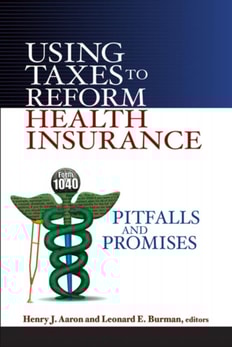
The Patient Protection and Affordable Care Act (commonly referred to as ObamaCare or PPACA), which was signed into US law in 2010, generated a lot of noise from both supporters and detractors.
Within Post-Keynesian economics there is a spectrum of approaches to theories of the firm but what they have in common, to their great benefit, is a proper integration of the concept of radical uncertainty: data that cannot be known.
The Patient Protection and Affordable Care Act (commonly referred to as ObamaCare or PPACA), which was signed into US law in 2010, generated a lot of noise from both supporters and detractors.
This volume examines the experience of Kazakhstan's transition over the past 30 years, explaining the political and economic performance of the country since the collapse of the USSR, through the country's institutions, policy choices, and external environment.
This volume discusses the concept of The Spatial University as part of the broad growth of spatial science and the need for spatial infrastructure in colleges and universities.
With a range of case studies from every continent, the contributors to this book analyze the challenges that arise for states living with much larger neighbors, and the policies they develop to account for this asymmetry.