Re-Globalization examines the changing face of globalization, with political, economic, and social balances in flux, and tensions increasing in many parts of the globe.
This book provides a systematic analysis of the establishment and decision-making processes concerning the institutional design of the East African Community (EAC) throughout the 1990s and discusses to what extent these were impacted and inspired by other regional organizations from Africa and Europe.
The Rise of Green Extractivism tackles the understudied interconnections between extractivism and climate-smart policies and their implications for rural livelihoods, both theoretically and empirically.
Re-Globalization examines the changing face of globalization, with political, economic, and social balances in flux, and tensions increasing in many parts of the globe.
This book provides a systematic analysis of the establishment and decision-making processes concerning the institutional design of the East African Community (EAC) throughout the 1990s and discusses to what extent these were impacted and inspired by other regional organizations from Africa and Europe.
International Trade, Labor Relations, and Bargaining Power: International Strawberry Commodity Networks examines power in the commercial food system through the history of always available strawberries.
As the current capitalist system has been increasingly struggling to respond to the problems and uncertainties in the global economy, this book aims to identify the main economic, social, and ecological problems and discusses solutions for a more inclusive and sustainable economic system.
Written by leading scholars from various disciplines, this book presents current research on topics such as public choice, game theory, and political economy.
The World Today (1974) examines the world of the late twentieth century and its roots - the disintegration of the old world is analysed in the expansion and subsequent decline of nineteenth-century imperialism, and the attempts by the League of Nations and United Nations to bring about a new order on international cooperation.
Race, Power and Social Segmentation in Colonial Society (1987) studies Guyanese society after slavery and specifically examines the area of social classes and ethnic groups.
The Ruins of Time (1975) examines the conquest of the Maya by the Spanish, the discoveries and adventures of the first travellers among them, the dramatic journeys of Victorian archaeologists and explorers and also contemporary attempts to unravel Maya hieroglyphs.
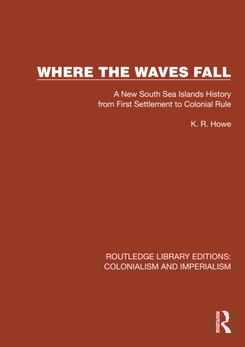
Where the Waves Fall (1984) centres the stories of the Pacific Islanders and how they were affected by European explorers and colonisers in this unique account of human settlement and cultural interchange in the Pacific islands.
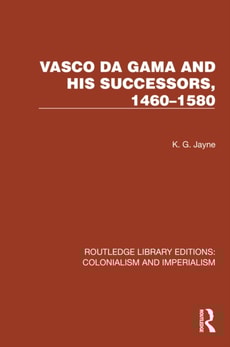
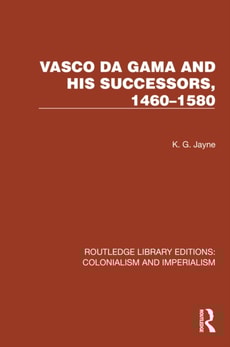
Vasco da Gama and His Successors (1970) looks at a range of Portuguese explorers of the fifteenth and sixteenth centuries, the most important being Vasco da Gama, whose first voyage to India ushered in a period of European conquest and empire, and established direct and permanent contact between Europe and the Far East.
Where the Waves Fall (1984) centres the stories of the Pacific Islanders and how they were affected by European explorers and colonisers in this unique account of human settlement and cultural interchange in the Pacific islands.
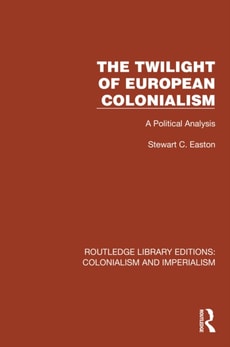
The Twilight of European Colonialism (1961) is a comprehensive appraisal of modern colonialism, as well as providing historical background, of the governments of British, French, Belgian and Portuguese colonies.
Vasco da Gama and His Successors (1970) looks at a range of Portuguese explorers of the fifteenth and sixteenth centuries, the most important being Vasco da Gama, whose first voyage to India ushered in a period of European conquest and empire, and established direct and permanent contact between Europe and the Far East.
The Turning Point in Africa (1982) is a significant study of British colonial policy towards tropical Africa during a critical decade, from the complacent trusteeship of the inter-war years to the strategy of decolonization inaugurated after the Second World War.
Race, Power and Social Segmentation in Colonial Society (1987) studies Guyanese society after slavery and specifically examines the area of social classes and ethnic groups.
The Yoruba-Speaking Peoples of the Slave Coast of West Africa (1894) is an important work of in-depth research into one of the principal indigenous communities of West Africa.
The Ruins of Time (1975) examines the conquest of the Maya by the Spanish, the discoveries and adventures of the first travellers among them, the dramatic journeys of Victorian archaeologists and explorers and also contemporary attempts to unravel Maya hieroglyphs.
The Twilight of European Colonialism (1961) is a comprehensive appraisal of modern colonialism, as well as providing historical background, of the governments of British, French, Belgian and Portuguese colonies.
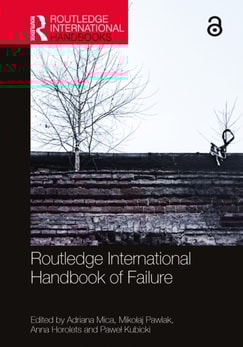
This Handbook examines the study of failure in social sciences, its manifestations in the contemporary world, and the modalities of dealing with it - both in theory and in practice.
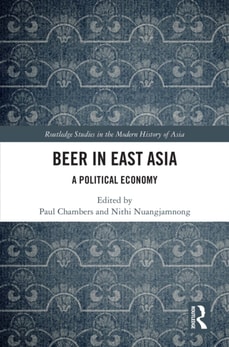
Chambers, Nuangjamnong, and their contributors look at how the development of the beer industry in East Asia presents a unique opportunity for understanding the region's political economy.
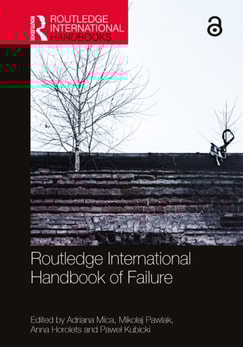
This Handbook examines the study of failure in social sciences, its manifestations in the contemporary world, and the modalities of dealing with it - both in theory and in practice.
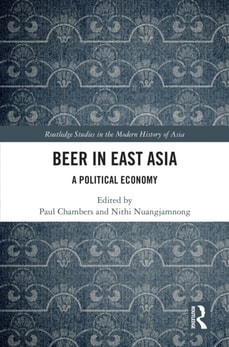
Chambers, Nuangjamnong, and their contributors look at how the development of the beer industry in East Asia presents a unique opportunity for understanding the region's political economy.