Gene Grossman and Elhanan Helpman are widely acclaimed for their pioneering theoretical studies of how special interest groups seek to influence the policymaking process in democratic societies.
Peter Albin is known for his seminal work in applying the concepts of adaptive dynamical systems, first developed by biologists and physicists, to the study of economic systems.
In 1900 the newly appointed Austrian prime minister, Ernest von Koerber, initiated a novel program of economic development designed to solve the political and economic problems of the Habsburg Monarchy.
This book originated from a 2010 conference marking the fortieth anniversary of the publication of the landmark Phelps volume, Microeconomic Foundations of Employment and Inflation Theory, a book that is often credited with pioneering the currently dominant approach to macroeconomic analysis.
Why we need to heed the lessons of high inflationToday's global economy, with most developed nations experiencing very low inflation, seems a world apart from the "e;Great Inflation"e; that spanned the late 1960s to early 1980s.
An interdisciplinary look at the behavioral roots of public policy from the field's leading expertsIn recent years, remarkable progress has been made in behavioral research on a wide variety of topics, from behavioral finance, labor contracts, philanthropy, and the analysis of savings and poverty, to eyewitness identification and sentencing decisions, racism, sexism, health behaviors, and voting.
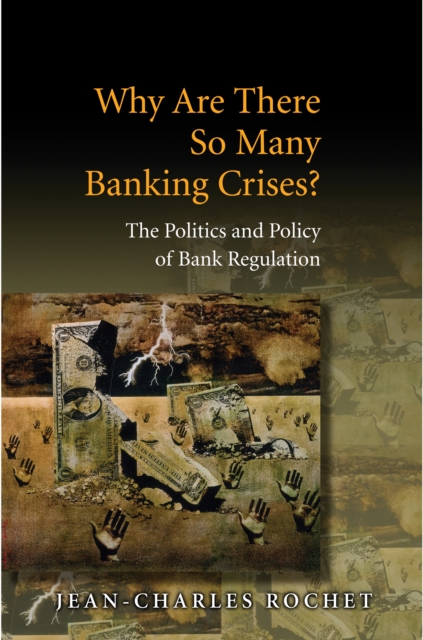
At the beginning of the 1990s, a massive speculative asset bubble burst in Japan, leaving the nation's banks with an enormous burden of nonperforming loans.
An integrated approach to the economics of sovereign defaultFiscal crises and sovereign default repeatedly threaten the stability and growth of economies around the world.
Economic Modeling and Inference takes econometrics to a new level by demonstrating how to combine modern economic theory with the latest statistical inference methods to get the most out of economic data.
Classics in Game Theory assembles in one sourcebook the basic contributions to the field that followed on the publication of Theory of Games and Economic Behavior by John von Neumann and Oskar Morgenstern (Princeton, 1944).
For decades women working as nurses, librarians, and secretaries have argued that they are paid less than men in jobs requiring comparable skill and effort.
Karl Marx predicted a world in which technical innovation would increasingly devalue and impoverish workers, but other economists thought the opposite, that it would lead to increased wages and living standards--and the economists were right.
A crucial challenge for economists is figuring out how people interpret the world and form expectations that will likely influence their economic activity.
Max Arthur, bestselling author of the hugely popular 'Forgotten Voices' series, recaptures the day-to-day lives of working people in the Edwardian era.
A FINANCIAL TIMES BOOK OF THE YEAROne of our most scintillating public intellectuals explores the political paradoxes of the pandemic and helps us think our way through it'We are able to imagine anything because we are being besieged by something that was considered unimaginable.
As government officials and political activists are becoming increasingly aware, international nonprofit agencies have an important political dimension: although not self-serving, these private voluntary organizations (PVOs) and nongovernmental organizations (NGOs) seek social changes of which many of their financial contributors are unaware.
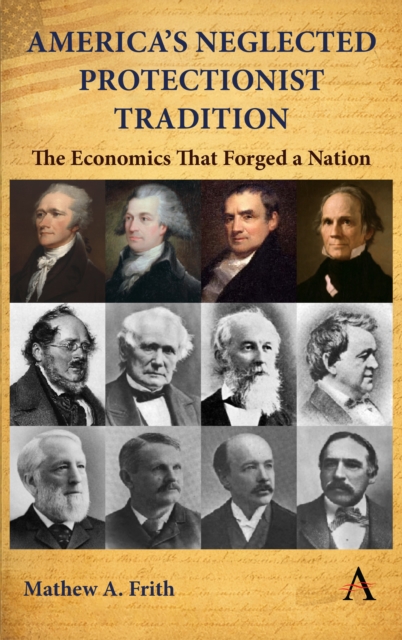
At a moment when protectionist trade policy has returned to the centre of global economic debate, America's Neglected Protectionist Tradition recovers the deep intellectual roots of that impulse - roots that stretch back to America's founding and that represent a far more sophisticated economic tradition than is commonly understood.
At a moment when protectionist trade policy has returned to the centre of global economic debate, America's Neglected Protectionist Tradition recovers the deep intellectual roots of that impulse - roots that stretch back to America's founding and that represent a far more sophisticated economic tradition than is commonly understood.
A provocative book that demystifies China's great democratic leap backward under Xi Jinping, revealing why the country's embrace of capitalism has given rise to hard authoritarianism, mass surveillance, and one-man rule instead of democracy as many in the West had hopedWhen China embarked on its transformative journey of modernization in 1979, many believed the country's turn toward capitalism would put its totalitarian past to rest and mark the birth of a democratic, open society.
An empirically powerful account of why interpersonal violence across the globe exacts a far greater cumulative cost on society than war and terrorism combinedCivil wars, interstate wars, and terrorism receive a great deal of media and policy attention, for good reasons.
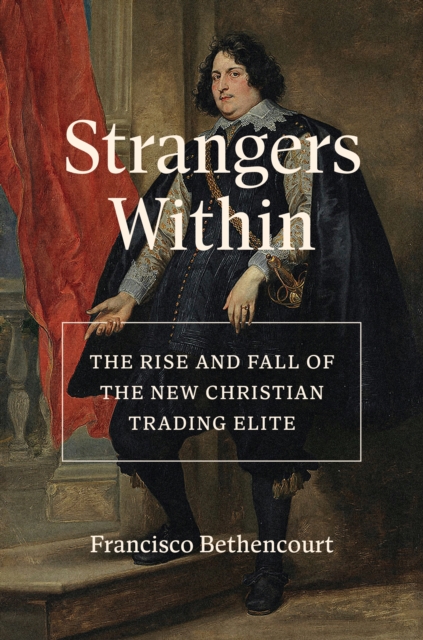
A comprehensive study of the New Christian elite of Jewish originprominent traders, merchants, bankers and men of lettersbetween the fifteenth and eighteenth centuriesIn Strangers Within, Francisco Bethencourt provides the first comprehensive history of New Christians, the descendants of Jews forced to convert to Catholicism in late medieval Spain and Portugal.
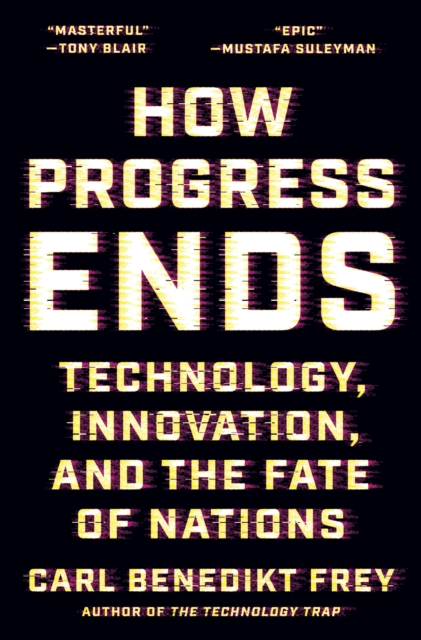
Shortlisted for the Financial Times and Schroders Business Book of the Year AwardHow 1,000 years of global history show why technological and economic progress is often followed by stagnation and even collapseIn How Progress Ends, Carl Benedikt Frey challenges the conventional belief that economic and technological progress is inevitable.
Shortlisted for the Financial Times and Schroders Business Book of the Year AwardHow 1,000 years of global history show why technological and economic progress is often followed by stagnation and even collapseIn How Progress Ends, Carl Benedikt Frey challenges the conventional belief that economic and technological progress is inevitable.
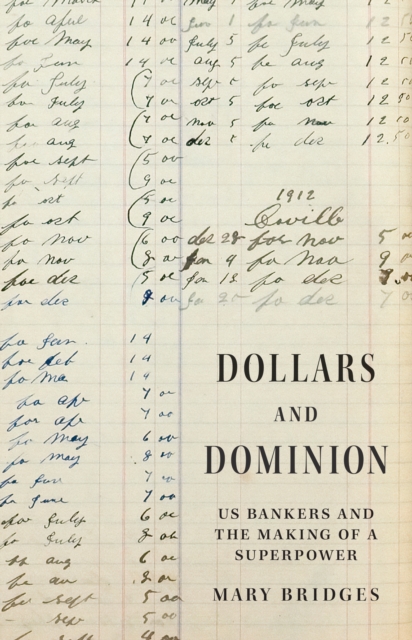
How the creation of a new banking infrastructure in the early twentieth century established the United States as a global financial powerThe dominance of US multinational businesses today can seem at first like an inevitable byproduct of the nation's superpower status.