What started as a sub-prime mortgage crisis in the United States in 2007 snowballed into global recession and later transformed into an economic crisis, if not a sociopolitical one.
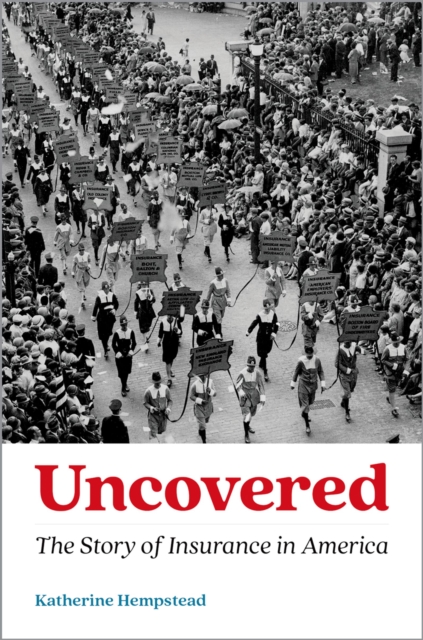
Many older Americans today are poorly prepared to finance their retirement years, and such under-preparedness is especially acute for members of disadvantaged racial and ethnic minority groups.
The Oxford Handbook of Banking (4th edition) provides an overview and analysis of developments and research in banking written by leading researchers in the field.
The Oxford Handbook of Banking (4th edition) provides an overview and analysis of developments and research in banking written by leading researchers in the field.
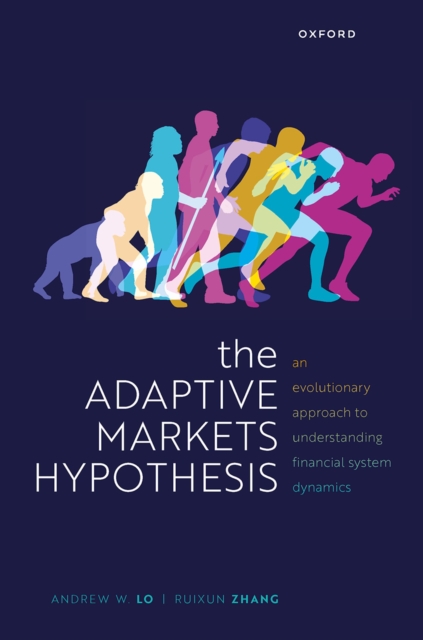
The Adaptive Markets Hypothesis (AMH) presents a formal and systematic exposition of a new narrative about financial markets that reconciles rational investor behaviour with periods of temporary financial insanity.
When Emily Power declared online, 'I am 33 and my parents give me pocket money,' she started a national debate about personal finances and the challenges of breaking into the property market.
The growing interest in investment in Latin America - particularly in commodities production and real estate development - has increased the use of trusts as investment vehicles throughout Latin America.
The topic of the financial industry, from both practical and regulatory perspectives, has been widely debated since the Global Financial Crisis of 2007-2008, but the discussion is mostly framed within a Western context.
This book provides the first comprehensive treatment of the governance framework for credit institutions and certain investment firms introduced by the Capital Requirements Directive 2013/36/EU (CRD IV) in response to the global financial crisis and progressively refined most recently by Directive (EU) 2024/1619 (CRD VI).
This self-contained book is the first of a two-volume set providing a thorough introduction to quantitative finance, covering both theoretical and computational methods.
This book provides the first comprehensive treatment of the governance framework for credit institutions and certain investment firms introduced by the Capital Requirements Directive 2013/36/EU (CRD IV) in response to the global financial crisis and progressively refined most recently by Directive (EU) 2024/1619 (CRD VI).
Islamic Capital Markets: A Comparative Approach (2nd Edition) looks at the similarities and differences between Islamic capital markets and conventional capital markets.
Islamic Capital Markets: A Comparative Approach (2nd Edition) looks at the similarities and differences between Islamic capital markets and conventional capital markets.
This self-contained book is the first of a two-volume set providing a thorough introduction to quantitative finance, covering both theoretical and computational methods.
Esta nueva edición de Contabilidad Financiera: el Plan General de Contabilidad nace con el objetivo de ofrecer una obra plenamente actualizada, tanto en sus contenidos como en la normativa contable vigente, manteniendo la clara vocación pedagógica que ha consolidado este libro como manual de referencia.
Cet ouvrage analyse le paradoxe des financements environnementaux en RDC, ou l'intensification des investissements ne produit pas necessairement des transformations equitables et durables sur le terrain.
This book explores the role of inclusive entrepreneurship in promoting social equality, wealth creation, and development in underrepresented groups such as women, ethnic minorities, youth, immigrants, and people with disabilities.
This book explores the role of inclusive entrepreneurship in promoting social equality, wealth creation, and development in underrepresented groups such as women, ethnic minorities, youth, immigrants, and people with disabilities.
This book explores the financial and regulatory dimensions shaping the electrification of society, an essential step towards global sustainable development.
Bachelor Thesis from the year 2008 in the subject Business economics - Banking, Stock Exchanges, Insurance, Accounting, grade: 1,2, European Business School - International University Schlo Reichartshausen Oestrich-Winkel, language: English, abstract: The US subprime-crisis became a headline in the global media starting in February 2007 after the US housing market had already shown first signs of a slowdown in late 2006 (DiMartino & Duca, 2007, p.