This book examines the challenges for the life insurance sector in Europe arising from new technologies, socio-cultural and demographic trends, and the financial crisis.
A clear understanding of what we know, don't know, and can't know should guide any reasonable approach to managing financial risk, yet the most widely used measure in finance today--Value at Risk, or VaR--reduces these risks to a single number, creating a false sense of security among risk managers, executives, and regulators.
How cutting-edge economics can improve decision-making methods for doctorsAlthough uncertainty is a common element of patient care, it has largely been overlooked in research on evidence-based medicine.
Artificial Intelligence (AI) Design and Solutions for Risk and Security targets readers to understand, learn, define problems, and architect AI projects.
Safety and Security Review for the Process Industries: Application of HAZOP, PHA, What-IF and SVA Reviews, Third Edition, describes the responsibilities, methods, and documentation required for the performance of qualitative hazard analysis for industrial and commercial processes, specifically Preliminary Hazard Analysis (PHA), What-If, and Hazard and Operability (HAZOP) reviews.
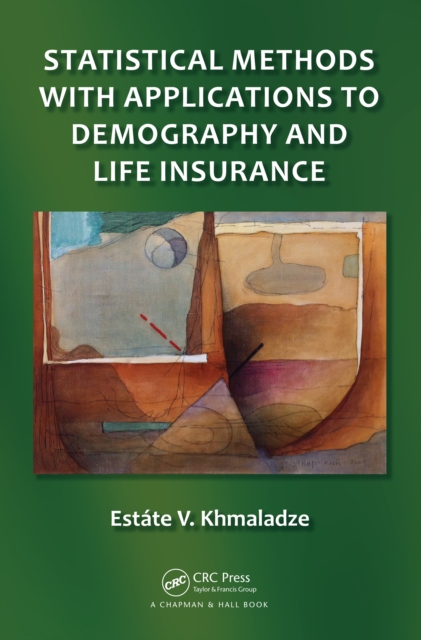
Suitable for statisticians, mathematicians, actuaries, and students interested in the problems of insurance and analysis of lifetimes, Statistical Methods with Applications to Demography and Life Insurance presents contemporary statistical techniques for analyzing life distributions and life insurance problems.
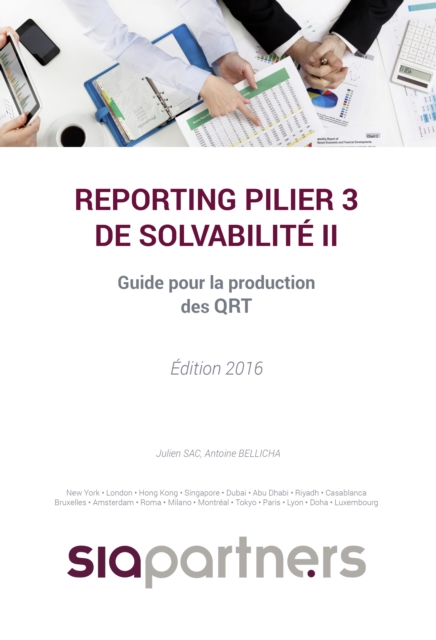
Pour une vision globale des actions à entreprendre concernant les éléments attendus pour le reporting des organismes d'assurance
L’entrée en vigueur de la directive Solvabilité II au 1er janvier 2016 contraint les organismes d’assurance à mettre en œuvre un reporting totalement refondu, à destination des autorités de contrôle et du public.
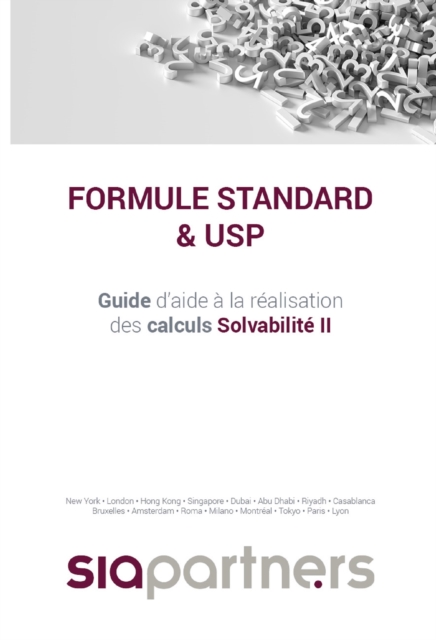
Grâce à une approche claire et agrémentée d’exemples concrets, Sia vous propose différentes approches de l’évaluation du SCR
Bien que l’évaluation du SCR par la Formule Standard présente une réelle simplicité opérationnelle par rapport aux autres approches, sa mise en œuvre se révèle toutefois exigeante et parfois complexe d’un point de vue calculatoire.
This updated and expanded edition discusses many different tools for root cause analysis and presents them in an easy-to-follow structure: a general description of the tool, its purpose and typical applications, the procedure when using it, an example of its use, a checklist to help you make sure if is applied properly, and different forms and templates.
This book is the first and only study on implementing Universal Health Coverage in poor, rural and informal settings, with end-to-end guidance for rolling out a demand-driven and needs-based health insurance model.
Insurance Planning Models: Price Competition and Regulation of Financial Stability is an exciting new book that takes readers inside the secrets of internal organization of the modern general insurance business.
This volume is a milestone on our journey toward developing a more comprehensive understanding of the underpinnings of corporate financial performance.
Financial Risk and Derivatives provides an excellent illustration of the links that have developed in recent years between the theory of finance on one hand and insurance economics and actuarial science on the other.
Insurance Planning Models: Price Competition and Regulation of Financial Stability is an exciting new book that takes readers inside the secrets of internal organization of the modern general insurance business.
This Simple Linear Actuarial Model (SLAM) manual is the accompanying publication to An Actuarial Model for Costing Universal Health Coverage in Armenia.
This country diagnostics assessment seeks to strengthen financial preparedness for disasters in Nepal, focusing on insurance and other risk transfer instruments.
The annual Asian Development Outlook, now in its 30th year, analyzes economic performance in the past year and forecasts performance in the next 2 years for the 45 economies in Asia and the Pacific that make up developing Asia.
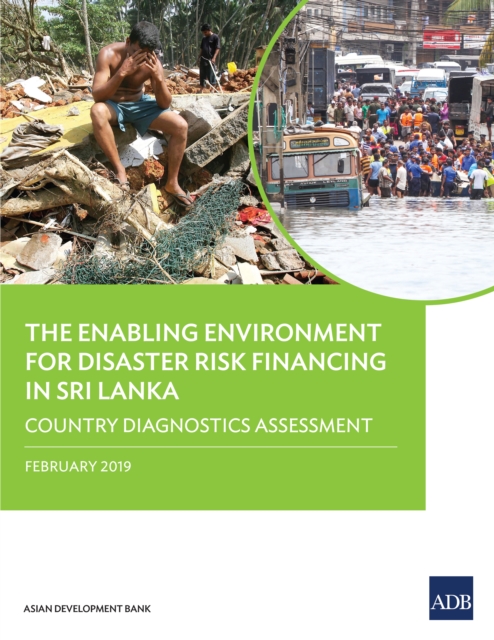
This country diagnostic assessment seeks to strengthen financial preparedness for disasters in Sri Lanka, focusing on insurance and other risk transfer instruments.
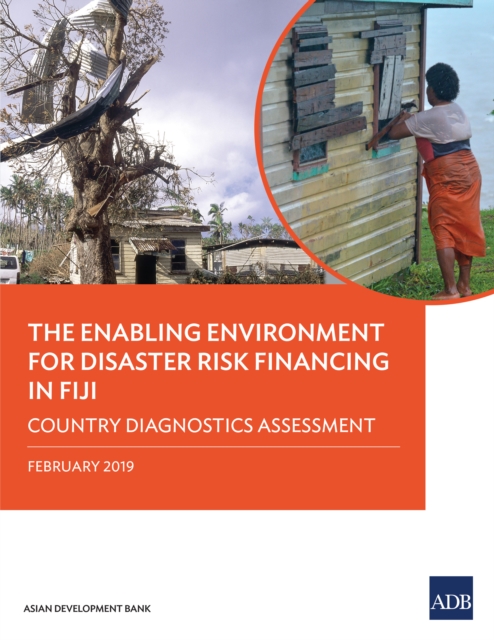
This country diagnostic assessment seeks to strengthen financial preparedness for disasters in Fiji, focusing on insurance and other risk transfer instruments.
The poor and vulnerable populations suffer disproportionately from the adverse impacts of climate change and disasters, which result in loss of life, damage to household and community assets, disruption of livelihoods, and loss of income.
Disasters damage and destroy infrastructure and disrupt economic activities and services, potentially delaying long-term development and hampering efforts to reduce poverty in the region.
The Asian Development Bank (ADB) is an active partner of the Government of the Philippines in developing microfinance---the provision of insurance products that meet the needs of the disadvantaged for risk protection and relief against misfortune.
The OECD Guidelines on Insurer Governance offer a comprehensive set of principles on the governance of insurers that are intended to provide guidance and serve as a reference point for insurers, governmental authorities, and other relevant stakeholders in OECD and non-OECD countries.
This comprehensive study responds to the growing concerns of economic, financial, political and social actors regarding the ever increasing exposure to new expanding risks.
This annual publication presents the main official insurance statistics for all OECD countries and for Singapore, which has an observer status to the OECD Insurance Committee.
This yearbook gathers major official insurance statistics for all OECD countries, including extensive data on the number of insurance companies and employees, insurance premiums and investments by insurance companies as well as - this year for the first time -claims, expenses and commissions.
These proceedings, based on a conference held in November 2004 at OECD in Paris, present leading academic analysis as well as government and private sector information and experience-sharing on how governments and the financial and insurance sectors can deal with losses caused by terrorism, atmosperic perils, and other large-scale risks.
This book presents OECD policy conclusions and leading academic analysis on the financial management of terrorism risk nearly four years after the World Trade Centre attacks.
GuíaBurros: Seguros es una guía con TODO lo que necesitas saber antes de contratar un seguro, desde qué es un seguro, pasando por la consideraciones a la hora de contratar una poliza, hasta lo que debemos hacer en caso de siniestro.