This book scientifically tests the assertion that accommodative monetary policy can eliminate the "e;crowd out"e; problem, allowing fiscal stimulus programs (such as tax cuts or increased government spending) to stimulate the economy as intended.
The book provides readers with a clear understanding of infrastructure challenges, how Public-Private Partnerships (PPP) can help, and their use in practice.
This book explores Portugal's response to the 2008 economic crisis and how the country regained the trust of the global capital markets through investor support.
This book sheds new light on if and why, between 2009 and 2015, European governments succeeded or failed in initiating and actually realizing some of the farthest-reaching austerity plans in modern history.
Evaluation in recent decades has evolved from a tool for project appraisals to a more widely used framework for public decision-making and operational management.
Why our addiction to debt caused the global financial crisis and is the root of our financial woesAdair Turner became chairman of Britain's Financial Services Authority just as the global financial crisis struck in 2008, and he played a leading role in redesigning global financial regulation.
The Theory of Taxation and Public Economics presents a unified conceptual framework for analyzing taxation--the first to be systematically developed in several decades.
Optimal tax design attempts to resolve a well-known trade-off: namely, that high taxes are bad insofar as they discourage people from working, but good to the degree that, by redistributing wealth, they help insure people against productivity shocks.
The cost benefit technique is so often referenced in government policy that a correct understanding is necessary for officials entrusted with public decisions.
This comparative analysis report, the second in a series, is part of ADB's regional research and development project on tax administration that analyzes the administrative frameworks, functions, and performance of 21 economies in Asia and the Pacific.
This book explains and illustrates each of the requirements for a nontaxable corporate division and the methods for mitigating the tax consequences when those requirements cannot be satisfied.
The euro crisis, Japan's sluggish economy, and partisan disagreements in the United States about the role of government all have at least one thing in common: worries about high levels of public debt.
Se trata de un análisis novedoso, una exposición por primera vez de las verdaderas causas y una sensacional solución inmediata (que yo llamo con razón un "truco") a nuestros problemas económicos, monetarios y financieros, una solución que no sólo puede aplicarse en un tiempo sensacionalmente corto, sino que también se hace sostenible y duradera mediante medidas de acompañamiento.
Sowohl für Studierende und Lehrende als auch für Praktiker aus den Bereichen der Betriebswirtschaftlichen Steuerlehre und des Steuerrechts gibt dieses Buch eine übersichtliche Darstellung der wichtigsten Steuerarten in Deutschland.
Unlock the Language of Business with the ICAEW ACA Corporate Reporting: Advanced Level Second EditionThis isn't just another textbook; it's your comprehensive guide to mastering the intricacies of corporate reporting at an advanced level.
Based on a treasure trove of information collected through fieldwork interviews and painstaking documentary research through the Chinese and Western language presses, this book analyzes one of the most important reforms implemented in China over the past decade - the rural tax and fee reform, also known as the "e;Third Revolution in the Countryside"e;.
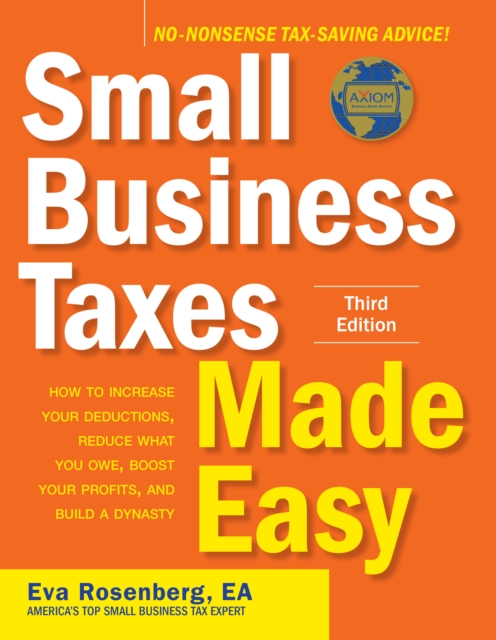
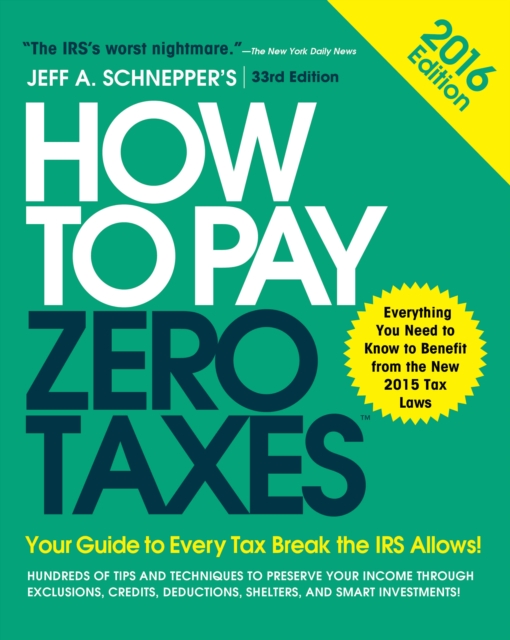
Updated for 2016-a new revised edition of the classic guide that shows you how to pay less to the IRSEasy to read, easy to use, and hard to beat, this comprehensive tax-saving guide has become the go-to resource for tax professionals and home filers alike.
L'accent est mis sur une analyse novatrice, une première exposition des causes véritables et une solution immédiate sensationnelle (que j'appelle à juste titre "truc") à nos problèmes économiques, monétaires et financiers, une solution qui peut non seulement être mise en œuvre dans un délai sensationnellement court, mais qui est également rendue durable et viable par des mesures d'accompagnement.
This is the first book that analyzes public-private partnership (PPP) infrastructure development in developing countries by focusing on recent developments in the Philippines.