'An invaluable primer to some of the underlying tensions behind contemporary political debate' Financial TimesIt has always been an important part of British self-image to see the United Kingdom as an ancient, organic and sensibly managed place, in striking contrast to the convulsions of other European countries.
Covering the period from the 1920s, when international tax policy was solely about avoiding double taxation, to the present era of international tax competition, Rixen investigates the fate of 'the power to tax' in an era of globalization, illustrating that tax sovereignty is both shaped and constrained by an international tax regime.
This book is a revised and updated guide to some of the most important issues in the capital markets today, with an emphasis on fixed-income instruments such as index-linked bonds, asset backed securities, mortgage backed securities and related products such as credit derivatives.
In the 1990s shareholder value was applied to all aspects of corporate strategy and management decisions as a result of intense competition, globalization, advances in technology, deregulation and the financial markets.
Financing European Transport Infrastructure examines organisational arrangements for planning and financing transport infrastructure in Western Europe.
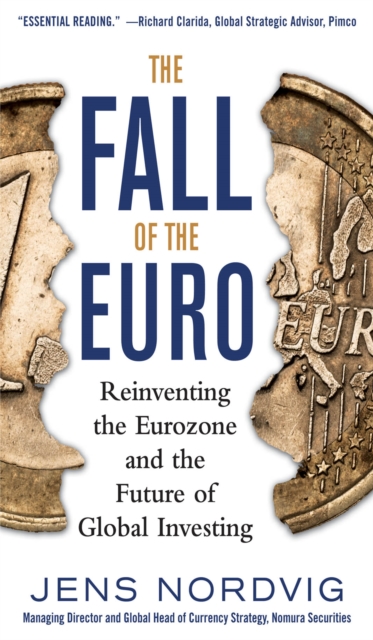
A detailed and informed analysis of the current crisis facing the eurozone, examining the root causes and exploring the possible outcomes and uncertain future of the European Union and its currency.
Updated and revised, the third edition frames strategy as delivering firm value in both the short and long term while maintaining a sustainable competitive advantage.
This book presents a theoretically-based comprehensive analysis of macroeconomic consequences of fiscal policy using a popular economic model: the overlapping generations growth model.
An in-depth analysis of the fundamental role that decentralization plays in developing countries, using detailed statistical data to examine the actual fiscal structure between tiers of government, and the effects of decentralization at the local, national and international levels.
This book focuses on the distributional consequences of the public sector and examines and documents, theoretically and empirically, the effects of government spending and taxation on personal distribution, and includes chapters investigating the relationship between the public sector and functional distribution of national income.
The amount collected in taxation, the items which have been taxed, and the classes of people on whom the tax burden has fallen, have all changed greatly in the period from the Restoration to the present.
Economics for a Civilized Society incorporates both self-interest and civic value motivations to provide an understanding of how our economic system works and how we can develop economic policies that assures a prosperous and civil society.
This book explains how banking institutions in Portugal were able to maintain their strength and solubility while undergoing a demanding Program of Financial Assistance from the International Monetary Fund, the European Central Bank and the European Commission from May 2011 and May 2014.
Management accounting has undergone significant evolution moving away from rigid budgeting programs and static output measures to comprehensive approaches of value identification and measurement.
The book analyses the Spanish financial system from the turn of the last century to the present day and the economic, social and political backdrop to this history.
In June 2010 IE Business School, with King Abdulaziz University, gathered in Madrid some of the world's foremost scholars, academics and practitioners of Islamic Economics and Finance.
Updated and revised, this second edition applies advanced financial analytics within a strategic framework that recognizes an environment where sustainable competitive advantage is a progressively more difficult task.
Selected essays from the eminent economist, Wynne Godley, tracing the development of his work and illuminating the key theories and models that made his name.
As a collection of alternative views on societies, methodologies, policies and assessment of the current elements of the society, Alternative Perspectives on a Good Society brings together different authors answering different questions all within the context of visions of a good society.
With the current global crisis, high levels of volatility in trade, capital flows, commodity prices, aid, and the looming threat of climate change, this book brings together high-quality research and presents conceptual issues and empirical results to analyze the determinants of the vulnerability to poverty in developing countries.
This book on the different aspects of international economic policy covers financial crises, reserve accumulation, capital flows and currency wars as well as issues relating to foreign direct investment and developments in China and India.
Public sector organizations are about to enter one of the most challenging environments they have ever had to face as they bear much of the cost of the credit crunch.
The book presents arguments against the taxpayers'-funded bailing out of failed financial institutions, and puts forward suggestions to circumvent the TBTF problem, including some preventive measures.