How to maintain a bullish portfolio--no matter where the market goesInvest to Win revolutionizes the way investors approach the markets by offering a more profitable alternative to the old buy-and-hold strategy that leaves many people destitute in this age of market crashes.
THREE E-BOOKS IN ONEThe Millionaire Real Estate InvestorAnyone who seeks financial wealth must first learn the fundamental truths and models that drive it.
The recent financial crisis had a profound effect on both public and private universities, which faced shrinking endowments, declining charitable contributions, and reductions in government support.
The recent recession has brought fiscal policy back to the forefront, with economists and policy makers struggling to reach a consensus on highly political issues like tax rates and government spending.
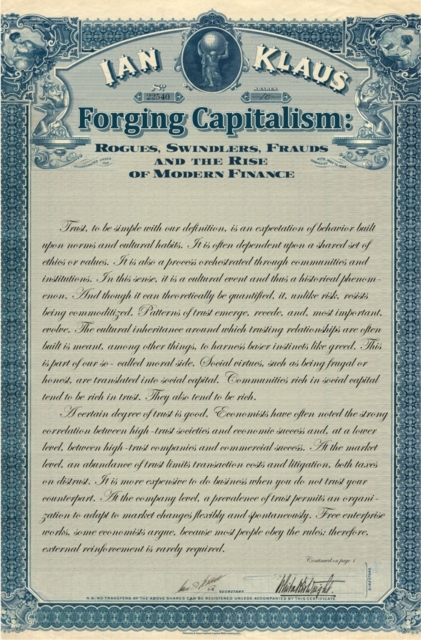
A riveting history of raw capitalism that exposes the unscrupulousness at its heart Vice is endemic to Western capitalism, according to this fascinating, wildly entertaining, often startling history of modern finance.
Over the last decade or so, private-sector financing through public-private partnerships (PPPs) has become increasingly popular around the world as a way of procuring and maintaining public-sector infrastructure, in sectors such as transportation (roads, bridges, tunnels, railways, ports, airports), social infrastructure (hospitals, schools, prisons, social housing) public utilities (water supply, waste water treatment, waste disposal), government offices and other accommodation, and other specialised services (communications networks or defence equipment).
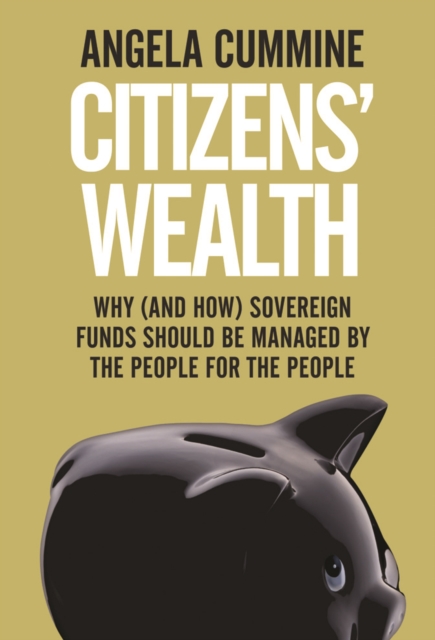
A wide-ranging analysis of a powerful but controversial new economic tool that has rapidly eclipsed the size of the hedge fund market In 2006, Chile teemed with protesters after finance minister Andrés Velasco invested budget surpluses from the nation’s historic copper boom in two Sovereign Wealth Funds.
International Money and Finance, Tenth Edition presents an institutional and historical overview of international finance and international money, illustrating how key economic concepts can illuminate real world problems.
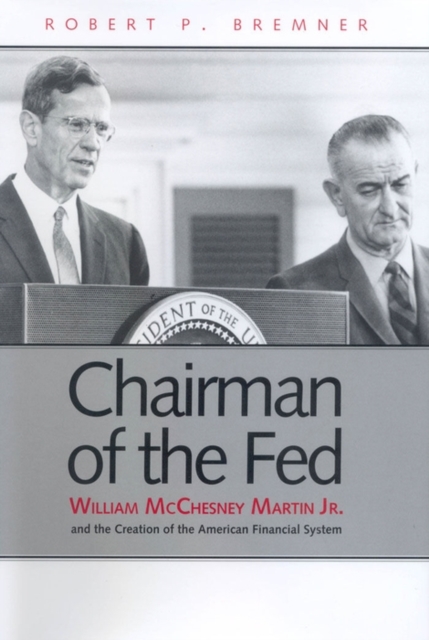
Although little noticed, the face of central banking has changed significantly over the past ten to fifteen years, says the author of this enlightening book.
Designed for aspiring school leaders, this fully updated fourth edition presents the realities of school finance policy and issues, as well as the tools for formulating and managing school budgets.
A behind-the-scenes look at how the rich and powerful use offshore shell corporations to conceal their wealth and make themselves richerIn 2015, the anonymous leak of the Panama Papers brought to light millions of financial and legal documents exposing how the superrich hide their money using complex webs of offshore vehicles.
An engaging and enlightening account of taxation told through lively, dramatic, and sometimes ludicrous stories drawn from around the world and across the agesGovernments have always struggled to tax in ways that are effective and tolerably fair.
This book examines the views of Greek Church Fathers on hoarding, saving, and management of economic surplus, and their development primarily in urban centres of the Eastern Mediterranean, from the late first to the fifth century.
In a way, the situation is ironic: housing was at the root of the financial crisis, and six years after the meltdown, housing finance is still the greatest unsolved issue.
The overarching aim of this book is to bring order to the subjects of money laundering and of the anti-money laundering frameworks that have been written over the past thirty years.
This book analyzes shifting international taxation strategies in pursuit of tax nomads, individuals and companies who minimize their tax obligations among multiple countries.
This book provides a uniquely comprehensive explanation of the 2008-2009 global financial crisis and resulting scholarly research in the context of building an agenda for reform.
Monetary policy in the Middle East and North African (MENA) countries remains an understudied area; this book fills an important gap by examining monetary policy frameworks and monetary policy strategies in the region.
Indices, index funds and ETFs are grossly inaccurate and inefficient and affect more than 120 trillion worth of securities, debts and commodities worldwide.
This book provides a first, basic introduction into the valuation of financial options via the numerical solution of partial differential equations (PDEs).
This book focuses on extending the models and theories (from a mathematical/statistical point of view) which were introduced in the first volume to a more technical level.
The New International Monetary System brings together twelve original contributions by leading scholars and practitioners to a conference convened in May 2008 on the occasion of the retirement of Alexander Swoboda.
This book describes and analyses the impact of the 2007-2008 financial crisis upon the working conditions of employees in the financial services sector in Britain.
The unique Japanese banking system has contributed greatly to Japan's post-war economic advance by investing aggressively in industry and by supporting close government-business relations.
First published in 1981, this book concerns itself with the different ways in which money is used, the relationships which then arise, and the institutions concerned in maintaining its various functions.
This popular textbook offers a broad and accessible introduction to the building blocks of modern finance: financial markets, institutions and instruments.
Even among the four Asian tigers, with their economic miracles during the past several decades that allowed them to join the ranks of the developed nations, South Korea is extraordinary.