This book presents a System Dynamics based model that rethinks the role of sustainability accounting in business contexts to highlight its role in supporting long-term corporate decision-making.
This book presents a System Dynamics based model that rethinks the role of sustainability accounting in business contexts to highlight its role in supporting long-term corporate decision-making.
From the bestselling author of MONEYLAND and BUTLER TO THE WORLD, a revelatory new anatomy of global money laundering, the crime that makes crime payWithout money laundering, few crimes of acquisition would be worth the trouble.
This edited volume collates discussions on latest challenges, opportunities, trends and practices applicable to two major business sectors -- retail and financial services -- and chapters are segregated accordingly.
This book offers a critical examination of the due diligence frameworks employed by select Commonwealth Island Citizenship by Investment (CBI) programmes, where an investment of as little as USD $200,000 can secure a second passport, granting visa-free access to numerous countries.
In the complex world of corporate strategy and market dynamics, very few questions are as fundamental as understanding what drives the value of business assets.
This edited volume collates discussions on latest challenges, opportunities, trends and practices applicable to two major business sectors -- retail and financial services -- and chapters are segregated accordingly.
In the complex world of corporate strategy and market dynamics, very few questions are as fundamental as understanding what drives the value of business assets.
In recent years, many financial and monetary issues have been clarified and explained by the post-Keynesian theory, but some open questions remain on the functioning of the bank and the role of bank profitability in interest rate determination and distributive conflict.
In recent years, many financial and monetary issues have been clarified and explained by the post-Keynesian theory, but some open questions remain on the functioning of the bank and the role of bank profitability in interest rate determination and distributive conflict.
Standard corporate evaluation approaches are improved by trendy innovation, especially as it concerns technological scale up and environmental issues such as digital networking or ESG compliance.
Standard corporate evaluation approaches are improved by trendy innovation, especially as it concerns technological scale up and environmental issues such as digital networking or ESG compliance.
Filling a critical gap that has left founders unprepared for the nuances of corporate venture capital (CVC) engagement, this book provides a definitive, practitioner-focused field guide for navigating this complex world and avoiding pitfalls caused by misaligned incentives, hidden terms, or corporate politics.
This book analyses how preindustrial monetary practices functioned, focusing on Europe and some selected colonial areas between the fourteenth and twentieth centuries.
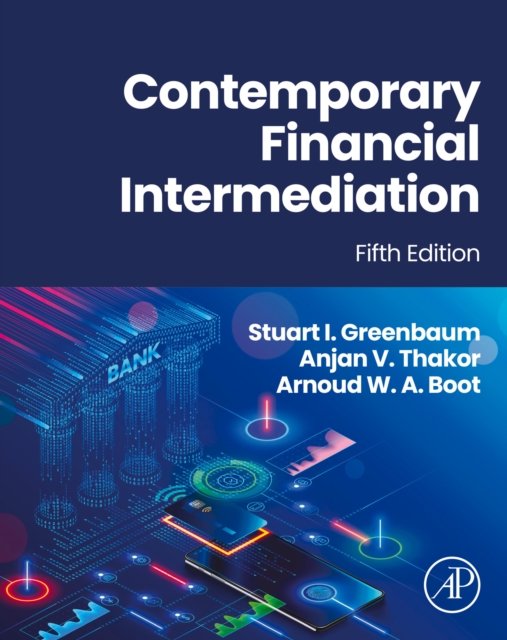
Contemporary Financial Intermediation, Fifth Edition offers a distinctive approach to the study of financial markets and institutions by presenting an integrated portrait that puts information and economic reasoning at the core.
Este trabajo tiene como objetivo explorar la conexion conceptual y metodologica entre la medicion y la valoracion en contabilidad, considerando las teorias del valor y su evolucion en el pensamiento economico, ademas de incluir el papel emergente de la inteligencia artificial en estos procesos.
This book analyses how preindustrial monetary practices functioned, focusing on Europe and some selected colonial areas between the fourteenth and twentieth centuries.
Most dispensary owners spend years building something valuable — then lose a significant portion of that value in the final 90 days because they never learned how to sell.
Similar to banking systems worldwide and driven by geopolitical pressures, the banking systems in the Gulf Cooperation Council (GCC) region face many significant challenges, especially in the wake of the 2007-09 credit crunch, the decline in oil prices in 2014, and the post-2011 unsettled political landscape in the wider Middle East North Africa (MENA) region.
International financial markets and their participants-financial intermediaries and supervisory authorities-appear to be settling into a more steady pattern of growth and innovation, in marked contrast to the turbulence that characterised the transitional years from 1992 to 1995.
This book offers a timely and authoritative examination of how financial systems can support the transition from linear “take–make–dispose” models to regenerative, inclusive, and resilient economic pathways.
This book offers a timely and authoritative examination of how financial systems can support the transition from linear “take–make–dispose” models to regenerative, inclusive, and resilient economic pathways.
Similar to banking systems worldwide and driven by geopolitical pressures, the banking systems in the Gulf Cooperation Council (GCC) region face many significant challenges, especially in the wake of the 2007-09 credit crunch, the decline in oil prices in 2014, and the post-2011 unsettled political landscape in the wider Middle East North Africa (MENA) region.
International financial markets and their participants-financial intermediaries and supervisory authorities-appear to be settling into a more steady pattern of growth and innovation, in marked contrast to the turbulence that characterised the transitional years from 1992 to 1995.