Howard Zahniser (19061964), executive secretary of The Wilderness Society and editor of The Living Wilderness from 1945 to 1964, is arguably the person most responsible for drafting and promoting the Wilderness Act in 1964.
Before commercial whaling was outlawed in the 1980s, diplomats, scientists, bureaucrats, environmentalists, and sometimes even whalers themselves had attempted to create an international regulatory framework that would allow for a sustainable whaling industry.
Forests of Belonging examines the history and ongoing transformation of ethnic and social relationships among four distinct communities--Bangando, Baka, Bakwle, and Mbomam--in the Lobk forest region of southeastern Cameroon.
Seismic Imaging Methods and Application for Oil and Gas Exploration connects the legacy of field data processing and imaging with new research methods using diffractions and anisotropy in the field of geophysics.
2011 Outstanding Title, University Press Books for Public and Secondary School LibrariesWinner of the Pacific Northwest Booksellers Association AwardBefore Forks, a small town on Washingtons Olympic Peninsula, became famous as the location for Stephenie Meyers Twilight book series, it was the self-proclaimed Logging Capital of the World and ground zero in a regional conflict over the fate of old-growth forests.
Agricultural Bioeconomy: Innovation and Foresight in the Post-COVID Era presents recent advancements in biotechnology, exploring the optimal utilization of technologies to provide rapid and impactful economic recovery and sustainable resources in a future that will bear the mark of COVID-19.
From the interactive clockwork world of geology, tides, Northwest weather, and snow, to the hidden roles of dirt, stream life, and mosses and lichens, Pulitzer Prize winning writer William Dietrich explores the natural splendors of the Pacific Northwest.
Bioinformatics in Agriculture: Next Generation Sequencing Era is a comprehensive volume presenting an integrated research and development approach to the practical application of genomics to improve agricultural crops.
From prehistory to the present-day conservation movement, Pyne explores the efforts of successive American cultures to master wildfire and to use it to shape the landscape.
Winner of the 2014 Albert Corey Prize from the American Historical AssociationWinner of the 2013 Hal Rothman Award from the Western History AssociationWinner of the 2013 John Lyman Book Award in the Naval and Maritime Science and Technology category from the North American Society for Oceanic HistoryFor centuries, borders have been central to salmon management customs on the Salish Sea, but how those borders were drawn has had very different effects on the Northwest salmon fishery.
The human impulse to religion--the drive to explain the world, humans, and humans place in the universe can be seen to encompass environmentalism as an offshoot of the secular, material faith in human reason and power that dominates modern society.
A translation of a key commentary on perhaps the most broadly influential text of classical China This book is a translation of a key commentary on the Book of Changes, or Yijing (I Ching), perhaps the most broadly influential text of classical China.
Harvey details the first major clash between conservationists and developers after World War II, the successful fight to prevent the building of Echo Park Dam.
In this lively account of one [fire] season, Pyne introduces us to the tightly knit world of a fire crew, to the complex geography of the North Rim, to the technique and changing philosophy of fire management.
This is the first history of the Jewish agricultural colonies that were established in Crimea and Southern Ukraine in 1924 and that, fewer than 20 years later, ended in tragedy.
An exploration of the rise of the crop strain that came to dominate the American tobacco industry and its toll on the Southern landscape that produced it Drew A.
The Monterey coast, home to an acclaimed aquarium and the setting for John Steinbeck's classic novel Cannery Row, was also the stage for a historical junction of industry and tourism.
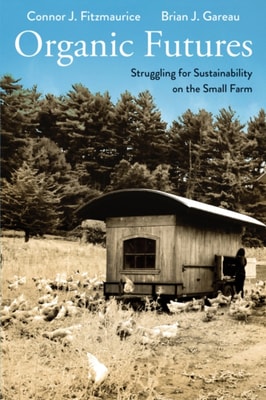
An exploration of the lived experience of small-scale organic farmers in New England that unpacks how they balance their ideals with economic realities In recent years, the popularity of organically grown produce has exploded.
Radiation-Processed Polysaccharides: Emerging Roles in Agriculture is the first book to focus exclusively on this emerging and important option for reducing the overuse and negative impact of agrochemicals in agriculture.
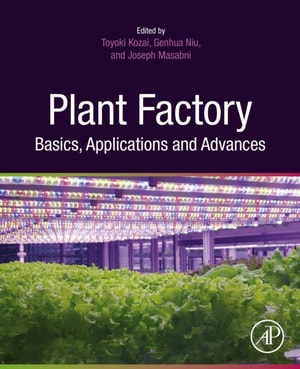
Plant Factory Basics, Applications, and Advances takes the reader from an overview of the need for and potential of plant factories with artificial lighting (PFALs) in enhancing food production and security to the latest advances and benefits of this agriculture environment.
The Ordos Basin: Sedimentological Research for Hydrocarbons Exploration provides an overview of sedimentological approaches used in the lacustrine Ordos Basin (but also applicable in other marine and lacustrine basins) to make hydrocarbon exploration more efficient.
Citrus Fruit: Biology, Technology and Evaluation, Second Edition presents a comprehensive view of these globally important crops, from cultivars to consumer acceptability.
Although originally published in 1928, many of the issues discussed in this book remain pertinent today: in unstable markets grappling with labour shortages, how to pay the producers of food a fair price, at a price the consumer can afford, whilst maximising efficiency and minimising waste.