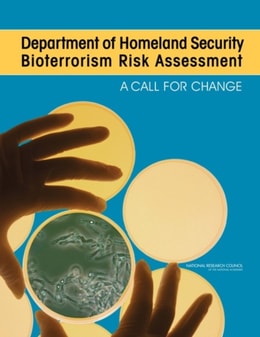
The mission of Department of Homeland Security Bioterrorism Risk Assessment: A Call for Change, the book published in December 2008, is to independently and scientifically review the methodology that led to the 2006 Department of Homeland Security report, Bioterrorism Risk Assessment (BTRA) and provide a foundation for future updates.
In response to HUD's request, the NRC assembled a panel of experts, the Committee for Oversight and Assessment of the Partnership for Advancing Technology in Housing, under the auspices of the Board on Infrastructure and the Constructed Environment.
As national priorities have been focused both on reducing fuel consumption and improving air quality, attention has increased on reducing emissions from many types of vehicles, including light-duty, medium-duty, and heavy-duty diesel-powered vehicles.
The 21st Century Truck Partnership (21CTP), a cooperative research and development partnership formed by four federal agencies with 15 industrial partners, was launched in the year 2000 with high hopes that it would dramatically advance the technologies used in trucks and buses, yielding a cleaner, safer, more efficient generation of vehicles.
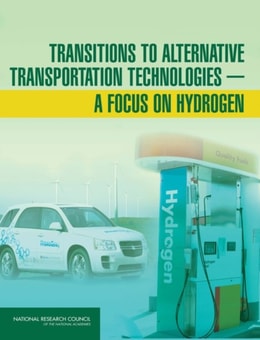
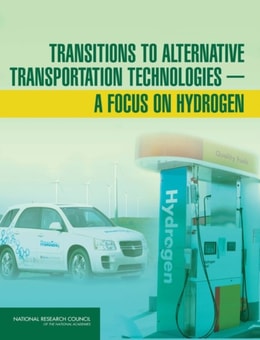
The public-private partnership to develop vehicles that require less petroleum-based fuel and emit fewer greenhouse gases should continue to include fuel cells and other hydrogen technologies in its research and development portfolio.
Technological Trajectories and the Human Environment provides a surprising projection of a much greener planet, based on long-range analysis of trends in the efficient use of energy, materials, and land.
In legislation appropriating funds for DOE's fiscal year (FY) 2000 energy RD budget, the House Interior Appropriations Subcommittee directed an evaluation of the benefits that have accrued to the nation from the RD conducted since 1978 in DOE's energy efficiency and fossil energy programs.
Vision 21 reviews the goals of the Department of Energy's (DOE) Vision 21 Program (DOE's vision for the future of coal-based power generation) and to recommend systems and approaches for moving from concept to reality.
The Department of Energy (DOE) is engaged in numerous multimillion- and even multibillion-dollar projects that are one of a kind or first of a kind and require cutting-edge technology.
The USGCRP's Carbon Cycle Working Group asked the National Research Council's Committee on the Human Dimensions of Global Change to hold a workshop on Human Interactions with the Carbon Cycle.
In order to achieve the Army's envisioned Objective Force related to deployability, transportability, and mobility, the Committee on Lightweight Materials for the 21st Century Army Trucks was asked to identify research and technology development opportunities related to the introduction of new lightweight structural materials for light medium and heavy Army trucks.
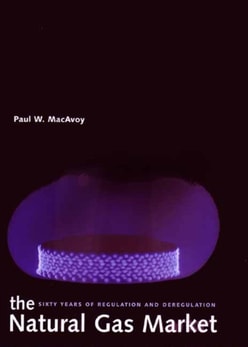
Natural gas, composed mostly of methane, is the cleanest of all the fossil fuels, emitting 25-50% less carbon dioxide than either oil or coal for each unit of energy produced.
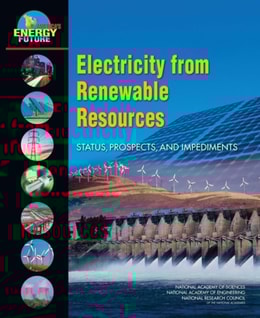
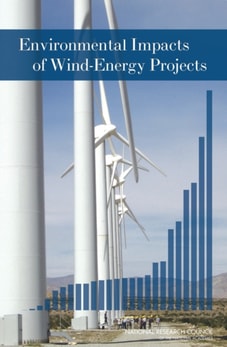
A component in the America's Energy Future study, Electricity from Renewable Resources examines the technical potential for electric power generation with alternative sources such as wind, solar-photovoltaic, geothermal, solar-thermal, hydroelectric, and other renewable sources.
Natural gas, composed mostly of methane, is the cleanest of all the fossil fuels, emitting 25-50% less carbon dioxide than either oil or coal for each unit of energy produced.
A component in the America's Energy Future study, Electricity from Renewable Resources examines the technical potential for electric power generation with alternative sources such as wind, solar-photovoltaic, geothermal, solar-thermal, hydroelectric, and other renewable sources.
The 21st Century Truck Partnership (21CTP), a cooperative research and development partnership formed by four federal agencies with 15 industrial partners, was launched in the year 2000 with high hopes that it would dramatically advance the technologies used in trucks and buses, yielding a cleaner, safer, more efficient generation of vehicles.
The mission of Department of Homeland Security Bioterrorism Risk Assessment: A Call for Change, the book published in December 2008, is to independently and scientifically review the methodology that led to the 2006 Department of Homeland Security report, Bioterrorism Risk Assessment (BTRA) and provide a foundation for future updates.
An energy revolution is under way with far-reaching consequences for nations, companies, and the way we address climate change Low oil prices are sending shockwaves through the global economy, and longtime industry observer Dieter Helm explains how this and other shifts are the harbingers of a coming energy revolution and how the fossil fuel age will come to an end.
While everyone wants energy that is clean, cheap, and secure, these goals often conflict: traditional fossil fuels tend to be cheaper than alternative fuels, but they are hardly clean or (in the case of oil) secure.
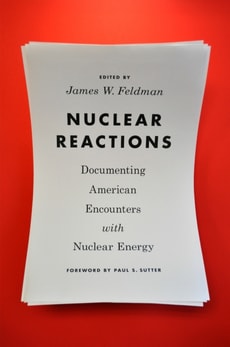
Nuclear Reactions explores the nuclear consensus that emerged in postWorld War II America, characterized by widespread support for a diplomatic and military strategy based on nuclear weapons and a vision of economic growth that welcomed nuclear energy both for the generation of electricity and for other peaceful and industrial uses.
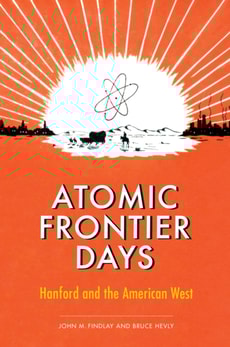
Outstanding Title by Choice MagazineOn the banks of the Pacific Northwests greatest river lies the Hanford nuclear reservation, an industrial site that appears to be at odds with the surrounding vineyards and desert.
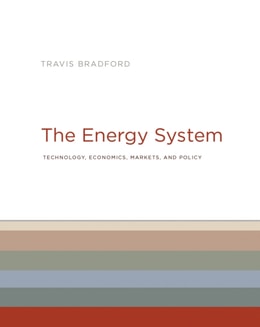
A comprehensive textbook that integrates tools from technology, economics, markets, and policy to approach energy issues using a dynamic systems and capital-centric perspective.
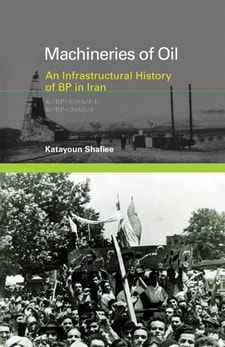
The emergence of the international oil corporation as a political actor in the twentieth century, seen in BP''s infrastructure and information arrangements in Iran.
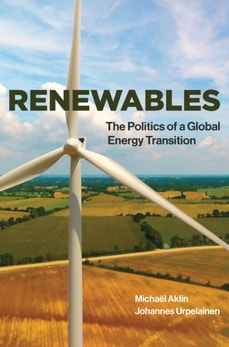
A comprehensive political analysis of the rapid growth in renewable wind and solar power, mapping an energy transition through theory, case studies, and policy.
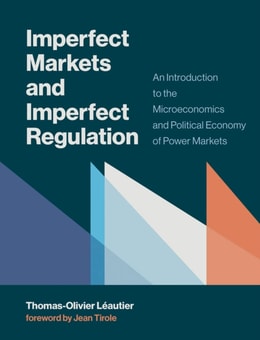
The first textbook to present a comprehensive and detailed economic analysis of electricity markets, analyzing the tensions between microeconomics and political economy.
A comprehensive, coherent strategy for modernizing America''s electricity infrastructure while ensuring affordable, reliable, secure, and environmentally sustainable electricity services.
The economic and political aspects of energy subsidies, viewed both theoretically and empirically, with a focus on fossil fuel subsidies in developing nations.
An objective, comprehensive, and accessible examination of today''s most crucial problem: preserving the environment in the face of society''s insatiable demand for energy.