This book offers a comprehensive examination of the fundamental concepts and principles crucial to the taxation and management of natural resources, specifically tailored to the unique challenges faced by developing African countries.
***BUSINESS BOOK AWARDS 2022 SHORTLISTED TITLE***An insider's view of the challenges that big businesses face in the developing world: the opportunities, pitfalls, political and personal challenges involved.
The availability of low-cost energy from fossil fuels - in particular oil - has been the driving force behind postwar global economic growth, such that the petroleum industry has some of the world's largest companies.
Reduce energy costs and combat climate change with ISO 50001ISO 50001:2018, the international standard for energy management, provides a framework for organisations both large and small to manage and reduce their energy usage and associated costs.
Reduce energy costs and combat climate change with ISO 50001ISO 50001:2018, the international standard for energy management, provides a framework for organisations both large and small to manage and reduce their energy usage and associated costs.
Energy Power Risk: Derivatives, Computation and Optimization is a comprehensive guide presenting the latest mathematical and computational tools required for the quantification and management of energy power risk.
Energy Power Risk: Derivatives, Computation and Optimization is a comprehensive guide presenting the latest mathematical and computational tools required for the quantification and management of energy power risk.
Generating energy from waste is an attractive solution, as governments around the world grapple with the challenges of providing energy security, mitigating carbon emissions and disposing of increasing waste volume.
Generating energy from waste is an attractive solution, as governments around the world grapple with the challenges of providing energy security, mitigating carbon emissions and disposing of increasing waste volume.
As certain oil and gas provinces near the end of their production lives, companies, governments and other stakeholders are turning their attention to decommissioning.
As certain oil and gas provinces near the end of their production lives, companies, governments and other stakeholders are turning their attention to decommissioning.
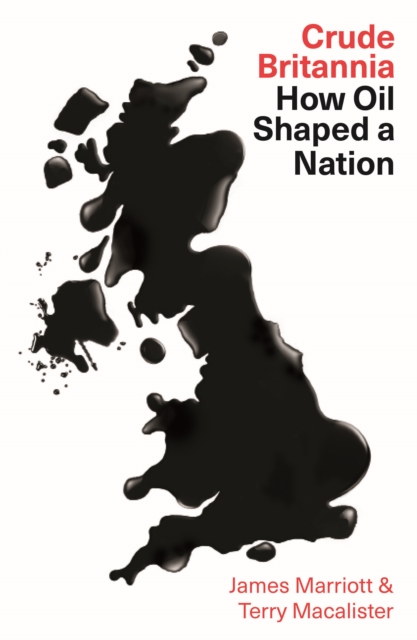
'Dripping with delicious detail' - Aditya ChakraborttyTaking the reader on a journey through North East Scotland, Merseyside, South Wales, the Thames Estuary and London, this is the story of Britain s oil-soaked past, present and future.
Sitting next to the Great Barrier Reef, marinated in coal and gas, the industrial boomtown of Gladstone, Australia embodies many of the contradictions of the 'overheated' world: prosperous yet polluted; growing and developing yet always on the precipice of uncertainty.
The Polar North is known to be home to large gas and oil reserves and its positionholds signifi cant trading and military advantages, yet the maritime boundaries of the region remain ill-defined.
Amidst political upheaval and the decline of the Ottoman Empire, the State of Kuwait emerged as an independent country under British protection in 1899, with Sheikh Mubarak Al Sabah widely accredited as the instrument of its foundation.
The Polar North is known to be home to large gas and oil reserves and its positionholds signifi cant trading and military advantages, yet the maritime boundaries of the region remain ill-defined.
Bridging the technical and the economical worlds of the energy sector and establishing a solid understanding of today's energy supply as a complex system- with these missions in mind, the book at hand compactly describes the fundamentals of electrical power supply in a dialogue between technology and non-technology, between academia and practitioners, and between nations and continents.
The German abandonment of nuclear power represents one of the most successful popular revolts against technocratic thinking in modern times the triumph of a dynamic social movement, encompassing a broad swath of West Germans as well as East German dissident circles, over political, economic, and scientific elites.
The impact of the oil and gas industry - paradoxically seen both as a blessing and a curse on socio-economic development - is a question at the heart of the comparative studies in this volume stretching from Northern Europe to the Caucasus, the Gulf of Guinea to Latin America.
Indispensable for human existence yet increasingly owned and controlled by private capital; the last decade has witnessed an intensifying battle for water.
The development of Africa's oil has greatly accelerated in recent years, with some countries looking at the prospect of almost unimaginable flows of money into their national budgets.
The development of Africa's oil has greatly accelerated in recent years, with some countries looking at the prospect of almost unimaginable flows of money into their national budgets.
In the global North the commoditization of creativity and knowledge under the banner of a creative economy is being posed as the post-industrial answer to dependency on labour and natural resources.
In the global North the commoditization of creativity and knowledge under the banner of a creative economy is being posed as the post-industrial answer to dependency on labour and natural resources.
The UK energy system has experienced radical reform in past decade - privatisation, liberalisation, re-structuring and re-regulation for gas/electricity supply and coal, plus rapid technological change and flexible fiscal policy in offshore oil/gas.
This book provides a comprehensive analysis of Bhutan’s economic growth and productivity dynamics from 1990 to 2022, with a special focus on hydropower development.
This book discusses the requirements and preconditions for transforming the economy in order to achieve defined goals while maintaining and utilizing the efficiency of markets.
Vapour permeation and membrane distillation are two emerging membrane technologies for the production of vapour as permeate, which, in addition to well-established pervaporation technology, are of increasing interest to academia and industry.
Oil is the lifeblood of modern civilization, and the industry that supplies it has been the subject of intense interest and scrutiny, as well as countless books.
In a unique journey from the oil fields of the Caspian Sea to the refineries and financial centres of Northern Europe, James Marriott and Mika Minio-Paluello track the concealed routes along which flows the lifeblood of our economy.
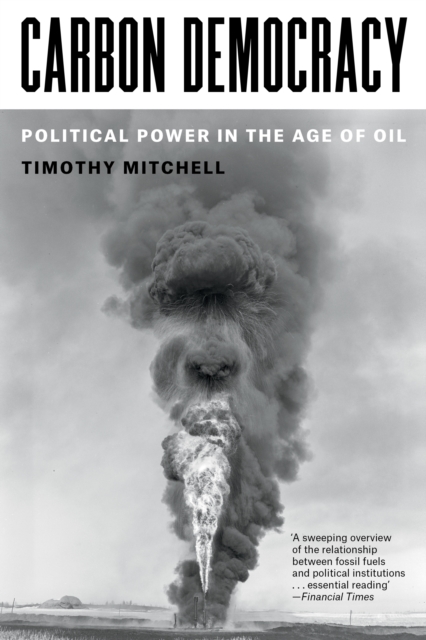
With the rise of coal power, the producers who oversaw its development acquired the ability to shut down energy systems, a threat they used to build the first mass democracies.
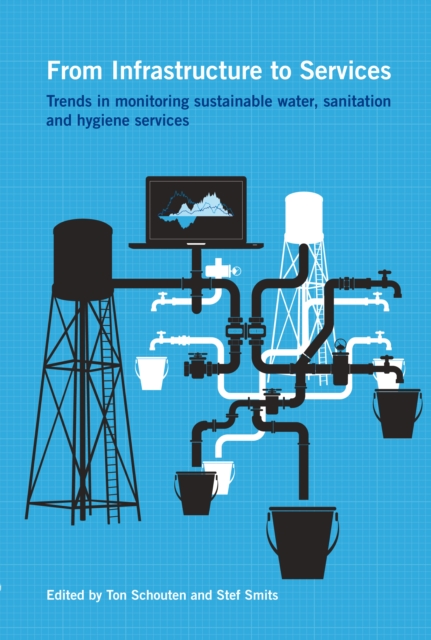
From Infrastructure to Services reveals important breakthroughs in country-led and country-wide monitoring of rural and small towns water supplies; ICT for monitoring sustainable service delivery; monitoring the finance needed for service delivery; monitoring for sanitation and hygiene; and building coherence in global-regional-national monitoring.