Shows how to validate scientifically the marketing claims of chemically stable and well-balanced products to withstand adequately the challenge of competitors and government regulators.
A group of experts, leaders in their fields, provide a formal conjecture on the nature of various aspects of pharmaceutical marketing in the early part of the twenty-first century.
The biopharmaceutical industry has entered an era of unprecedented change and challenge, characterized by increasing pricing pressures, rising rates of attrition in the product development lifecycle, and decreasing scientific innovation.
The rise and rationalization of the industrial phosphates industry have gone hand in hand with the development and maturation of technologies to purify phosphoric acid.
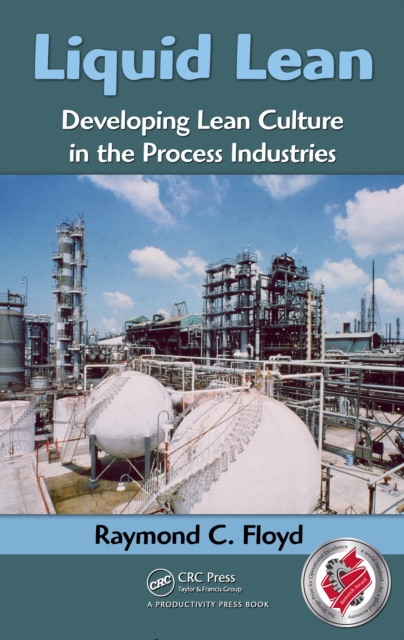
While Lean practices have been successfully implemented into the process industry with excellent results for over 20 years (including the author's own award winning example at Exxon Chemical), that industry has been especially slow in adopting Lean.
Insights and analysis that challenge current thought on consumer branding theory and strategy Pharmaceutical companies need to go beyond simply relying on strong sales forces and innovative research and development to succeed.
While Lean practices have been successfully implemented into the process industry with excellent results for over 20 years (including the author's own award winning example at Exxon Chemical), that industry has been especially slow in adopting Lean.
This updated Second Edition details how marketers, forecasters, and brand planners can achieve optimal success by building internally consistent simulation models to project future behavior of patients, physicians, and R&D processes.
Six Sigma in the Pharmaceutical Industry is the first book to introduce the fundamentals of Six Sigma, examine control chart theory and practice, and explain the concept of variation management and reduction applied specifically to the pharmaceutical industry.
Knowing how to deal with the regulatory issues, understanding the impacts of cleanliness, and recognizing the affect that poor facility layout will have on GMP spaces are only some of the issues an experienced Project Manager must focus on.
During the last two decades, the pharmaceutical industry has been under pressure to reduce development costs and the time needed to bring drugs to market in order to maximize return on investment and bring treatments to patients sooner.
Increasingly, pharmaceutical scientists must not only be specialists in their field but must also be familiar with legislation that governs the use of equipment in their industry.
Encompassing the full spectrum of project management's role and responsibility encountered in the pharmaceutical industry, Pharmaceutical Project Management outlines the key objectives, risks, and challenges of each stage of the pharmaceutical lifecycle, from discovery and preclinical phases through clinical development, manufacturing, registration
From Physick to Pharmacology addresses the important, albeit neglected history of the distribution and sale of medicinal drugs in England from the sixteenth to the twenty-first century.
From Physick to Pharmacology addresses the important, albeit neglected history of the distribution and sale of medicinal drugs in England from the sixteenth to the twenty-first century.
Mergers and acquisitions occur for many legitimate reasons and should be encouraged as a matter of general policy, yet the resulting increase in the level of market concentration and market strength can lead to concerns that certain 'deals' may irreparably damage the market structure and create anti-competitive effects.
Mergers and acquisitions occur for many legitimate reasons and should be encouraged as a matter of general policy, yet the resulting increase in the level of market concentration and market strength can lead to concerns that certain 'deals' may irreparably damage the market structure and create anti-competitive effects.
During the last five years, clinical research and development costs have risen exponentially without a proportionate increase in the number of new medications.
During the last five years, clinical research and development costs have risen exponentially without a proportionate increase in the number of new medications.
Now fully updated for its fourth edition, Pharmacy: What It Is and How It Works continues to provide a comprehensive review of all aspects of pharmacy, from the various roles, pathways and settings of pharmacists to information about how pharmacy works within the broader health care system.
Now fully updated for its fourth edition, Pharmacy: What It Is and How It Works continues to provide a comprehensive review of all aspects of pharmacy, from the various roles, pathways and settings of pharmacists to information about how pharmacy works within the broader health care system.
Drug Discovery and Development, Third Edition presents up-to-date scientific information for maximizing the ability of a multidisciplinary research team to discover and bring new drugs to the marketplace.
Drug Discovery and Development, Third Edition presents up-to-date scientific information for maximizing the ability of a multidisciplinary research team to discover and bring new drugs to the marketplace.
The Handbook of Pharmaceutical Manufacturing Formulations, Third Edition: Volume One, Compressed Solid Products is an authoritative and practical guide to the art and science of formulating drugs for commercial manufacturing.
The Handbook of Pharmaceutical Manufacturing Formulations, Third Edition: Volume One, Compressed Solid Products is an authoritative and practical guide to the art and science of formulating drugs for commercial manufacturing.
This book summarizes the authority of regulatory agencies and programs as they pertain to the cosmetic industry, offers practical advice on how to operate within the regulatory environment, and introduces scientific and regulatory issues that are likely to have an impact on cosmetic manufacturers.
Process industries have a particularly urgent need for collaborative equipment management systems, but until now have lacked for programs directed toward their specific needs.
Process industries have a particularly urgent need for collaborative equipment management systems, but until now have lacked for programs directed toward their specific needs.
A guide through the maze of the pharmaceutical research and development process, Medical Writing in Drug Development fills a gap in the libraries of technical writers, college instructors, and corporate professionals associated with the pharmaceutical process.