Autonomous State provides the first detailed examination of the Canadian auto industry, the country’s most important economic sector, in the post-war period.
This controversial analysis of economic nationalism will interest economists and those concerned with nationalism and the competitive position of Canadian manufacturing.
Published for the Private Planning Association of Canada as part of the Canada in the Atlantic Economy series, this book covers impact of trade liberalization on Canadian agriculture, prospects for trade liberalization in agriculture, as well as trade liberalization and the Canadian pulp and paper industry and trade liberalization and the Canadian furniture industry.
Systematic study of the geography distribution of the wood-processing industry has received recent Soviet attention, yet the results have been disappointing.
In The Capacity to Innovate, Sarah Giest provides insight into the collaborative and absorptive capacities needed to provide public support to local innovation through cluster organizations.
In The Capacity to Innovate, Sarah Giest provides insight into the collaborative and absorptive capacities needed to provide public support to local innovation through cluster organizations.
The widespread condemnation of drastic price increases on life-saving drugs highlights our growing dependency on and vulnerability to international pharmaceutical conglomerates.
The widespread condemnation of drastic price increases on life-saving drugs highlights our growing dependency on and vulnerability to international pharmaceutical conglomerates.
The rise and rationalization of the industrial phosphates industry have gone hand in hand with the development and maturation of technologies to purify phosphoric acid.
While Lean practices have been successfully implemented into the process industry with excellent results for over 20 years (including the author's own award winning example at Exxon Chemical), that industry has been especially slow in adopting Lean.
Second Edition of a Shingo Prize Winner Based on the author's personal experience with Toyota's master teachers and with companies in the midst of great change, Andy and Me: Crisis and Transformation on the Lean Journey, now in its second edition, is a business novel set in a failing New Jersey auto plant focusing on the tribulations of Tom Pappas,
A hands-on guide to adapting Lean principles and the Toyota Production System to high-mix/low-volume environments, Lean Production for the Small Company uses charts, pictures, and easy-to-understand language to describe the methods needed to improve processes and eliminate waste.
The global sourcing of ingredients has created complex supply chains, significant management challenges, and additional regulatory compliance requirements.
The preparation of sterile products using aseptic processing is considered perhaps the most critical process in the pharmaceutical industry and has witnessed continual improvement over the last half century.
Second Edition of a Shingo Prize Winner Based on the author's personal experience with Toyota's master teachers and with companies in the midst of great change, Andy and Me: Crisis and Transformation on the Lean Journey, now in its second edition, is a business novel set in a failing New Jersey auto plant focusing on the tribulations of Tom Pappas,
Insights and analysis that challenge current thought on consumer branding theory and strategy Pharmaceutical companies need to go beyond simply relying on strong sales forces and innovative research and development to succeed.
While Lean practices have been successfully implemented into the process industry with excellent results for over 20 years (including the author's own award winning example at Exxon Chemical), that industry has been especially slow in adopting Lean.
This updated Second Edition details how marketers, forecasters, and brand planners can achieve optimal success by building internally consistent simulation models to project future behavior of patients, physicians, and R&D processes.
Developed by a plant manager who experienced first-hand the challenges to going green in a business environment, Green Intentions provides organizations with a simple, straightforward, and practical approach to green the Green Value Stream (GVS) process that is as mindful as it is profitable.
Six Sigma in the Pharmaceutical Industry is the first book to introduce the fundamentals of Six Sigma, examine control chart theory and practice, and explain the concept of variation management and reduction applied specifically to the pharmaceutical industry.
Knowing how to deal with the regulatory issues, understanding the impacts of cleanliness, and recognizing the affect that poor facility layout will have on GMP spaces are only some of the issues an experienced Project Manager must focus on.
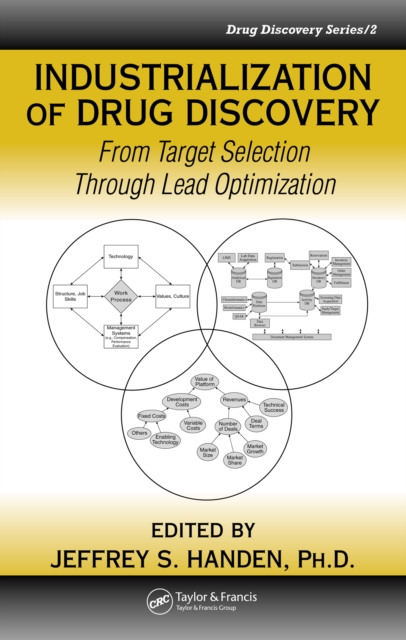
During the last two decades, the pharmaceutical industry has been under pressure to reduce development costs and the time needed to bring drugs to market in order to maximize return on investment and bring treatments to patients sooner.
Increasingly, pharmaceutical scientists must not only be specialists in their field but must also be familiar with legislation that governs the use of equipment in their industry.
Encompassing the full spectrum of project management's role and responsibility encountered in the pharmaceutical industry, Pharmaceutical Project Management outlines the key objectives, risks, and challenges of each stage of the pharmaceutical lifecycle, from discovery and preclinical phases through clinical development, manufacturing, registration
The effect Lean Manufacturing programs have on profit and loss statements during the early months of their implementation often causes them to be viewed as failures.
The definitive guide to product management-updated for a more digital, more global, more competitive business landscapeThe digital age is here to stay.
Coca-Cola is the world's best-known brand, and perhaps the most quintessentially American one: a beverage with no nutritional value, sold variously as a remedy, a tonic and a refreshment.