Regensburg, 1546: a burgher's daughter with a great voice sings before the Emperor Charles V, and the son she bears him will grow up to be Don John of Austria and win Lepanto - but the novel stays with her, and with what the Empire does to a woman it has finished using.
The Marches, married twenty-five years, take the European tour they could not afford as newlyweds - the ship, the Rhine, Carlsbad, a young couple in trouble whom they cannot help minding about.
Virginia in the 1680s: a convict-servant with a gentleman's past, a planter's daughter, and the Tobacco Rebellion - when men went through the fields at night cutting the plants to force the price up.
Six tales so strange that Walpole printed only six copies and told friends they were nonsense written for his own amusement - a princess born of a nose, a king who wants nothing, sentences that fold in on themselves.
Milan under the Austrians, 1848: a singer at La Scala is to give the signal for the rising from the stage, and half the conspirators do not trust her because her mother was English.
A young woman with a fortune and no past that anyone can trace buys her way into the Second Empire's demi-monde and refuses everything it offers her - including a general who is used to being accepted.
A Paris salon, an unhappy marriage, and a woman who runs to Florence to be with a sculptor - until the past follows her there in the form of a man she has not stopped loving.
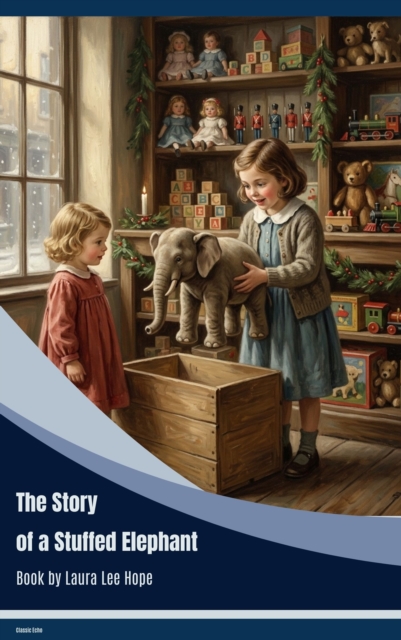
True animal stories gathered for young readers: a grizzly cub raised by hand, a fight with a catamount, a lynx in Canada, a droll fox-trap in the Maine woods, beavers at home and the ships of the desert.
A Norwegian mother spoils her son, protects him from every consequence, and the beautiful hair of the title is the sign of everything she has let him become - until a girl is destroyed by it.
Plassans, December 1851: the coup comes to a small Provencal town, a handful of republicans march out with rifles, and the Rougon family calculates precisely which way to jump.
A country clergyman with a large family, a small fortune and an unshakable good opinion of himself loses the money in the first chapter, and things proceed downhill with perfect cheerfulness.
Akbar at the height of his power, seen from inside the harem and the council chamber alike: the emperor who could not read building a capital, a religion and an empire, and the women whose lives are decided by his moods.
A deformed hermit on a Scottish moor, feared as a warlock, keeps his own counsel while a girl is carried off and a rising is plotted - and the Dwarf knows all of it, because he is not what the country people think.
A Cambridge don of fifty, comfortable and dry, takes a country living and discovers, too late to be dignified about it, that he has fallen in love with a girl of twenty-two.
Berlin, 1740: the old king dies, and the son he beat, imprisoned and forced to watch his friend beheaded takes the throne - and within months has invaded Silesia.
The Zulu century told by an old man to a white hunter: Chaka's rise, the impis, the killing grounds, Umslopogaas who was Chaka's son and did not know it, and Nada, the most beautiful woman in the land.
France, 1360s: a boy of a knightly house is left with a castle, a baby heir and no money, in a country where the Free Companies take what they like - and Bertrand du Guesclin is on the other side.
Severian, Lehrling in der Gilde der Folterer, verfugt uber eine Fahigkeit, die Fluch und Segen zugleich ist: Nichts, was er erlebt, kann er je vergessen.
Olaf, a Northman, breaks a barrow to take a necklace from a dead woman and is set on a road that carries him to Byzantium - to the Empress Irene, the Varangian guard, and a blinding.
A child raised by Christian Science parents is left with a rich grandfather who has decided to dislike her, and proceeds to reorganise his household by declining to be unhappy.
Lithuanian immigrant Jurgis Rudkus arrives in Chicago chasing the American dream and finds instead the brutal, filthy machinery of the meatpacking industry - a world of exploitation, corruption, and unsanitary horrors that Upton Sinclair exposed in unflinching detail.
A woman who remembers a life five thousand years ago meets, on a yacht in the Hebrides, the man she loved then - and the book explains, at length and in earnest, the electric theology behind it.
Three years after Zenda: the queen's letter is in the wrong hands, Rupert of Hentzau is back in Ruritania, and the Englishman who once impersonated a king is asked to do it again - for a stake that cannot be given back.
The musketeers are middle-aged, the young king is in love with Louise de La Valliere, and Fouquet is spending the treasury on a house that will destroy him.
The Pendyce estate must pass intact to the eldest son, and the son has taken up with a married woman - so the squire, the parson and the family solicitor set about correcting him.
A Dublin childhood, a Jesuit education, a sermon on hell that runs for pages, and a young man who decides that neither family, nor country, nor church will have him.
The chapter cut from Dracula and eight other tales, published by Stoker's widow two years after his death: a traveller stranded on Walpurgis Night among the tombs, a house that takes its rent in visitors, a squaw and a cat.
A judge is destroyed by a financier who owns the newspapers, the senators and the courts - and the judge's daughter goes into the great man's house under another name to find the proof.
Nanda Brookenham comes downstairs - she is old enough now to sit in her mother's drawing room, where the talk is not meant for her, and the talk is what the room is for.
Chauvelin has learned who the Scarlet Pimpernel is, and this time he does not want an arrest - he wants Sir Percy Blakeney to walk into Boulogne of his own accord and choose between his wife and his honour.
A Senegalese girl is bought as an infant and raised in a Paris salon as an aristocrat's ward - loved, educated, and then old enough to notice that no one will marry her.
Katherine Mortimer's diary from sixteen to middle age: bad temper, vanity, a marriage, children, deaths, and the slow uphill business of becoming good.
Forced by her family's declining fortunes to become a governess, young Agnes Grey enters the households of the wealthy expecting purpose and connection - and finds instead spoiled, cruel charges and employers who treat her as barely human.