In an expansion of his 2012 Robson Classical Lectures, Clifford Ando examines the connection between the nature of the Latin language and Roman thinking about law, society, and empire.
In an expansion of his 2012 Robson Classical Lectures, Clifford Ando examines the connection between the nature of the Latin language and Roman thinking about law, society, and empire.
Through the Lens of Anthropology is a concise but comprehensive introductory textbook that uses the twin themes of food and sustainability to illustrate the connected nature of anthropology's four major subfields: archaeology, and biological, cultural, and linguistic anthropology.
Through the Lens of Anthropology is a concise but comprehensive introductory textbook that uses the twin themes of food and sustainability to illustrate the connected nature of anthropology's four major subfields: archaeology, and biological, cultural, and linguistic anthropology.
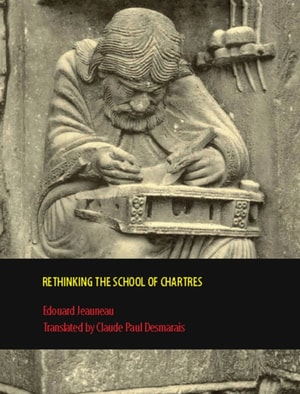
In this brief essay, esteemed medieval historian Edouard Jeauneau examines a much-debated question in medieval intellectual history: did the famous School of Chartres actually exist?
In this brief essay, esteemed medieval historian Edouard Jeauneau examines a much-debated question in medieval intellectual history: did the famous School of Chartres actually exist?
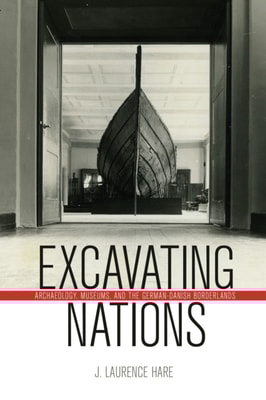
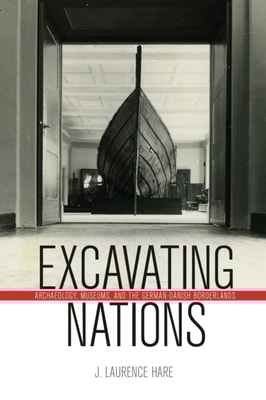
Excavating Nations traces the history of archaeology and museums in the contested German-Danish borderlands from the emergence of antiquarianism in the early nineteenth-century to German-Danish reconciliation after the Second World War.
Excavating Nations traces the history of archaeology and museums in the contested German-Danish borderlands from the emergence of antiquarianism in the early nineteenth-century to German-Danish reconciliation after the Second World War.
Since the beginning of the twentieth century, Toronto’s Kensington Market neighbourhood has been home to a multicultural mosaic of immigrant communities: Jewish, Portuguese, Chinese, South Asian, Caribbean, and many others.
Since the beginning of the twentieth century, Toronto’s Kensington Market neighbourhood has been home to a multicultural mosaic of immigrant communities: Jewish, Portuguese, Chinese, South Asian, Caribbean, and many others.
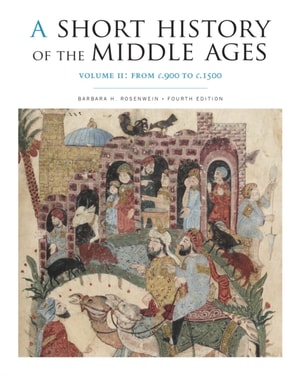
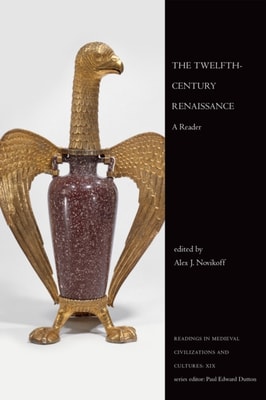
The twelfth century was a time of new ideas and creative innovation spurred on by patron-monarchs like King Henry II and Eleanor of Aquitaine, poets like Marie de France and Chretien de Troyes, lovers and intellectuals like Abelard and Heloise, and religious thinkers like Bernard of Clairvaux and Hildegard of Bingen.
The twelfth century was a time of new ideas and creative innovation spurred on by patron-monarchs like King Henry II and Eleanor of Aquitaine, poets like Marie de France and Chretien de Troyes, lovers and intellectuals like Abelard and Heloise, and religious thinkers like Bernard of Clairvaux and Hildegard of Bingen.
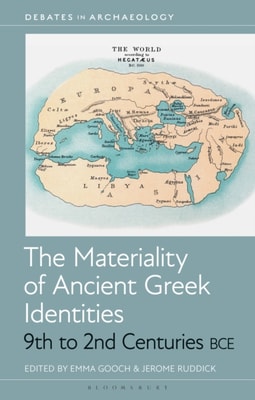
Material culture is the physical trace of what was used to construct and define identities in the past, and is therefore a key source of evidence for archaeologists and ancient historians investigating ancient identities.
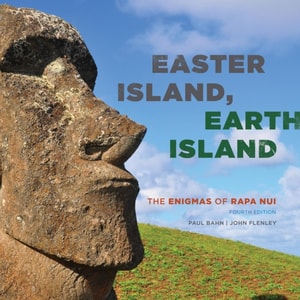
Easter Island, isolated deep in the South Pacific and now a World Heritage Site, was home to a fascinating prehistoric culture-one that produced massive stone effigies (the moai) and the birdman cult-and yet much of the island's past remains shrouded in mystery.
The internment of civilian and military prisoners became an increasingly common feature of conflicts in the twentieth century and into the twenty-first.
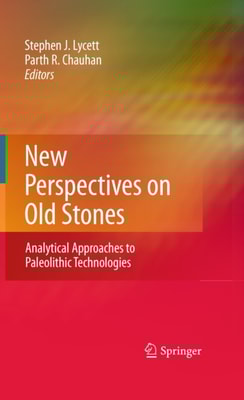
Procedures by which archaeological stone tools have been analyzed have tradition- ally operated on an apprenticeship model, whereby a novice acquires competency at the elbow of a grizzled but revered expert in the field.
As an archaeologist with primary research and training experience in North American arid lands, I have always found the European Stone Age remote and impenetrable.
With just 400 pages, this title provides readers with the results of recent research from some of the world's leading historians of astronomy on aspects of Arabic, Australian, Chinese, Japanese, and North and South American astronomy and astrophysics.
Maritime cultural landscapes are collections of submerged archaeological sites, or combinations of terrestrial and submerged sites that reflect the relationship between humans and the water.
Archaeology, as with all of the social sciences, has always been characterized by competing theoretical propositions based on diverse bodies of locally acquired data.
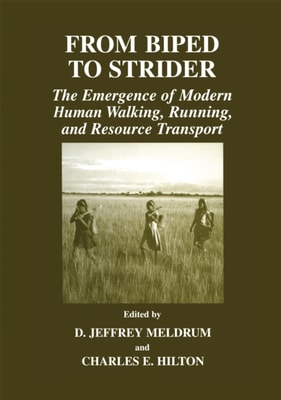
The inspiration for this volume of contributed papers stemmed from conversations between the editors in front of Chuck Hilton's poster on the determinants of hominid walking speed, presented at thel998 meetings of the American Association of Physical Anthropologists (AAPA).
The area claimed by the British Empire as Western Australia was primarily colonized through two major thrusts: the development of the Swan River Colony to the southwest in 1829, and the 1863 movement of Australian born settlers to colonize the northwest region.
Newfoundland lies at the intersection of arctic and more temperate regions and, commensurate with this geography, populations of two Amerindian and two Paleoeskimo cultural traditions occupied Port au Choix, in northern Newfoundland, Canada, for centuries and millennia.
Since the 1960s, x-ray fluorescence spectrometry (XRF), both wavelength and energy-dispersive have served as the workhorse for non-destructive and destructive analyses of archaeological materials.