Since its inception, paleoanthropology has been closely wedded to the idea that big-game hunting by our hominin ancestors arose, first and foremost, as a means for acquiring energy and vital nutrients.
European Prehistory: A Survey traces humans from their earliest appearance on the continent to the Rise of the Roman Empire, drawing on archaeological research from all over Europe.
There are few questions more central to understanding the prehistory of our species than those regarding the institutionalization of social inequality.
Long before the advent of the global economy, foreign goods were transported, traded, and exchanged through myriad means, over short and long distances.
In recent years, scholars have emphasized the need for more holistic subsistence analyses, and collaborative publications towards this endeavor have become more numerous in the literature.
To Write What one Could Not Tell Anyone You who live in all tranquility So warm and comfortable in your houses, You who come home at night to find The table laid and friendly faces around you, Consider if this is a man, He who toils in the mud, Who knows no rest, Who fights for a crust of bread, Who dies for the slightest reason.
The significance of food and feasting to Pre-Columbian Mesoamerican cultures has been extensively studied by archaeologists, anthropologists and art historians.
Archaeology - the study of human cultures through the analysis and interpretation of artefacts and material remains - continues to captivate and engage people on a local and global level.
In 1901 a rich collection of extracts from documents relating to witch beliefs and witch trials in the Middle Ages - Hexenwahns und der Hexenverfolgung in Mittelalter - was published in Bonn.
The volume traces the controversy that revolves around the bio-cultural relationships of Archaic (Neanderthal) and Modern humans at global and regional, Levantine scales.
Jeremy Bentham's law of marriage is firmly based on the principle of utility, which claims that all human actions are governed by a wish to gain pleasure and avoid pain, and on the proposition that men and women are equal.
What were the principal factors that influenced and shaped the behaviour of the gentry during the Wars of the Roses, from 1455 at the first battle of St Albans to the final encounter at Stoke in 1487?
This is the first study to examine the rise and fall of a medieval religious group, the Order of Apostles, that began with orthodox support but ended in the fires of heresy.
By utilising the latest research, readers will be given a complete picture of the way Britain fought the Cold War, moving the focus away from the now familiar crises of Suez and Cuba and onto the themes that underpinned the British war strategy.
Elizabeth Rees, using this archaeological and literary evidence, has produced a guidebook to major sites in the British Isles where the Celtic saints lived and worked.
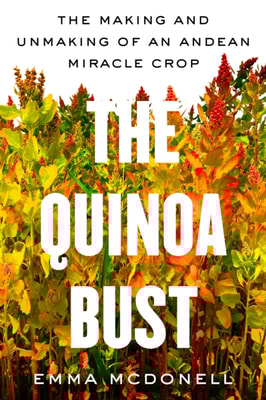
Quinoa rose to global stardom pitched as an unparalleled sustainable development opportunity that heralded a bright future for rural communities devastated by decades of rural-urban migration, civil war, and state neglect.
Forensic taphonomy is the study of the postmortem changes to human remains, focusing largely on environmental effects including decomposition in soil and water and interaction with plants, insects, and other animals.
This reference, now in its second edition, is a comprehensive guide that focuses on the practical aspects of excavating and recovering human remains, as well as any associated evidence, from crime scenes.
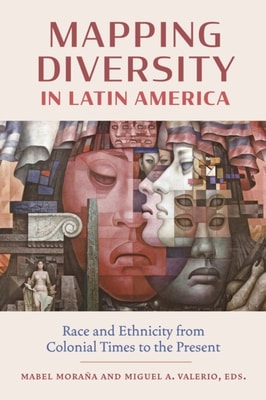
Mapping Diversity in Latin America offers ample critical coverage of recent approaches to the historical study of race and ethnicity in Latin America since the arrival of Spanish and Portuguese colonizers to the present.
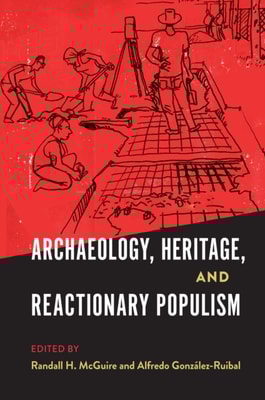
A timely collection on the role of public archaeology inan era of reactionary populismReactionary populism, seen inradical anti-intellectual movements around the globe, is changing how politicsare practiced and how people view themselves and others.
Presents archaeological evidence from the Azerbaijan-Japan excavations, revealing insights into Mesolithic to Neolithic transition and farming communities in the South Caucasus.
A thrilling study of the greatest of all epic poems, by one of the world's leading classicistsHomer's Iliad is the famous epic poem set among the tales of Troy.