This volume presents a series of studies of the wine from Hispania Citerior-Tarraconensis traded in amphorae, with the aim of demonstrating (as has recently been done for the amphora production) the existence of different trade dynamics, according to individual cases, territories and periods.
Egyptian Cultural Identity in the Architecture of Roman Egypt (30 BC-AD 325) considers the relationship between architectural form and different layers of identity assertion in Roman Egypt.
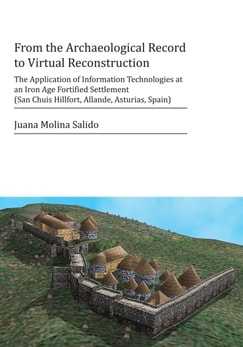
From the Archaeological Record to Virtual Reconstruction' describes the use of New Information Technologies (IT) for the analyses and interpretation of archaeological record of the San Chuis Hillfort (San Martin de Beduledo, Allande, Asturias, Spain).
This book focuses on the characteristics and the development of the stone vessel industry in the Near East during the Iron Age and the Persian period (c.
This is the first dedicated and comprehensive study of glass beads from Early Medieval Ireland, presenting the first national classification, typology, dating, symbology and social performance of glass beads.
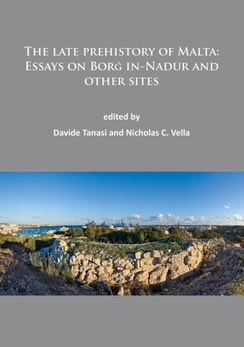
Borg in-Nadur, on the south-east coast of the island of Malta, is a major multi-period site, with archaeological remains that span several thousand years.
The themes of this volume are concerned with archaeological, historical, linguistic, anthropological, geographical and other investigations across the vast area (and different regions) through which the Argonauts travelled in seeking to return from Colchis: from the eastern shore of the Black Sea and the mouth of the Danube to the Adriatic.
Whereas animals are a frequent depiction on gemstones within the Greek and Roman periods, and play a key role in symbolic representations on these engraved gems, they have generally been overlooked with little in the way of focussed academic study.
This volume brings together a group of peer reviewed papers, most of them presented at a workshop held at the Institute of Archaeology, University College London.
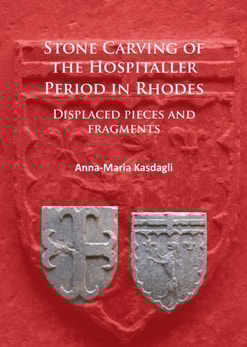
The work presents 230 stone carvings of the Hospitaller period in Rhodes (1309-1522), which for various reasons are no longer in their original setting.
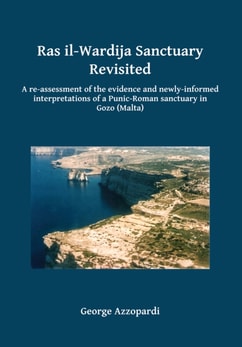
The secluded sanctuary on the coastal promontory of Ras il-Wardija on the central Mediterranean island of Gozo (near Malta) constitutes another landmark on the religious map of the ancient Mediterranean.
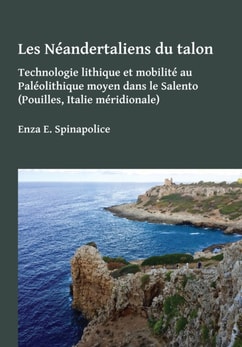
Salento is a peninsula in Southern Italy, the heel of the Italian boot, characterised both by an abundance of Middle Palaeolithic sites and a scarcity of raw material suitable for knapping.
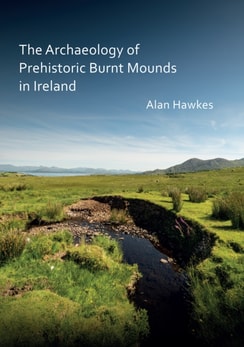
This book details the archaeology of burnt mounds (fulachtai fia) in Ireland, one of the most frequent and under researched prehistoric site types in the country.
The number and density of megalithic chambered cairns in the Isles of Scilly, a tiny archipelago that forms the most south-westerly part of the British Isles, has been remarked upon since the 18th century.
The Nordic Bronze Age Symposium began modestly in 1977 with 13 participants, and has now expanded to over 120 participants: a tenfold increase that reflects the expanding role of Bronze Age research in Scandinavia, not least amongst younger researchers.
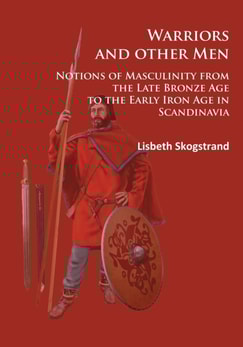
What is considered masculine is not something given and innate to males but determined by cultural ideas and ideals constructed through performative practices – today and in the past.
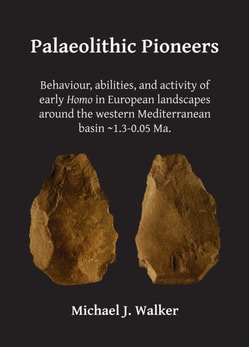
Archaic humans were present for over a million years in western Mediterranean Europe where they left very many traces of their early stone-age activities and behaviour, and sometimes even human skeletal remains.
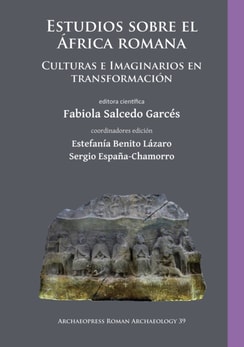
This collective work, carried out by both senior and beginning researchers, is for those scholars who have their gaze fixed on the fascinating mosaic of cultures that was the North-African world from the moment Rome appeared in the region.
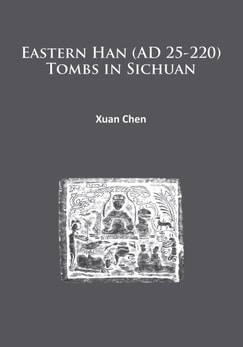
This work explores the many factors underlying the extended popularity of the cliff tomb, a local burial form in the Sichuan Basin in China during the Eastern Han dynasty (AD 25-220).
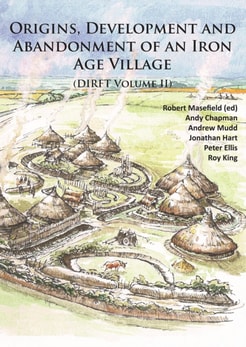
This volume is the second of two reports on archaeological excavations undertaken ahead of the eastern expansion of Daventry International Rail Freight Terminal (DIRFT) which lies in the northern watershed region of Northamptonshire at its border with Warwickshire.
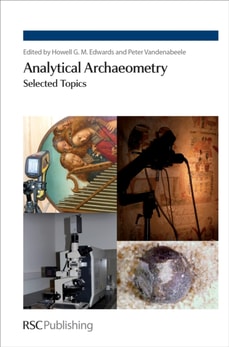
Analytical Archaeometry describes this interesting and challenging field of research - on the border between natural sciences (chemistry, spectroscopy, biology, geology) and humanities (archaeology, (art-)history, conservation sciences).
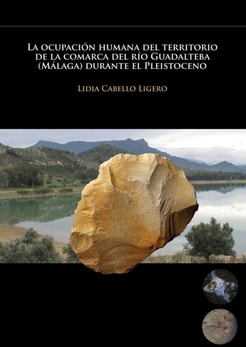
This investigation exhaustively gathers the archaeological evidence of the Palaeolithic human settlement in the Guadalteba river region (Malaga, Spain) during the Pleistocene.
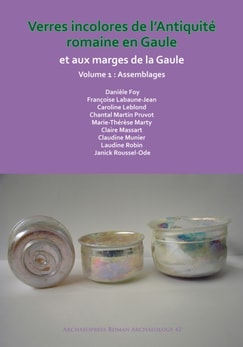
Colourless glass, deliberately decolorized with manganese or antimony, became prominent between the middle of the 1st century AD and the beginning of the 4th century.
Transformationpresents a diachronic investigation providing a rich case study as well as an approach tracing the contours of a category of Roman material culture defined by the Roman period technique of openwork carving.
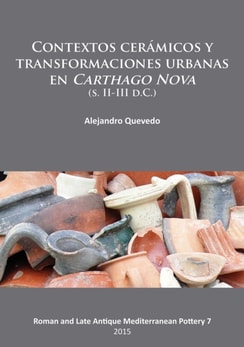
The transition process of the Roman city between the Early Roman period and Late Antiquity is difficult to understand due to the absence of urban models and the decline in epigraphy.