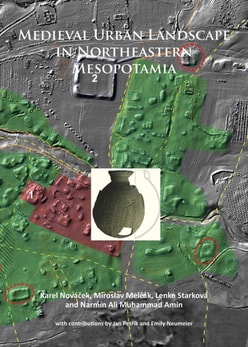
More than fifteen sites of either confirmed or conjectured urban status existed between the 6th and 19th centuries in the particular region of northeastern Mesopotamia, bounded by the rivers Great Zab, Little Zab and Tigris.
In a world without plastics, ceramics, alongside organic containers, were used for almost every substance which required protection or containment: from perfume to porridge.
The scholarship assembled in this volume was first presented at the 79th Annual Meeting of the Society for American Archaeology (SAA) in Austin, Texas, in April 2014.
The investigation of the Roman villa and its economic structures in the western provinces of the Roman Empire has clearly shown that rural settlement developed at different paces and intensities that largely depended on the specific region in which a villa landscape was intended and created.
These two barrows in the parish of Tixall, north of Stafford, were excavated by the StokeonTrent Museum Archaeological Society between the years 1986 and 1994.
In scholarly literature, there is much attention given to the Hittites and the Mycenaean Greeks, but the Luwians of Western Anatolia are notoriously neglected.
The honorand of this volume, Matti Egon, has been a great benefactor to museums, schools, universities and hospitals in the UK and also in Greece: all areas that her background and life's interests have made dear to her.
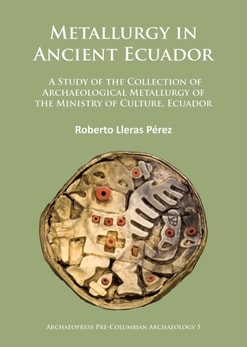
Metallurgical activity was present in Ecuador from at least 1500 BC; by around the beginning of the Common Era metallurgical manufacture and use had extended to most of the Costa and Sierra.
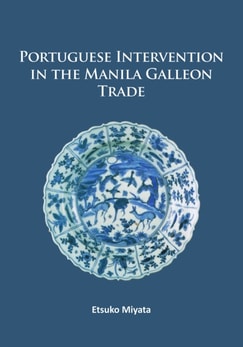
In this study of the Portuguese intervention in the Manila Galleon Trade, Etsuko Miyata explores its history through a new approach: the examination of Chinese ceramics.
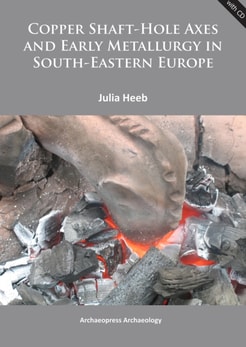
Although the copper axes with central shaft-hole from south-eastern Europe have a long history of research, they have not been studied on a transnational basis since the 1960s.
Rural Settlement in Britain (1977) examines the roots of rural settlements prior to the Domesday Book of 1086 and their evolution and changes up to the twentieth century.
Rural Settlement in Britain (1977) examines the roots of rural settlements prior to the Domesday Book of 1086 and their evolution and changes up to the twentieth century.
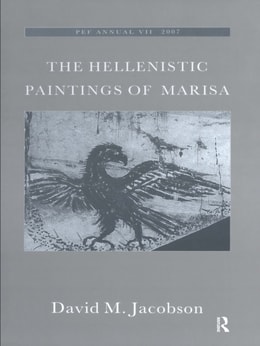
In early June 1902, John Peters, an American theologian, and Hermann Thiersch, a German classical scholar, were alerted to the discovery of two painted burial caves at Marisa/Beit Jibrin, less than 40 miles (62 km) by road southwest from Jerusalem.
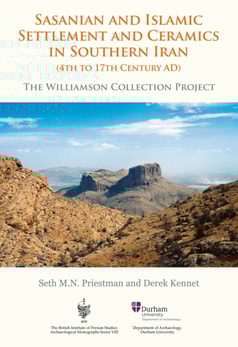
This monograph comprises the final publication of a study supported by the British Institute of Persian Studies and undertaken by Seth Priestman and Derek Kennet at the University of Durham.
This book explores and critiques the underlying assumption that a binary gender system and patriarchal norms were universal in Bronze Age Europe through a careful analysis of burial practice in Ireland and Scotland.
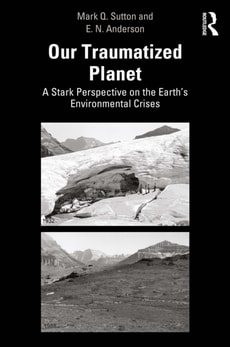
Our Traumatized Planet explores the state of the environment and some of the major issues faced today and asks what we can learn and apply from contemporary traditional peoples, ancient societies, and our own successes and failures.
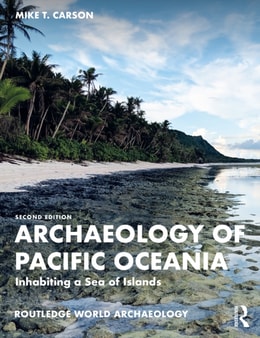
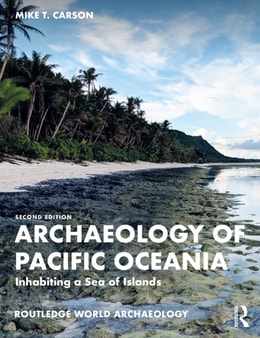
Archaeology of Pacific Oceania, now in its second edition, offers a state-of-the-art and fully detailed chronological narrative of how Pacific Oceania came to be inhabited over a long time scale, posing fundamental questions both for Pacific Oceania and for global archaeology.
Archaeology of Pacific Oceania, now in its second edition, offers a state-of-the-art and fully detailed chronological narrative of how Pacific Oceania came to be inhabited over a long time scale, posing fundamental questions both for Pacific Oceania and for global archaeology.
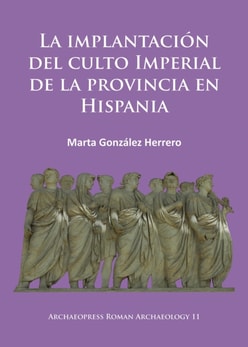
The aim of this study is to show how the Imperial Cult was introduced and organised in provincial Hispania, and examines the collaboration with the Romanised native elites who came from Lusitania, Baetica and Hispania Citerior.
The Roman Cemetery at Nemesbod belonged to a settlement or a villa which was located on the territory of the Roman colony of Savaria (present day Szombathey, Hungary) in Pannonia.
This analysis is concerned with the dating of megaliths in Europe and is based on 2410 available radiocarbon results from pre-megalithic and megalithic sites, and to the megaliths contemporaneous contexts and the application of a Bayesian statistical framework.
This work investigates a large assemblage of potentially late-dated Roman ceramics excavated in the early 1990s during rescue interventions in Vigo (N/E Spain) and its surroundings.
First published in 1929, The Mystery of the Great Pyramid attempts to unravel the secrets of the Great Pyramid by drawing parallels with the rituals in the Book of the Dead.
This book explores routes of interaction and exchange in the Southern Maya Area, a zone that had both short- and long-distance trade and whose natural resources were exploited by merchants and rulers, colonists and entrepreneurs during Olmec, Teotihuacan, Maya, Aztec, colonial and modern times.
First published in 1929, The Mystery of the Great Pyramid attempts to unravel the secrets of the Great Pyramid by drawing parallels with the rituals in the Book of the Dead.
First published in 1979 this facsimile edition of Jeffrey Spencer’s comprehensive study provides a detailed account of the brick architecture of ancient Egypt.
This book explores routes of interaction and exchange in the Southern Maya Area, a zone that had both short- and long-distance trade and whose natural resources were exploited by merchants and rulers, colonists and entrepreneurs during Olmec, Teotihuacan, Maya, Aztec, colonial and modern times.
Ground-penetrating radar is a near-surface geophysical technique that can provide three-dimensional maps and other images of buried archaeological features and associated stratigraphy in a precise way.
First published in 1979 this facsimile edition of Jeffrey Spencer’s comprehensive study provides a detailed account of the brick architecture of ancient Egypt.
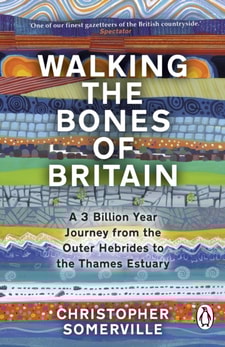
Somerville s infectious enthusiasm and wry humour infuse his journey from the Isle of Lewis to southern England, revealing our rich geological history with vibrant local and natural history Observer A meticulous exploration of the ground beneath our feet.
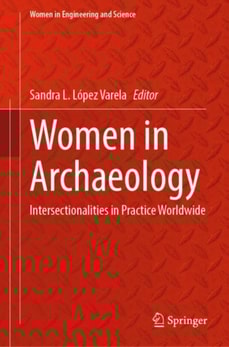
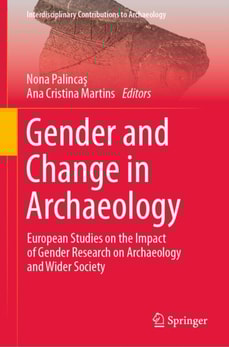
This volume presents the various ways in which the study of gender makes a difference in archaeological research, the archaeological academic milieu and the wider public's thinking about gender and considers avenues of future development.