A small record consisting of six to seven lines that has been published by eminent epigraphists several times, would require a fresh interpretation was almost beyond imagination.
A small record consisting of six to seven lines that has been published by eminent epigraphists several times, would require a fresh interpretation was almost beyond imagination.
Provides an expansive view of the full field of linguistic anthropology, featuring an all-new team of contributing authors representing diverse new perspectives A New Companion to Linguistic Anthropology provides a timely and authoritative overview of the field of study that explores how language influences society and culture.
This book, built around the study of the representation of age and identity in 23,000 Latin funerary epitaphs from the Western Mediterranean in the Roman era, sets out how the use of age in inscriptions, and in turn, time, varied across this region.
This book, built around the study of the representation of age and identity in 23,000 Latin funerary epitaphs from the Western Mediterranean in the Roman era, sets out how the use of age in inscriptions, and in turn, time, varied across this region.
Explores the Irish Mesolithic - the period after the end of the last Ice Age when Ireland was home to hunter-gatherer communities, mostly from about 10,000-6,000 years ago.
Theorizing Archaeological Museum Studies works towards reconnecting archaeological practice, the theoretical richness of archaeology, and museum studies.
Theorizing Archaeological Museum Studies works towards reconnecting archaeological practice, the theoretical richness of archaeology, and museum studies.
»Eine Liebeserklärung an die Archäologie«Frankfurter Allgemeine ZeitungGarküchen, ein Sklavenzimmer, griechische Theater, Villen, Thermen und Tempel – die Ausgrabungen in Pompeji offenbaren eine Welt.
People of the Earth is a narrative account of the prehistory of humankind from our origins over 6 million years ago to the first pre-industrial states, beginning about 5,000 years ago.
People of the Earth is a narrative account of the prehistory of humankind from our origins over 6 million years ago to the first pre-industrial states, beginning about 5,000 years ago.
The shift from a hunting and gathering economy to a productive economy, based on the domestication of plants and animals, is one of the most important changes in human history.
The shift from a hunting and gathering economy to a productive economy, based on the domestication of plants and animals, is one of the most important changes in human history.
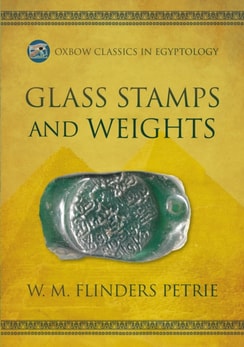
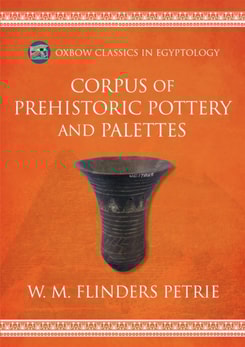
Facsimile of volume of detailed catalog prepared by Flinders Petrie on artifacts largely collected from his Egyptian explorations of a series of glass stamps of Egyptian manufacture that were used from the Roman to Abbasid period variously as tokens, counters, weights, or attached to glass cups as indications of measure.
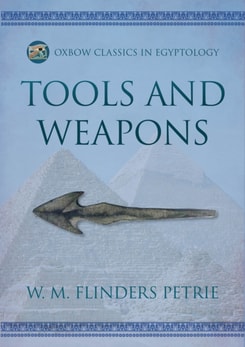
Facsimile edition of the 1974 reissue of Flinders Petrie’s 1917 pioneering typological catalog of Egyptian metal, wooden and composite tools and weapons, one of a number of such catalogs to be reissued in this new series.
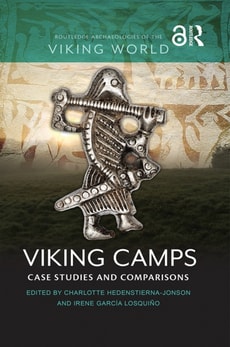
This book is the coming together of several disciplines under the thematic umbrella of Viking Camps and provides the very latest research presented by the leading researchers in the field, making it the most comprehensive compilation of the phenomenon of Viking camps to date.
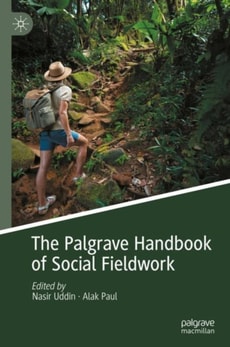
This handbook offers epistemologically and ontologically important personal accounts of academic and professional researchers having long-term intensive, comprehensive and ethnographic fieldwork in various social settings and versatile regional contexts across the globe.
By exploring the processes of collecting, which challenge the bounds of normally acceptable practice, this book debates the practice of collecting difficult objects, from a historical and contemporary perspective; and discusses the acquisition of objects related to war and genocide, and those purchased from the internet, as well as considering human remains, mass produced objects and illicitly traded antiquities.
Winner, 2020 Association for the Study of Food and Society Book Award, Edited Volume Long before the founding of the Jamestown, Virginia, colony and its Starving Time of 1609-1610-one of the most famous cannibalism narratives in North American colonial history-cannibalism played an important role in shaping the human relationship to food, hunger, and moral outrage.
Significant historic and archaeological sites affiliated with two-spirit, lesbian, gay, bisexual, transgender, and queer history in the United States are examined in this unique volume.
Nutritional Anthropology and public health research and programming have employed similar methodologies for decades; many anthropologists are public health practitioners while many public health practitioners have been trained as medical or biological anthropologists.
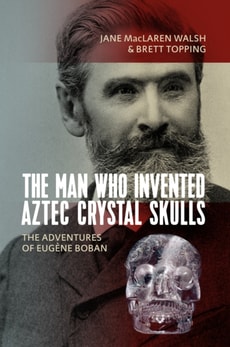
Eugene Boban began life in humble circumstances in Paris, traveled to the California Gold Rush, and later became a recognized authority on pre-Columbian cultures.
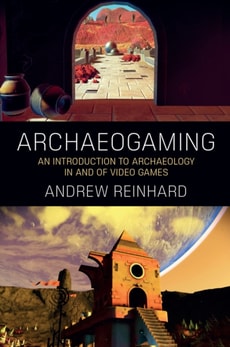
A general introduction to archeogaming describing the intersection of archaeology and video games and applying archaeological method and theory into understanding game-spaces.
In the first book-length treatise on historical ecology of the West Indies, Island Historical Ecology addresses Caribbean island ecologies from the perspective of social and cultural interventions over approximately eight millennia of human occupations.
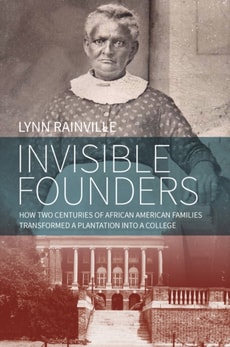
Literal and metaphorical excavations at Sweet Briar College reveal how African American labor enabled the transformation of Sweet Briar Plantation into a private women s college in 1906.
Stressing the interdisciplinary, public-policy oriented character of Cultural Resource Management (CRM), which is not merely applied archaeology, this short, relatively uncomplicated introduction is aimed at emerging archaeologists.
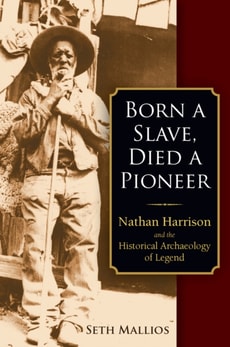
Spectacular recent discoveries from the Nathan Harrison cabin site offer new insights and perspectives into the life of this former slave and legendary California homesteader.
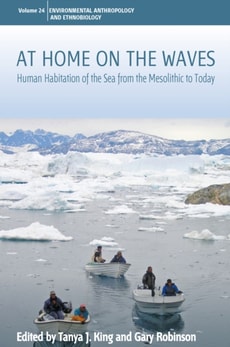
Contemporary public discourses about the ocean are routinely characterized by scientific and environmentalist narratives that imagine and idealize marine spaces in which humans are absent.
The racialization of immigrant labor and the labor strife in the coal and textile communities in northeastern Pennsylvania appears to be an isolated incident in history.
Colonial encounters between indigenous peoples and European state powers are overarching themes in the historical archaeology of the modern era, and postcolonial historical archaeology has repeatedly emphasized the complex two-way nature of colonial encounters.
Departing from an ethnographic collection in London, From Storeroom to Stage traces the journey of its artefacts back to the Romanian villages where they were made 70 years ago, and to other places where similar objects are still in use.
Travis Rayne Pickering argues that the advent of ambush hunting approximately two million years ago marked a milestone in human evolution, one that established the social dynamic that allowed our ancestors to expand their range and diet.