Menschliche Überreste (körperliche Überreste der biologischen Art Homo sapiens) liegen in wissenschaftlichen Sammlungen und Museen in vielfältiger Form vor.
Dieses praxisorientierte Buch stellt Porträts von 22 in der Literatur bisher eher weniger berücksichtigten Ländern vor, um dann ausgehend davon die Kultur des Landes zu erklären.
Das Buch befasst sich mit Nahrungslandschaften, sogenannten ‚foodscapes‘, die ein noch recht junges Forschungsfeld der Sozialwissenschaften darstellen und im Kontext von Fragen der räumlichen Ungleichheit ab Mitte der 1990er Jahre erstmals thematisiert wurden.
This volume is a compilation of results from sessions of the Second International Conference on the Replacement of Neanderthals by Modern Humans, which took place between November 30 and December 6, 2014, in Hokkaido, Japan.
As the Greater Mekong Subregion (GMS) has made considerable progress in food security, addressing health, safety, and environmental concerns is also essential.
This book contributes to the current discussion on climate change by presenting selected studies on the ways in which past human groups responded to climatic and environmental change.
This book outlines the latest research in Fanshan by the archaeologist, a man-made hathpace cemetery, on which is located the inner city of Liangzhu historical site at northwest area.
This book provides comprehensive information on enlargement of methodological and empirical choices in a multidisciplinary perspective by breaking down the monopoly of possessing tribal studies in the confinement of conventional disciplinary boundaries.
This book is one of the first to systematically explore cultural interactions between the Northern Zone of China and the Eurasian Steppe, with a focus on the formation process of the Xiongnu Confederation and the Silk Road.
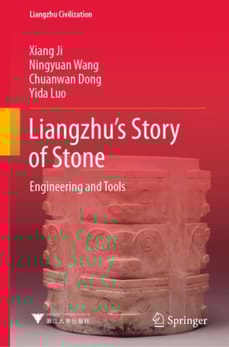
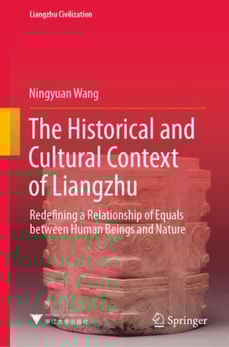
This book explains how the walls of Liangzhu City were made from bedding stones and mud, with the total area of bedding stones covering roughly 290,000 square meters.
This book provides the first synthetic review of the literature on cultural roads and itineraries, providing a template for developing typologies and clarity on existing research.
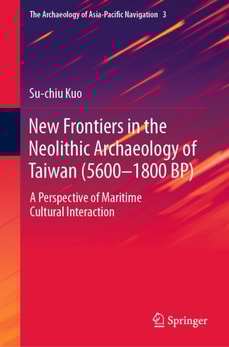
This book summarizes the systematic research on the Neolithic cultures of Taiwan, based on the latest archaeological discoveries, and focusing on the maritime interactions between mainland southeast China, Taiwan, and southeast Asia during (5600-1800 BP).
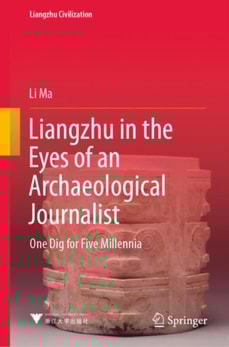
This book traces archaeological exploration and discoveries as early as 2012 and reveals Liangzhu culture by reviewing seven years of archaeological findings at the Liangzhu historical site, developments in archaeology history, the psychological journeys of archaeologists, as well as the collision of schools of thought.
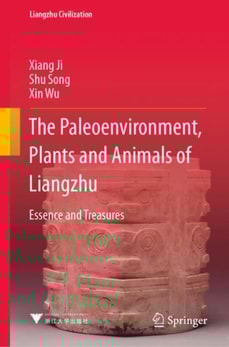
This book summarizes the latest archeological findings on Liangzhu culture and outlines the rise and fall of Liangzhu society in terms of its environment, flora and fauna.
This book initiatively and systematically presents the latest discoveries in the context of shipwreck archaeology in China, telling the exciting story of the wrecks' distribution, connotation and the research advances and empirically reconstructing the development of overseas trade and maritime cultures along the Maritime Silk Road, which flourished for more than 2000 years.
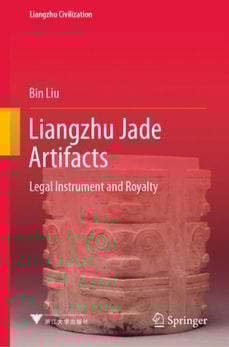
This book clarifies the advent of Liangzhu Culture and analyses the morphology, structure and internal social organization of grass-root settlements, medium-size settlements and the ancient city of Liangzhu, as well as the religious beliefs, ideology and power mechanisms represented by jade.
This book presents outstanding articles addressing various aspects related to the ancient Silk Road, in particular the cultural, political, and economic interactions that took place among the civilizations and cultures on the Eurasian continent.
This book presents up-to-date geoscience technologies for heritage investigations and conservation, covering various sub-disciplines of geophysics, geodesy, 3D laser scanning technology, hydrogeology, and rock mechanics applied to the exploration of new heritage sites, mapping and visualization, as well as hazard mitigation.
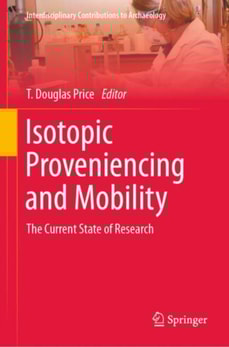
This volume provides a state-of-the-art presentation and discussion of procedures, especially what works and what doesn't - on isotopic proveniencing, learned over the last 30 years.
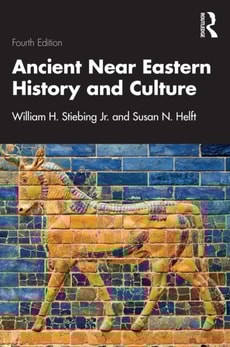
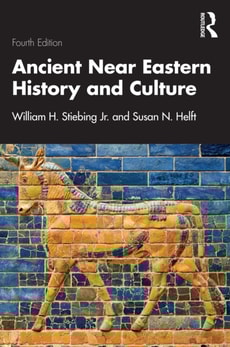
Ancient Near Eastern History and Culture offers an historical overview of the civilizations of the ancient Near East spanning ten thousand years of history.
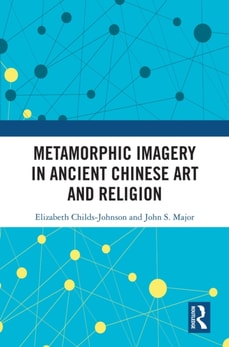
Metamorphic Imagery in Ancient Chinese Art and Religion demonstrates that the concept of metamorphism was central to ancient Chinese religious belief and practices from at least the late Neolithic period through the Warring States Period of the Zhou dynasty.
Ancient Near Eastern History and Culture offers an historical overview of the civilizations of the ancient Near East spanning ten thousand years of history.
Metamorphic Imagery in Ancient Chinese Art and Religion demonstrates that the concept of metamorphism was central to ancient Chinese religious belief and practices from at least the late Neolithic period through the Warring States Period of the Zhou dynasty.
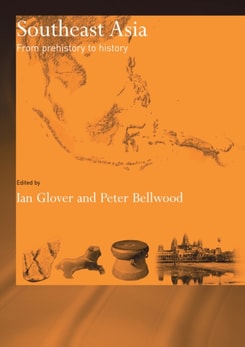
This comprehensive and absorbing book traces the cultural history of Southeast Asia from prehistoric (especially Neolithic, Bronze-Iron age) times through to the major Hindu and Buddhist civilizations, to around AD 1300.
This comprehensive and absorbing book traces the cultural history of Southeast Asia from prehistoric (especially Neolithic, Bronze-Iron age) times through to the major Hindu and Buddhist civilizations, to around AD 1300.
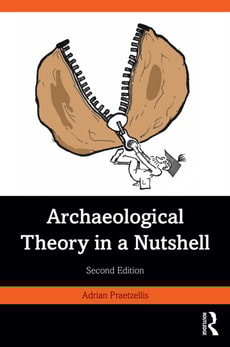
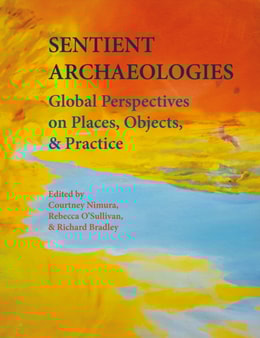
Archaeology in the past century has seen a major shift from theoretical frameworks that treat the remains of past societies as static snapshots of particular moments in time to interpretations that prioritize change and variability.
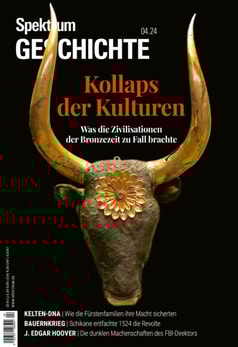
Es klingt wie das Szenario eines Hollywoodfilms: Horden von schwer gewappneten Kriegern durchkreuzten mit ihren Segelschiffen einst das Mittelmeer und verheerten Städte und Paläste.
Archaeology in the past century has seen a major shift from theoretical frameworks that treat the remains of past societies as static snapshots of particular moments in time to interpretations that prioritize change and variability.