This book aims to thoroughly discuss new directions of thinking in the arena of environmental archaeology and test them by presenting new practical applications.
Unlike food publications that have been more organized along regional or disciplinary lines, this edited volume is distinctive in that it brings together anthropologists, archaeologists, area study specialists, linguists and food policy administrators to explore the following questions: What kinds of changes in food and foodways are happening?
This book adds to the scant academic literature investigating how comics transmit knowledge of the past and how this refraction of the past shapes our understanding of society and politics in sometimes damaging ways.
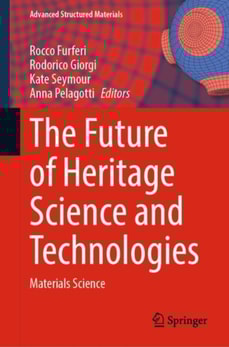
This book presents selected work from the Florence Heri-Tech, a conference focused on the use of innovative technologies and methods for analyzing, managing, and preserving cultural heritage.
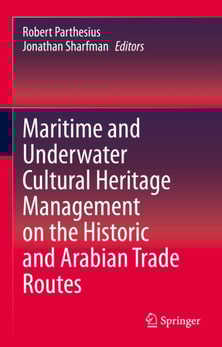
This book brings together perspectives on maritime and underwater cultural heritage (MUCH) in selected countries around the Indian Ocean rim that are linked by the historic and Arabian maritime trade routes.
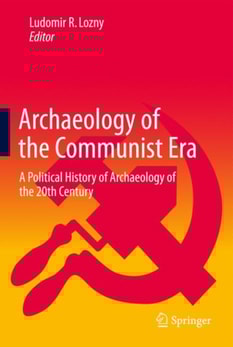
This book contributes to better recognition and comprehension of the interconnection between archaeology and political pressure, especially imposed by the totalitarian communist regimes.
This book aims at integrating archaeology with science in order to provide additional information with respect to a traditional archaeological anthropological perspective.
The aim of the book is to present original and though-provoking essays in human paleontology and prehistory, which are at the forefront of human evolutionary research, in honor of Professor Yoel Rak (a leading scholar in paleoanthropology).
This book offers global perspectives from Mediterranean, Asian, Australian, and American cultures on sacred sites and their related stories in regional history.
This book provides a multidisciplinary analysis of the production of Turkish cultural policies in the context of globalization and of the circulation of knowledge and practices.
This interdisciplinary volume brings together expert researchers coming from primatology, anthropology, ethology, philosophy of cognitive sciences, neurophysiology, mathematics and psychology to discuss both the foundations of non-human primate and human social cognition as well as the means there currently exist to study the various facets of social cognition.
Archaeological heritage legislation aims to ensure the best possible protection for the archaeological heritage, yet it remains the case that legislation can remain ineffective through other practical considerations.
Dieses essential gibt einen Überblick über aktuelle Analysemethoden von Gesteinsartefakten von der Attributanalyse ganzer Inventare bis hin zu mikroskopischen Gebrauchsspurenanalysen einzelner Artefakte.
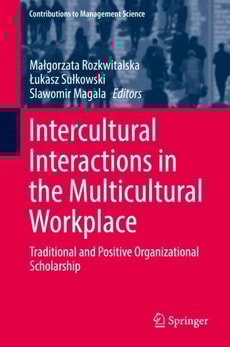
In diesem Essential wird auf Grundlage neuester Forschungsbefunde ein Modell zur Führung von Mitarbeitern vorgestellt und herausgearbeitet, das insbesondere im interkulturellen Kontext von Bedeutung ist.
In dem interdisziplinär besetzten Sammelband wird die sozialstrukturelle Zusammensetzung des Publikums, das wechselseitige Verhältnis von Oper und Gesellschaft und die Zukunft der Oper diskutiert.
Bioarchaeologists who study human remains in ancient, historic and contemporary settings are securely anchored within anthropology as anthropologists, yet they have not taken on the pundits the way other subdisciplines within anthropology have.
Die Autoren beschreiben mit vielen Praxisbeispielen die Synercube-Führungstheorie und erläutern die zehn Führungsstile in der Abhängigkeit von Menschen-, Sach- und Werteorientierung.
Die globalen Krisen seit dem Jahr 2008 haben eines sehr deutlich werden lassen: Das Vertrauen der Menschen in Wirtschaft und Politik ist signifikant gesunken.
Kulturmanagement gilt sowohl bei den Praktikern in den Kultureinrichtungen wie auch bei den Lehrenden und Forschenden vielfach nur als Hilfsmittel für die Finanzierung von kulturellen Aktivitäten.
Das Buch stellt die ökonomischen Zusammenhänge und Prozesse in der Musikwirtschaft dar und beleuchtet im Speziellen das Musikverlagswesen, die phonografische Industrie, den Live-Musiksektor, sekundäre Musikmärkte (Medien, Werbung, Branding, Merchandising, Games), Musikarbeitsmärkte sowie die ökonomischen Hintergründe des digitalen Musikbusiness.
Dieses Essential vermittelt einen Überblick über die aktuelle Diversity-Management-Debatte, bringt Beispiele aus Diversity-Management-Programmen verschiedener Unternehmen und erläutert deren Motive und Werkzeuge sowie die notwendigen Überlegungen zur Entwicklung eines Diversity-Management-Konzeptes.
Dieses essential vermittelt kompakt und praxisnah, welche Instrumente Führungskräfte konkret einsetzen können, um Personal in Kulturbetrieben erfolgreich zu führen.
Kompakt, fundiert und praxisnah werden in diesem Buch die wichtigsten Aufgaben, Besonderheiten und Herausforderungen von Führung in Kulturbetrieben behandelt.
Der vorliegende Sammelband hat das Ziel, die Besonderheiten von Gründungen in der Kultur- und Kreativwirtschaft auszuloten und Maßnahmen und Lösungsansätze im Hinblick auf Finanzierung, Förderung, Marketing und Netzwerkmanagement vorzustellen.
Dieses Buch zeigt, warum ko-kreative Angebote und Prozesse im Kulturmanagement immer wichtiger werden, wie sie konkret aussehen und gestaltet werden können.
Dieses Lehrbuch stellt Finanzierungsformen für Kulturbetriebe vor, ohne die Bereiche Staat, Markt und gemeinnütziger Sektor kategorisch zu trennen, da sie einander durchdringen und Kulturschaffende Grenzgänger zwischen diesen Welten sind.
Menschliche Überreste (körperliche Überreste der biologischen Art Homo sapiens) liegen in wissenschaftlichen Sammlungen und Museen in vielfältiger Form vor.
Dieses praxisorientierte Buch stellt Porträts von 22 in der Literatur bisher eher weniger berücksichtigten Ländern vor, um dann ausgehend davon die Kultur des Landes zu erklären.