Ancient Warfare: The Basics offers an engaging introduction to warfare in the ancient Mediterranean World from the mythical Trojan War, through the rise of hoplites and conquests of Alexander the Great to Roman hegemony and the Arab conquests of western Asia.
Empire of Elites investigates the self-representation of the late Roman senatorial aristocracy in epigraphic evidence to illuminate the cultural, social, and political dynamics of the Later Roman Empire.
This book explores the portrayal of the discipline of Classics and its practitioners as it emerges from fiction written in the United Kingdom and the United States from the 19th century to the present day.
Ancient Warfare: The Basics offers an engaging introduction to warfare in the ancient Mediterranean World from the mythical Trojan War, through the rise of hoplites and conquests of Alexander the Great to Roman hegemony and the Arab conquests of western Asia.
This book explores the portrayal of the discipline of Classics and its practitioners as it emerges from fiction written in the United Kingdom and the United States from the 19th century to the present day.
Empire of Elites investigates the self-representation of the late Roman senatorial aristocracy in epigraphic evidence to illuminate the cultural, social, and political dynamics of the Later Roman Empire.
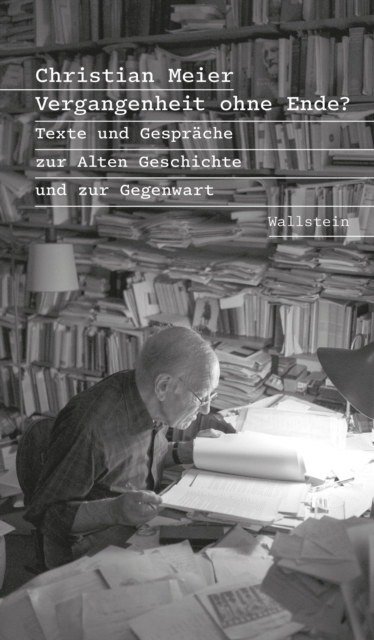
Der Althistoriker Christian Meier als Begleiter und Kommentator der Europäischen Geschichte Christian Meier ist einer der bekanntesten Fachvertreter der Alten Geschichte mit populär gewordenen Büchern über Caesar (1982) oder Athen (1993).
This three-volume set of essays is dedicated to Alain Touwaide, known for his far-reaching investigations in fields such as ancient medicine, botany, pharmacy, texts and manuscripts, the classical tradition, translation, the history of science, ethnopharmacology, and plant therapies.
This three-volume set of essays is dedicated to Alain Touwaide, known for his far-reaching investigations in fields such as ancient medicine, botany, pharmacy, texts and manuscripts, the classical tradition, translation, the history of science, ethnopharmacology, and plant therapies.
This volume introduces a fresh exploration of Classical literature, examining its engagement with personal or collective tragedy, horrific events, and fear-inflicting episodes.
This book explores how late antique miracle collections depict Christian saints as subversive, theatrical tricksters who blur the boundaries between sacred and profane, human and divine.
In this impressive volume, leading scholars offer compelling glimpses into the biblical world, the world in which prophets, poets, sages, and historians created one of our most important texts--the Bible.
This book explores how late antique miracle collections depict Christian saints as subversive, theatrical tricksters who blur the boundaries between sacred and profane, human and divine.
No easily accessible book which lists the emperors (of which there are very many, thanks to the vicissitudes of the empire itself) in alphabetical order for easy reference and in which a reasonably full biographical account of each, with references, has been available.
This volume introduces a fresh exploration of Classical literature, examining its engagement with personal or collective tragedy, horrific events, and fear-inflicting episodes.
Tuberculosis, once a leading cause of death in Europe and North America, was understood to be preventable and even curable by the early twentieth century.