Exploring contemporary Okinawan culture, politics, and historical memory, this book argues that the long Japanese tradition of defining Okinawa as a subordinate and peripheral part of Japan means that all claims of Okinawan distinctiveness necessarily become part of the larger debate over contemporary identity.
Indonesia is in the midst of an epic transition as it moves from decades of authoritarian government to a new era of democratic opening, from years of secular government to a time of struggle over the role of Islam in public life, and from the breakdown of a "e;miracle"e; economy to a search for resilience in the face of global forces.
When the Big Apple no longer felt big enough, Dave Prager and his wife, Jenny, moved to a city of sixteen million peoplewith seemingly twice as many honking horns.
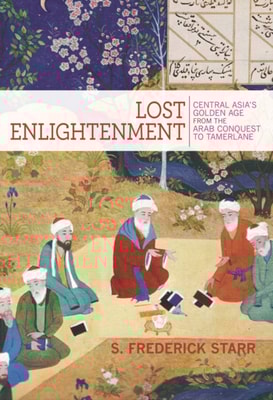
The first volume in a three-volume set, this is a study of the rise of Persian Sufi spirituality and literature in Islam during the first six Muslim centuries.
In October 2015, the Chinese Communist Party banned its 88 million members from excessive drinking, improper sexual relationships and holding golf club memberships.
Acclaimed Japanese poet Yorifumi Yaguchi has turned his writing attention to telling what he experienced as a child growing up on the island of Honshu in the late 1930s and '40s.
Sri Lanka has had a celebrated history, a long colonial past, and since independence in 1948 has passed through a series of crises and political experiments.
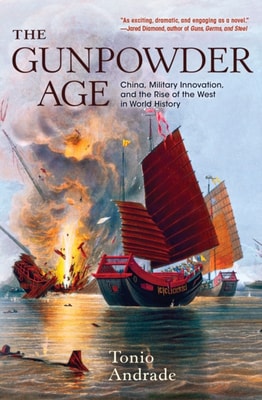
A first look at gunpowder's revolutionary impact on China's role in global historyThe Chinese invented gunpowder and began exploring its military uses as early as the 900s, four centuries before the technology passed to the West.
Winner: North American Society for Sport History Book AwardIn the 1970s sitcom The Odd Couple, Felix and Oscar argue over a racing greyhound that Oscar won in a bet.
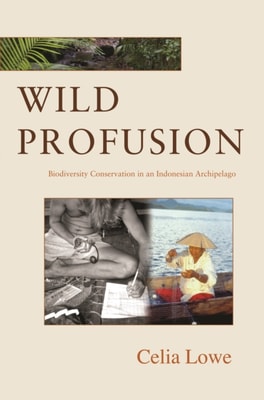
Wild Profusion tells the fascinating story of biodiversity conservation in Indonesia in the decade culminating in the great fires of 1997-98--a time when the country's environment became a point of concern for social and environmental activists, scientists, and the many fishermen and farmers nationwide who suffered from degraded environments and faced accusations that they were destroying nature.
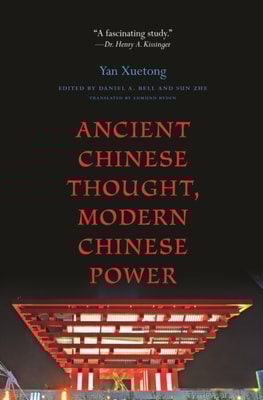
From China's most influential foreign policy thinker, a vision for a "e;Beijing Consensus"e; for international relationsThe rise of China could be the most important political development of the twenty-first century.
Why India's problems won't be solved by rapid economic growth aloneWhen India became independent in 1947 after two centuries of colonial rule, it immediately adopted a firmly democratic political system, with multiple parties, freedom of speech, and extensive political rights.
A history of partition seen through the life and fiction of one of the subcontinent's most important modern writersSaadat Hasan Manto (1912-1955) was an established Urdu short story writer and a rising screenwriter in Bombay at the time of India's partition in 1947, and he is perhaps best known for the short stories he wrote following his migration to Lahore in newly formed Pakistan.
An intimate look at war through the lives of soldiers and their families at Fort HoodMaking War at Fort Hood offers an illuminating look at war through the daily lives of the people whose job it is to produce it.
In this powerful and provocative book, Prasenjit Duara uses the case of Manchukuo, the Japanese puppet state in northeast China from 1932-1945, to explore how such antinomies as imperialism and nationalism, modernity and tradition, and governmentality and exploitation interacted in the post-World War I period.
Did Chinese mysticism vanish after its first appearance in ancient Taoist philosophy, to surface only after a thousand years had passed, when the Chinese had adapted Buddhism to their own culture?
Bernard Cohn's interest in the construction of Empire as an intellectual and cultural phenomenon has set the agenda for the academic study of modern Indian culture for over two decades.
Investigating the enormous contribution made by female textile workers to early industrialization in Meiji Japan, Patricia Tsurumi vividly documents not only their hardships but also their triumphs.
Asia is one of the most rapidly developing regions in the world, and knowledge of the individual countries is crucial for our understanding of the area.
How the I Ching became one of the most widely read and influential books in the worldThe I Ching originated in China as a divination manual more than three thousand years ago.
How a Chinese pirate defeated European colonialists and won Taiwan during the seventeenth centuryDuring the seventeenth century, Holland created the world's most dynamic colonial empire, outcompeting the British and capturing Spanish and Portuguese colonies.