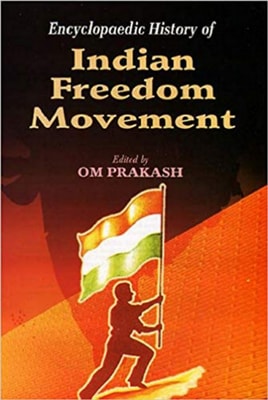
The History of India begins with the birth of the Indus Valley Civilization in such sites as Mohenjo-Daro, Harappa, and Lothal, and the coining of the Aryans.
The History of India begins with the birth of the Indus Valley Civilization in such sites as Mohenjo-Daro, Harappa, and Lothal, and the coining of the Aryans.
The History of India begins with the birth of the Indus Valley Civilization in such sites as Mohenjo-Daro, Harappa, and Lothal, and the coining of the Aryans.
The History of India begins with the birth of the Indus Valley Civilization in such sites as Mohenjo-Daro, Harappa, and Lothal, and the coining of the Aryans.
Published in association with the Japan Society and containing 57 essays, this ninth volume in the series continues to celebrate the life and work of the men and women, both British and Japanese, who over time played an interesting and significant role in a wide variety of different spheres relating to the history of Anglo-Japanese relations and deserve to be recorded and remembered.
The History of India begins with the birth of the Indus Valley Civilization in such sites as Mohenjo-Daro, Harappa, and Lothal, and the coining of the Aryans.
The History of India begins with the birth of the Indus Valley Civilization in such sites as Mohenjo-Daro, Harappa, and Lothal, and the coining of the Aryans.
The History of India begins with the birth of the Indus Valley Civilization in such sites as Mohenjo-Daro, Harappa, and Lothal, and the coining of the Aryans.
The History of India begins with the birth of the Indus Valley Civilization in such sites as Mohenjo-Daro, Harappa, and Lothal, and the coining of the Aryans.
The History of India begins with the birth of the Indus Valley Civilization in such sites as Mohenjo-Daro, Harappa, and Lothal, and the coining of the Aryans.
The History of India begins with the birth of the Indus Valley Civilization in such sites as Mohenjo-Daro, Harappa, and Lothal, and the coining of the Aryans.
The History of India begins with the birth of the Indus Valley Civilization in such sites as Mohenjo-Daro, Harappa, and Lothal, and the coining of the Aryans.
The History of India begins with the birth of the Indus Valley Civilization in such sites as Mohenjo-Daro, Harappa, and Lothal, and the coining of the Aryans.
The History of India begins with the birth of the Indus Valley Civilization in such sites as Mohenjo-Daro, Harappa, and Lothal, and the coining of the Aryans.
The History of India begins with the birth of the Indus Valley Civilization in such sites as Mohenjo-Daro, Harappa, and Lothal, and the coining of the Aryans.
The History of India begins with the birth of the Indus Valley Civilization in such sites as Mohenjo-Daro, Harappa, and Lothal, and the coining of the Aryans.
The History of India begins with the birth of the Indus Valley Civilization in such sites as Mohenjo-Daro, Harappa, and Lothal, and the coining of the Aryans.
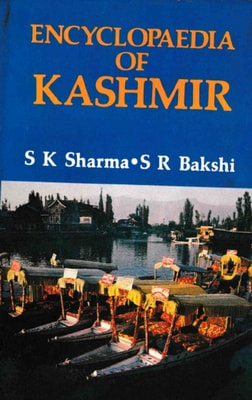
The picturesque valley of Kashmir situated on the northern extremity of India, occupies a position of unique and strategic importance in the sub-continent of India.
The picturesque valley of Kashmir situated on the northern extremity of India, occupies a position of unique and strategic importance in the sub-continent of India.
The picturesque valley of Kashmir situated on the northern extremity of India, occupies a position of unique and strategic importance in the sub-continent of India.
The picturesque valley of Kashmir situated on the northern extremity of India, occupies a position of unique and strategic importance in the sub-continent of India.
The History of India begins with the birth of the Indus Valley Civilization in such sites as Mohenjo-Daro, Harappa, and Lothal, and the coining of the Aryans.
The History of India begins with the birth of the Indus Valley Civilization in such sites as Mohenjo-Daro, Harappa, and Lothal, and the coining of the Aryans.
Encyclopaedia of Asia: Land, Culture and People is a unique attempt in the sense that for the first time the editors have attempted to provide readers with most contemporary information-base about these very important countries, forming the said region, called Asia.
Encyclopaedia lndica is a monumental work by reputed authors which highlights all aspects of lndian History and Culture in the light of modern knowledge in its pristine vigour.
Encyclopaedia lndica is a monumental work by reputed authors which highlights all aspects of lndian History and Culture in the light of modern knowledge in its pristine vigour.
The book consists of well-written, well analysed and well research material of eight chapters in a comprehensive way with caste system : early stages, evolution of castes, castes in India, social reforms, caste system in modern India, caste determines social status, etc.
The study attempts to look at the United States response to the various developments and challenges of Afghanistan with a view to understand the dynamics of survival and relative failure of this land-locked country.
This volume contains wide-ranging surveys of various aspects of the history of Awadh from its position as a province of the Mughal Empire to a successor state, a semi-colony under the Nawabi regime, the British annexation and the resistance in 1857.
This volume brings together eminent Tagore scholars and younger writers to revisit the concepts of nation, nationalism, identity and selfhood, civilization, culture and homeland in Tagore's writings.
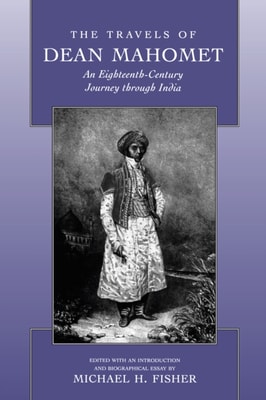
This unusual study combines two books in one: the 1794 autobiographical travel narrative of an Indian, Dean Mahomet, recalling his years as camp-follower, servant, and subaltern officer in the East India Company's army (1769 to 1784); and Michael H.
Taking in a wide range of film, television, and literature, this volume explores 21st century horror and its monsters from an intersectional perspective with a marked emphasis on gender and race.
Away from the spotlight of the pop charts and the demands of mainstream audiences, original music is still being played and audiences continue to engage with innovative artists.
This collection of original essays presents pedagogical tools, methods, and approaches for incorporating the figure of the vampire into the learning environment of the college classroom, in the hopes of ushering the Undead out of the coffin and into the classroom.
The combat engineers of the First Marine Division, 9th Engineer Battalion, risked their lives daily in Vietnam as they cleared the roads of mines, repaired and paved the famous "e;Highway 1,"e; disarmed booby traps, built bridges and culverts, and destroyed enemy bunkers and tunnels.
In April 1917, the United States ended its nonintervention policy and entered World War I as an "e;Associated Power"e; to aid the Allies in their fight against the Central Powers.