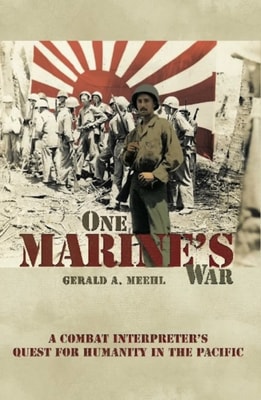
One Marines War recounts the experiences of Robert Sheeks, a Marine combat interpreter, and how he underwent a remarkable transformation as a consequence of his encounters with the Imperial Japanese Army, Nisei Japanese-American language instructors, Japanese and Pacific Island native civilians, and American Marines.
In 1965, despite pronounced disadvantages in firepower and mobility, the Communist Vietnamese endeavored to crush South Vietnam and expel the American military with a strategy for a quick and decisive victory predicated not on guerrilla but big-unit war.
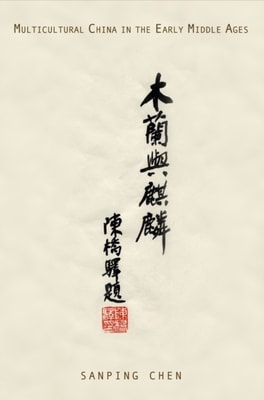
In contrast to the economic and cultural dominance by the south and the east coast over the past several centuries, influence in China in the early Middle Ages was centered in the north and featured a significantly multicultural society.
The assertion that even institutions often viewed as abhorrent should be dispassionately understood motivates Arkotong Longkumer's pathbreaking ethnography of the Sangh Parivar, a family of organizations comprising the Hindu right.
The Sultan's Communists uncovers the history of Jewish radical involvement in Morocco's national liberation project and examines how Moroccan Jews envisioned themselves participating as citizens in a newly-independent Morocco.
In this volume, Jason Radcliff offers an introduction, critical appreciation, and constructive extension of the Orthodox-Reformed Theological Dialogue spearheaded by Thomas F.
This cultural history reveals how cats became the undisputed mascot of the internet-"e;an essential look at life online"e; (Ryan Milner, author of The World Made Meme).
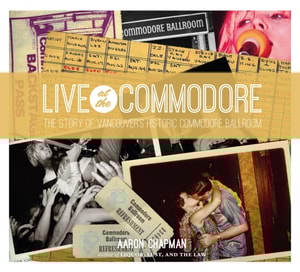
Vancouver's Commodore Ballroom is, like New York's CBGB's and Los Angeles's Whiskey a Go-Go, one of the most venerated rock clubs in the world; originally built in 1930, it's hosted a who's-who of music greats before they made it big: The Police, The Clash, Blondie, Talking Heads, Nirvana, New York Dolls, U2, and, more recently, Lady Gaga and the White Stripes.
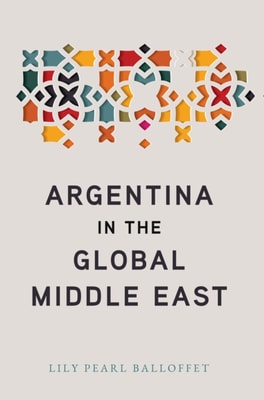
Argentina lies at the heart of the American hemisphere's history of global migration booms of the mid-nineteenth to early twentieth century: by 1910, one of every three Argentine residents was an immigrant-twice the demographic impact that the United States experienced in the boom period.
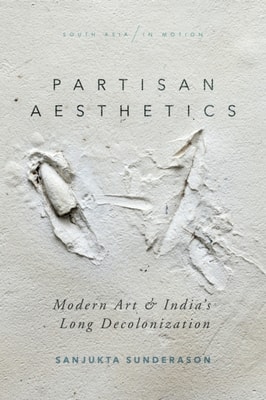
Partisan Aesthetics explores art's entanglements with histories of war, famine, mass politics and displacements that marked late-colonial and postcolonial India.
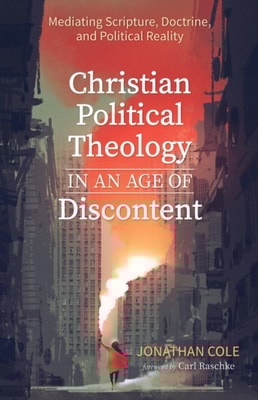
At a moment in which interest in political theology is rising, acceptance of a public role for religion is declining, and cynicism regarding both political and religious institutions is overflowing, this book investigates the possibilities and constraints of a Christian political theology that can meaningfully mediate Scripture, doctrine, and political reality.
From commune to ecovillage an in-depth look at the past, present and future of the world's best-known intentional community In the Summer of Love in San Francisco's Haight-Asbury, a charismatic young hippie by the name of Stephen Gaskin launched "e;Monday Night Class"e;a weekly event which drew together an eclectic mix of truth-seekers and flower children.
Collaborative consumption is a new way of living in which access is valued above ownership, experience is prized over material possessions, and "e;mine"e; becomes "e;ours,"e; allowing everyone's needs to be met with minimum waste.
The Architectonics of Hope provides a critical excavation and reconstruction of the Schmittian seductions that continue to bedevil contemporary political theology.
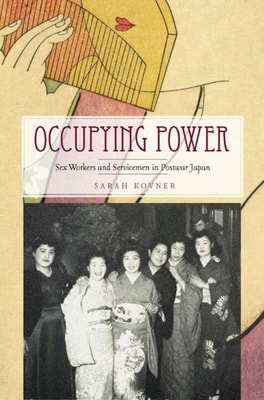
"e;An intelligent and insightful study"e; of the cultural and economic factors surrounding female sex workers in Japan (Nicole Constable, author of Maid to Order in Hong Kong: Stories of Migrant Workers).
At the 1919 Paris Peace Conference, where the victorious Allied powers met to reenvision the map of Europe in the aftermath of World War I, President Woodrow Wilson's influence on the remapping of borders was profound.
In the 1930s, a cohort of professional human scientists coalesced around a common and particular understanding of objectivity as the foundation of legitimate knowledge, and of fieldwork as the pathway to objectivity.
Since 2005, a series of significant developments has been unfolding in the area of the Tongking Gulf under the rubric of an ambitious project called "e;Two Corridors and One Rim.
Between the mid-eighteenth and mid-nineteenth centuries, Qing rulers, officials, and scholars fused diverse, fragmented perceptions of foreign territory into one integrated worldview.