Contesting the idea that the study of Anglophone literature and literary studies is simply a foreign import in Asia, this collection addresses the genealogies of textual critique and institutionalized forms of teaching of English language and literature in Asia through the 19th and 20th centuries, along with an examination of how its present options and possible future directions relate to these historical contexts.
In the 50th anniversary year of Singapore's independence, it is timely to trace our developmental journey in order that young Singaporeans students, visiting tourists and foreigners working in Singapore may be informed about why and how Singapore succeeded, despite tremendous odds.
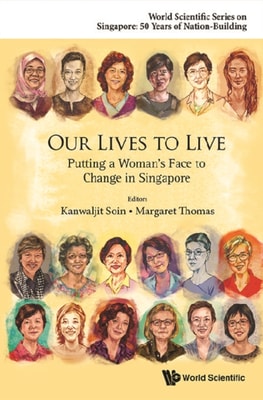
Our Lives to Live: Putting a Woman's Face to Change in Singapore explores and documents how women's roles, choices, and voices in Singapore have changed in the last 50 years; how women, from all sectors of society, have helped to shape the Singapore we know today.
The social context of Singapore is changing rapidly, and understanding how people think, feel and behave in various situations has become a key driver of effectiveness in addressing social issues.
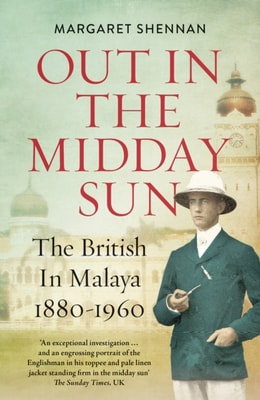
The story of British Malaya and Singapore, from the days of Victorian pioneers to the denouement of independence, is a momentous episode in Britain’s colonial past.
Growing Up in British Malaya and Singapore: A Time of Fireflies and Wild Guavas is an autobiography of Maurice Baker's life in Malaya and Singapore from the 1920s to the 1940s.
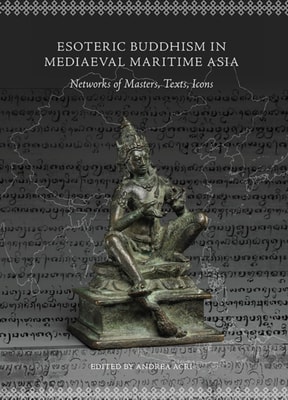
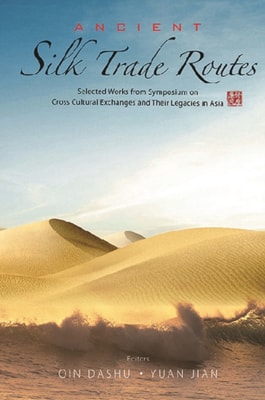
As key nodes that connected ancient silk routes traversing China, Japan and India, trading hubs, towns and cities in Java and Sumatra and other places in Asia were key destination points for merchants, monks and other itinerants plying these routes.
This work, written by an ex-Ambassador to Japan, is a first-hand account and observation of the various aspects of Japanese society - political, historical, social and economic.
This paper investigates the impact of political interventions made by Beijing and Taipei in recent years on the development of cross-Straits economic relations.
This book examines China's economic development since 1949, with special emphasis on the economic transition of the past two decades and the role of special economic zones in this gradually evolving process.
This book presents a unique array of insights into Hong Kong's transition to China since the 1 July 1997 handover, from several perspectives around the region.
Variation in market orientation in individual regions and the weakening of government intervention in regional income redistribution have been mainly responsible for the changes in China's regional economic disparities since 1978.
What the Jiang Zemin leadership faced in 1999 can be characterized by a century-old Chinese saying, neiyou waihuan (literally, "e;internal disturbance and external threat"e;).
In the last two decades of the 20th century, China stood out as the world's star performer in economic growth, thanks to the market-oriented reform that started in 1978.
The history of the People's Republic of China can be classified into two distinctive periods: Mao's China (1949-1978) and Deng's China (from 1979 to the present).
This volume looks at China's foreign policy from the perspective of learning theory, a relatively new approach to foreign policy analysis based on social psychology.
With mounting discontent due to widespread unemployment, corruption and misgovernment, the Ninth National People's Congress in March 2000 was a letdown.
This book explores the interaction between Europe and East Asia between the 16th and the 18th centuries in the field of mathematical sciences, bringing to the fore the role of Portugal as an agent of transmission of European science to East Asia.
This enlightening book describes the lives and achievements of eminent Rafflesians from Raffles Institution, Raffles Girls'; School and Raffles Junior College, many of whom have served in the Singapore public and community service in the highest positions.
This book consists of papers presented at the International Conference on "e;China: The Next Decade"e;, organized by the East Asian Institute at the National University of Singapore in 2007 to commemorate the Institute's 10th anniversary.
This edited book serves as the first instalment of a two-part title that aims to provide an academic exploration of the contemporary issues and perspectives on tourism in the Philippines.
This anthology critically re-examines and re-articulates the discursive boundary that binds the region called East Asia in order to produce Trans-Pacific Studies.
Over the six-month period from late 2012 to early 2013, Hu Jintao, the President of the People's Republic of China, Chair of the Central Military Commission, and Party Secretary of the Chinese Communist Party (CCP), will relinquish at least two of his three positions.
Confucianism, Chinese History and Society is a collection of essays authored by world renowned scholars on Chinese studies, including Professor Ho Peng Yoke (Needham Research Institute), Professor Leo Ou-fan Lee (Harvard University), Professor Philip Y S Leung (Chinese University of Hong Kong), Professor Liu Ts'un-Yan (Australian National University), Professor Tu Wei-Ming (Harvard University), Professor Wang Gungwu (National University of Singapore) and Professor Yue Daiyun (Peking University).
Shortly after midnight on 8 December 1941, two divisions of crack troops of the Imperial Japanese Army began a seaborne invasion of southern Thailand and northern Malaya.
Dr Goh Keng Swee was Singapore's first Minister for Finance from 1959 to 1965 who initiated Singapore's first industrial estate now known as Jurong Town.
This book closely examines one relatively small but significant political phenomenon - Suku in Revolutionary China through a matrix of western social theory: Freud, Marcuse, Arendt, and Ricoeur.
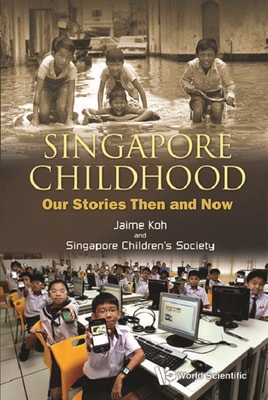
The political, economic and social changes that have occurred over the past 60 years have shaped and transformed the childhood of children in Singapore.
Managing Indonesia's Transformation: An Oral History is an account of Ginandjar Kartasasmita's career in the Indonesian government, both under President Suharto and in the post-Suharto era.