This book argues that Political Islam in the Iranian context evolved into three main schools of thought during the 1960s and 1970s: Jurisprudential Islam led by Ayatollah Khomeini, Leftist Islam led by Shariati, and Liberal Islam led by Bazargan.
This book considers literary images of Japan created by David Mitchell, Kazuo Ishiguro, and Tan Twan Eng to examine the influence of Japanese imperialism and its legacy at a time when culture was appropriated as route to governmentality and violence justified as root to peace.
This book presents a comprehensive overview of the Nanjing Massacre, together with an in-depth analysis of various aspects of the event and related issues.
This book is a systematic investigation of Korean cultural wave in South Asia, discovering and analysing the dynamics of fandom, mechanism of media industry and growing phenomena of Korean culture in this part of the world.
This book highlights the gains that a citizenship approach offers to the study of democracy in Indonesia, demonstrating that the struggle for citizenship and the historical development of democracy in the country are closely interwoven.
This remarkable collection commemorates the 70th anniversary of the 1951 San Francisco Peace Conference by revisiting the important legacies of both the Peace Treaty and the US-Japan Security Treaty have had on the peace and stability of the Asia-Pacific.
This book focuses on Luis Frois, a 16th-century Portuguese Jesuit and chronicler, who recorded his impressions of Japanese gardens, cities and building practices, tea-drinking rituals, Japan's unification efforts, cultural traditions, and the many differences between Europe and Japan in remarkable manuscripts almost lost to time.
This book comprehensively discusses the main features of the Chinese patent law system, which not only legally 'transplants' international treaties into the Chinese context, but also maintains China's legal culture and promotes domestic economic growth.
This book uses the mutual interactions between Chinese and Western culture as a point of departure in order to concisely introduce the origins and evolution of Chinese culture at the aspects of constitution, thinking, values and atheistic.
This book explores Korean literature from a broadly global perspective from the mid-9th century to the present, with special emphasis on how it has been influenced by, as well as it has influenced, literatures of other nations.
This book conducts detailed research and analysis on the relevant literature and historical evidence regarding the 640-year history of ancient and modern China and other countries since the Ming Dynasty, and clarifies the chain of evidence concerning the Diaoyu Islands in terms of the facts and jurisprudence.
Drawing on the rich trove of recently declassified Russian and Chinese archival materials, this history of Sino-Soviet relations in the 20th century sheds new light on key events during this period.
This book considers urban development in China, highlighting links between China's history and civilization and the rapid evolution of its urban forms.
This book explores China's urban development, examining the history and culture of Chinese cities and providing a cultural background to the rapid urban development of contemporary China.
Written by Chinese Jurist Mei Ju-ao, this significant book considers both the process and the impact of the International Military Tribunal for the Far East, otherwise known as the Tokyo Trial, which was convened in 1946 to try political military leaders accused of involvement in war crimes.
This book explains compellingly that, despite common belief, in the early modern period, the intra-East Asian commercial network still functioned sustainably, and within that network, the Sino-Japanese trade can be seen as the most significant part which not only connected the Chinese and Japanese domestic markets but also was linked to the global economy.
This volume presents a series of five portraits of Edo, the central region of urban space today known as Tokyo, from the great fire of 1657 to the devastating earthquake of 1855.
This book offers a multidisciplinary analysis of approach in the field of energy studies of Japan, examining post-closure coal mining towns in Japan and their gentrification.
This book sheds light on a little-known aspect of the Imperial family of Japan: For three generations, members of the family have devoted themselves to biological research.
This book examines the history of state formation in postcolonial Indonesia by starting with the death of Jan Djong, an activist and a former village head in the little town of Maumere.
Written by the Director of the Tokyo Trial Research Centre at China's Shanghai Jiao Tong University, this book provides a unique analysis of war crime trials in Asia-Pacific after World War II.
This book examines China's role and its cultural productions in the process of environmental destruction and transformation, focusing on how various cultural media play a significant role in shaping and reproducing Chinese subject formation in relation to changing ecological conditions.
This book explores practical and theoretical approaches to translation in Korea from the 16th century onwards, examining a variety of translations done in Korea from a diachronic perspective.
Based on fieldwork, archival research, and interviews, this book critically examines the building of modern Chinese discourse on a unified yet diverse Chinese nation on various sites of knowledge production.
This Key Concepts pivot discusses the contemporary relevance of the ancient Chinese concept of Tianxia or 'All-Under-Heaven' and argues the case for a new global political philosophy.
This Key Concepts pivot examines the fundamental Chinese ideas of 'Civilization' and 'culture', considering their extensive influence both over Chinese society and East Asian societies.
This Key Concepts pivot discusses the significance of the ancient Chinese concept of xing or 'Association' in defining Chinese civilization and thought through the centuries.
Fully utilizing the latest archival material, this book provides a comprehensive, multi-dimensional and nuanced understanding of the Tokyo Tribunal by delving into the temporal aspects that extended the relevance and reverberations of the Tribunal beyond its end in 1948.
This collection examines literature and film studies from the late colonial and early postcolonial periods in Taiwan and Korea, and highlights the similarities and differences of Taiwanese and Korean popular culture by focusing on the representation of gender, genre, state regulation, and spectatorship.
This volume approaches China's Belt and Road Initiative as a process of culturalization, one that started with the Silk Road and continued over the millennium.
This book investigates how rapid socio-political-economic change in China since 1949 has affected intergenerational relationships and practices in rural areas, specifically the care provided to elderly parents by their adult children.
This book addresses issues of how the cultures in Hong Kong, Singapore and Malaysia have been Englishized in postcolonial and globcalized contexts, not just in terms of language, but also in writers'/people's subjectivity.
This book brings Korea's finest foreign policy minds together in contemplating the risks and rewards of finally ending the 70 year stalemate between North and South Korea through reunification.
This book examines the development of Chinese translation practice in relation to the rise of ideas of modern selfhood in China from the 1890s to the 1920s.
This book explores questions of identity, cultural change and creativity from the perspective of contemporary musicians currently engaged in redefining Asian musical traditions and notions of heritage in Singapore.
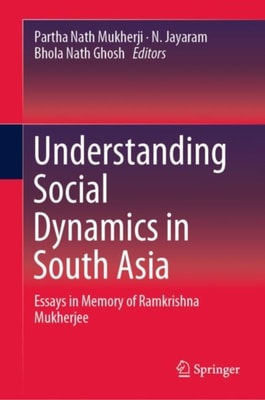
This volume includes fourteen essays by eminent sociologists in memory of Ramkrishna Mukherjee (1919-2017), the last of the founding architects of sociology in India.