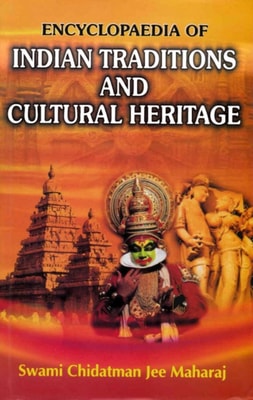
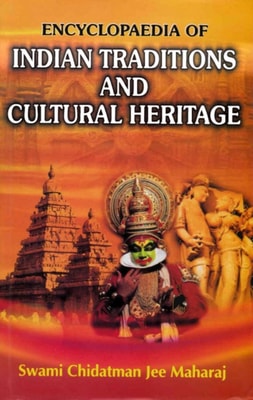
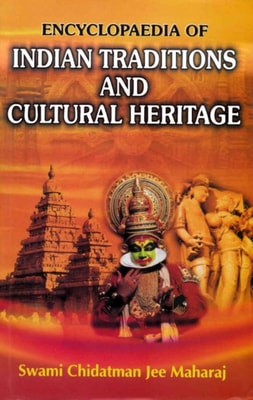
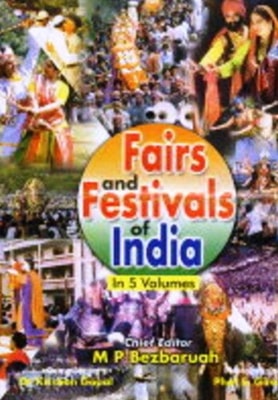
A complete benchwork on the rich indian cultural heritage in respect of fairs and festivals of indias all regions, from north to south, west to east, north - east region and central india, their socio-cultural, religions and economic significance and value, their support with the human society, in five comprehensive volume covering all the 28 states and 7 union territories very useful for social scientists, teachers and researchers in india and abroad.
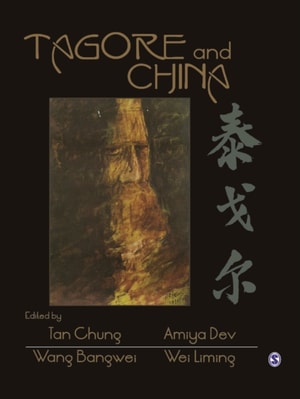
This volume brings together eminent Tagore scholars and younger writers to revisit the concepts of nation, nationalism, identity and selfhood, civilization, culture and homeland in Tagore's writings.
As one of the major challenges of the 21st century, food security requires nations to maintain food production at appropriate levels, provide potable water, and at once, ensure access of people to such food and water.
The Mahatma Gandhi National Rural Employment Guarantee Act is the first of its kind in the world wherein the government guarantees rights-based economic safety net for two-thirds of the country's population.
Economic Reforms and Social Exclusion is an analytical study that focuses on the socially marginalized and excluded groups in India since the onset of liberalization.
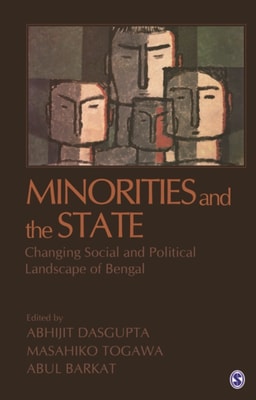
Minorities and the State discusses the plight of two numerically significant religious minority groups: Hindus in Bangladesh and Muslims in West Bengal, India.
A hitherto unattempted survey of social legislation by the East India Company, this book identifies the principles of Public Justice and Public Instruction as the inspiration for legislative decisions, some of which resonate in post-colonial India.
This book analyses the tumultuous situation in post-republic Nepal, with spot diagnosis of the major issues facing the country such as federal structure, security sector reform, armed movement in the terai, and religious clashes that have wide implications for India and China.
Probing into the history beyond mere historical facts, this book focuses on the 'imaginations' that have determined the course of Bengaluru over the last two-and-a-half centuries.
This is the first analysis of Gandhi's dressing style in terms of communication theory and an exploration of the subliminal messages that were subtly communicated to a large audience.
Promoting Economic Cooperation in South Asia: Beyond SAFTA examines the distinct development dichotomy that exists in South Asia and tries to find a workable solution to bridge this gap.
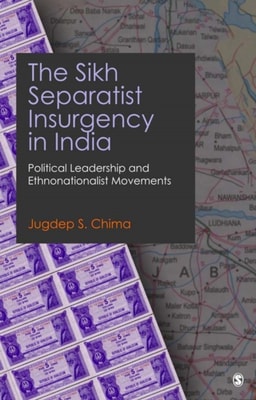
The "e;Punjab crisis,"e; a two-decade long armed insurgency that emerged as a violent ethnonationalist movement in the 1980s and gradually transformed into a secessionist struggle, resulted in an estimated 25,000 casualties in Punjab.
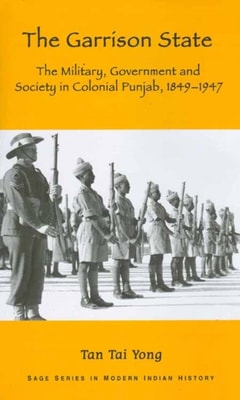
Following the Mutiny of 1857, various factors impelled the British to turn to the province of Punjab in north-western India as the principal recruiting ground for the Indian Army.
The processes of political mobilization and identity formation in the rural regions of Bombay Presidency between 1934 and 1947 are the major focus of this work.
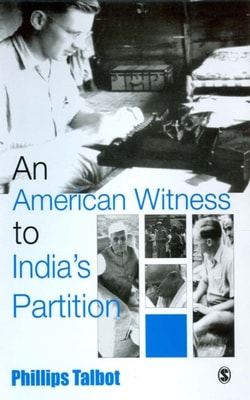
In 1938 the New York-based Institute of Current World Affairs awarded 23-year-old Phillips Talbot a fellowship with a mandate: visit South Asia and learn about the intricacies of life in India.
Communism and Nationalism in Colonial India, 1939-45 is an incisive and original contribution to our understanding of the Communist Party of India`s approach towards the Indian national movement and British colonialism from 1939 to 1945.
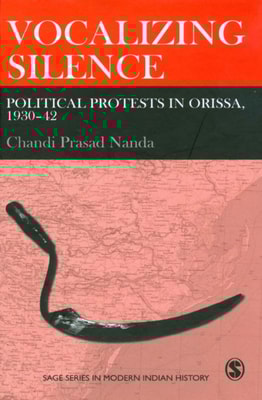
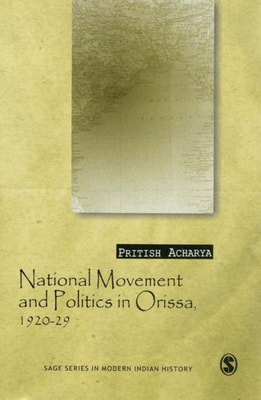
This book is a detailed study of the different facets of the Indian national movement in Orissa during the phase between the Civil Disobedience Movement and the Quit India Movement.
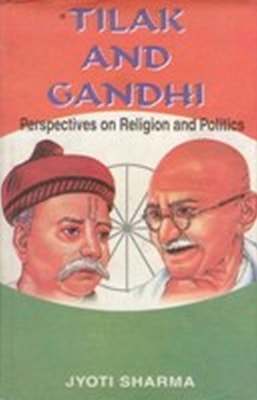
This book seeks to examine and explain the curious and important nexus between religion and politics in the light of the political philosophies of Tilak and Gandhi.
An insight of the authentic information in jharkhand: about all sixteen districts of states, minerals and ores, occurrences with latitude and , history of different ethno-cultural races, places of tourist interest, locations and area, population, religion, geography and physical features, rivers, canals and water ways, communication, agriculture and irrigation, industries, trade, commerce and export, fairs and festivals, education, administration, and assembly and parliamentary constituencies.
This volume contains wide-ranging surveys of various aspects of the history of Awadh from its position as a province of the Mughal Empire to a successor state, a semi-colony under the Nawabi regime, the British annexation and the resistance in 1857.
Vivid, nostalgic, studded with anecdotes and detailed insight into events and people as they really were, the book is an important source of history of the freedom struggle and post-Independence Indian affairs and makes a fascinating reading.
Authors reminiscences of his life and times in Kolkata in the late 1940s and early 1950s, in effect a political and socio-cultural history of post-world war II and post-partition India, make a scholarly tome laced with deep studies and gripping accounts of a wide range of subjects: origin of Kolkata, controvery over traditional differences between people of east and west Bengal, Portrayals of cultural, political , literary, academic, coffee house culture economic and personages national and international, a unique tome.
Darjeeling and Sikkim Himalaya, with their sublime snowy ranges and the tabulous Kanchenjungha, have no parallel in their physical charm and the mountaineering challenges it offer.
A complete benchwork on the rich indian cultural heritage in respect of fairs and festivals of indias all regions, from north to south, west to east, north - east region and central india, their socio-cultural, religions and economic significance and value, their support with the human society, in five comprehensive volume covering all the 28 states and 7 union territories very useful for social scientists, teachers and researchers in india and abroad.
A complete benchwork on the rich indian cultural heritage in respect of fairs and festivals of indias all regions, from north to south, west to east, north - east region and central india, their socio-cultural, religions and economic significance and value, their support with the human society, in five comprehensive volume covering all the 28 states and 7 union territories very useful for social scientists, teachers and researchers in india and abroad.
Memoirs and private diarie of spouses of important leaders, statesmen, diplomats and civil servants have a significance of their own in the history of mankind.