As Qing Dynasty China disintegrated, economic hardship and civil disorder led to millions of Chinese men and women seeking their fortunes abroad, many journeying south into French Indochina.
Enigmatic, Eminence grise, the 'power behind the throne' these phrases sum up Zhou Enlai's long and varied, but always pivotal, political career in the Chinese Communist Party from the 1920s to 1970s.
While jihad has been the subject of countless studies in the wake of recent terrorist attacks, scholarship on the topic has so far paid little attention to South Asian Islam and, more specifically, its place in South Asian history.
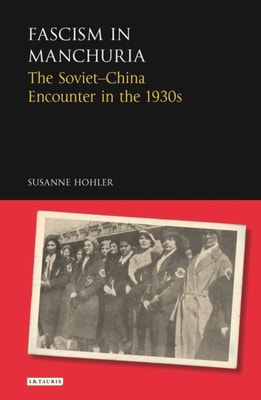
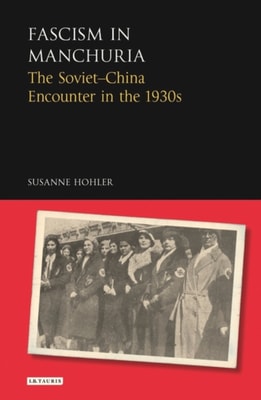
The history of the Russian fascist movement in Harbin, Manchuria during the 1930s has become increasingly relevant to our understanding of modern Russia.
Winner of the Penang Book Prize 2019Nusantaria often referred to as 'Maritime Southeast Asia' is the world's largest archipelago and has, for centuries, been a vital cultural and trading hub.
The Mongol invasions in the first half of the thirteenth century led to profound and shattering changes to the historical trajectory of Islamic West Asia.
The Xi'an Stele, erected in Tang China's capital in 781, describes in both Syriac and Chinese the existence of Christian communities in northern China.
While jihad has been the subject of countless studies in the wake of recent terrorist attacks, scholarship on the topic has so far paid little attention to South Asian Islam and, more specifically, its place in South Asian history.
The creation of Afghanistan in 1880, following the Second Anglo-Afghan War, gave an empowering voice to the Pashtun people, the largest ethnic group in a diverse country.
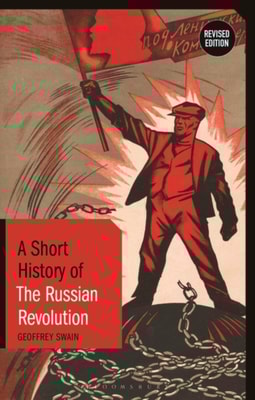
In 1917 revolutionary fervour swept through Russia, ending centuries of imperial rule and instigating political and social changes that would lead to the formation of the Soviet Union.
The indistinct status of the Zainichi has meant that, since the late 1940s, two ethnic Korean associations, the Chongryun (pro-North) and the Mindan (pro-South) have been vying for political loyalty from the Zainichi, with both groups initially opposing their assimilation in Japan.
In this classic account, Bernard Wasserstein draws on the files of the Shanghai Police as well as the intelligence archives of the many countries involved, to provide the definitive story of Shanghai's secret war.
The history of the Russian fascist movement in Harbin, Manchuria during the 1930s has become increasingly relevant to our understanding of modern Russia.
In 1801, at the age of just 20 years old, Ranjit Singh became the Maharaja of the Punjab Empire and subsequently became one of the greatest figures in the history of India.
There's a folk memory of China in which numberless yellow hordes pour out of the 'mysterious East' to overwhelm the vulnerable West, accompanied by a stereotype of the Chinese as cruel, cunning and depraved.