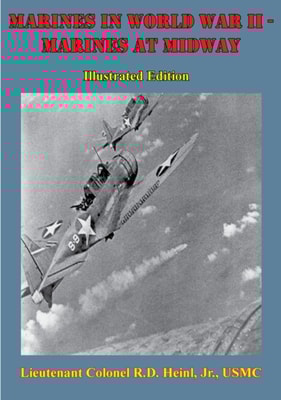
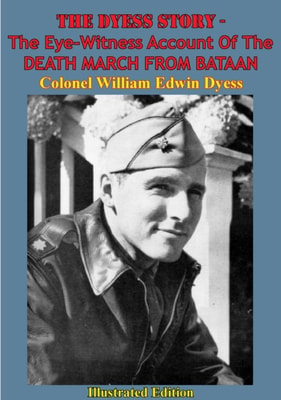
As the United States enters into the 21st century, it will face new and different challenges that will be more complex than those encountered in the past.
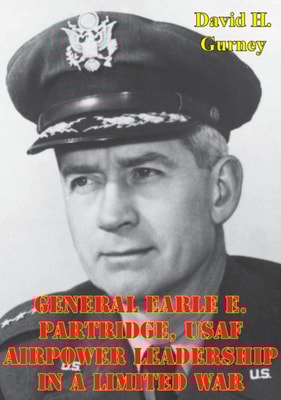
This study analyzes the career of General Earle Everard "e;Pat"e; Partridge, USAF, with a focus on the airpower lessons that inspired his craftsmanship of the first air campaign of the United States Air Force.
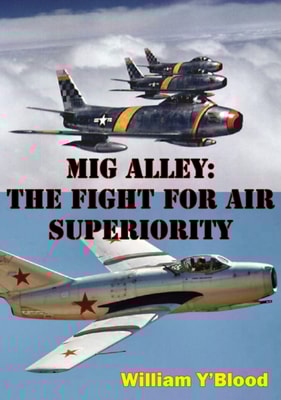
Includes more than 20 photo illustrationsThe fight for air superiority began the day the Korean War started and only ended with the armistice three years later.
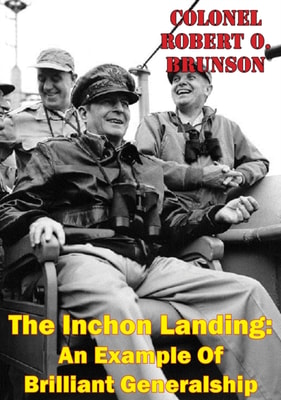
The Inchon Landing's success required a commander like General MacArthur who could gain the cooperation and coordination of the Army, Navy, Marine, and Air Force commanders, despite their belief that the Inchon Landing operation was very nearly impossible.
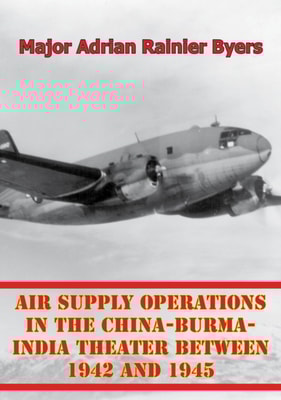
The USAAF responded to the requirement to keep China engaged against Japan by conducting two distinct air supply operations, a tactical air supply mission to Burma and a strategic air supply effort over the Himalayas to China.
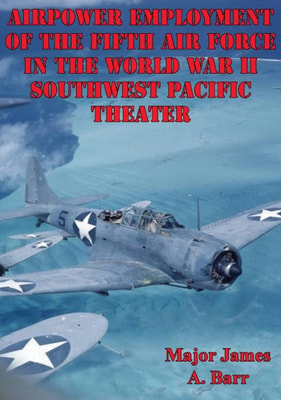
[Illustrated with more than 45 diagrams, photos and tables]Captain Rodman, an instructor weapon-systems officer at Dyess AFB, Texas, examines the distinctive nature of Fifth Air Force's role in the air war over the Southwest Pacific Area during World War II.
[Illustrated with over one hundred maps, photos and portraits, of the battles, individuals and places involved in the Indian Mutiny]Originally published anonymously as by a "e;Staff Officer"e;, Captain Thomas Wilson's memoirs are as gripping and vivid as any that a British officer wrote of the Famous Siege of Lucknow.
[Illustrated with over one hundred maps, photos and portraits, of the battles, individuals and places involved in the Indian Mutiny]The siege of Lucknow during the Indian Mutiny of 1857-8 was one of the focal points of the conflict that engulfed the sub-continent and threatened to bring the British Raj to its knees.
During the final stages of World War II, Japan was finally defeated through the strategic use of the Marianas Islands as a jumping-off point for power projection into the heart of Japan.
European airpower theorists of the 1920's and 30's envisioned the deliberate bombing of civilians in order to affect an enemy nation's wartime production capabilities and national morale.
The Battle for Leyte Gulf in October 1944 was the largest naval battle of World War II both in terms of the number of ships involved, and the expanse of area the battle covered.
The Fantastic story of the "e;Heroine of Manipur"e; who led to bloody, battered survivors of the Manipur Mutiny to safety over some of the roughest roads in all of India.
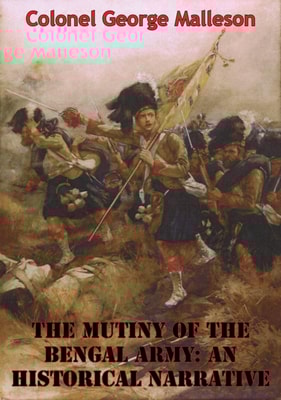
[Illustrated with over one hundred maps, photos and portraits, of the battles, individuals and places involved in the Indian Mutiny]The brilliant two-volume account of the Indian Mutiny written by the eminent military historian Colonel George Malleson, richly illustrated with maps, plans and portraits.
During the Second World War the American forces in the Pacific engaged in the greatest series of amphibious assaults ever known against tenacious Japanese foe.
As the Marines ran into the shore of the coral reefed island of Peleliu in their landing craft the Japanese artillery that wreathed the landing beach of Peleliu gave them little confidence in the words of their commander General Rupertus that the operation would be hard but short with minimal casualties; what lay ahead would be what was known as "e;the bitterest battle of the war for the Marines"e;.
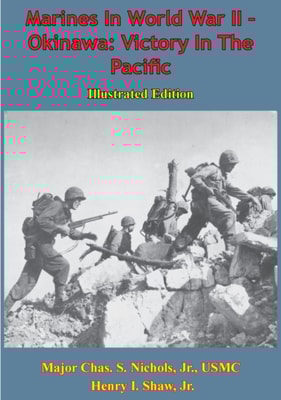
[Includes 2 tables, 3 charts, 21 maps and 88 illustrations]On 3 October 1944 American forces in the Pacific Ocean Areas received a directive to seize positions in the Ryukyu Islands (Nansei Shoto).
[Includes 16 charts, 54 maps and 196 illustrations]Triumph in the Philippines is the story of the largest joint campaign of the Pacific phase of World War II.
[Includes 10 tables, 9 charts, 54 maps and 88 illustrations]The landing of the American forces on Leyte on 20 October 1944 brought to fruition the long-cherished desire of General Douglas MacArthur to return to the Philippine Islands and avenge the humiliating reverses suffered in the early days of World War II.
[Includes 2 tables, 33 maps and 56 illustrations]Jungle warfare in the Southwest Pacific provided a unique experience for an army only lately thrust into global war; but as The Approach to the Philippines graphically demonstrates, the rules of war, the problems of leadership, and the opportunities for military success pertain in the steaming hills of New Guinea as well as on the broad plains of Normandy.
On the outcome of the Battle of Saipain hung the fate of the Pacific War, if the Japanese were to lost this island then the Home Islands would finally be in range of serious American bombing.
This book tells the story of the Marines spearheading the thrust through the Japanese outer ring of defences and recounts the brutal and important island-hopping Pacific campaign at its most gripping following the bloodbath at Tarawa.
The Story of the bloody brutal Battle of Tarawa, also known by its codename Operation Galvanic, was the first time that the Americans and principally the Marine Corps faced serious opposition to a seaborne landing.