The forgotten story of the nineteenth-century freethinkers and twentieth-century humanists who tried to build their own secular religionIn The Church of Saint Thomas Paine, Leigh Eric Schmidt tells the surprising story of how freethinking liberals in nineteenth-century America promoted a secular religion of humanity centered on the deistic revolutionary Thomas Paine (1737-1809) and how their descendants eventually became embroiled in the culture wars of the late twentieth century.
When the first season of Star Trek opened to American television viewers in 1966, the thematically insightful sci-fi story line presented audiences with the exciting vision of a bold voyage into the final frontiers of space and strange, new galactic worlds.
Balancing respect for religious conviction and the values of liberal democracy is a daunting challenge for judges and lawmakers, particularly when religious groups seek exemption from laws that govern others.
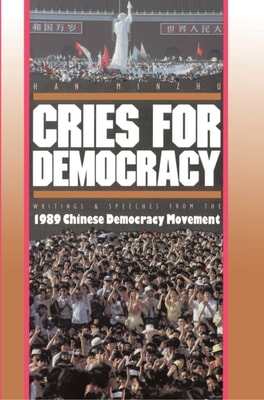
"e;Han Minzhu"e; and her assistant editor, "e;Hua Sheng,"e; both writing under pseudonyms to protect their identities, present a rich collection of translations of original writings and speeches from the 1989 Chinese Democracy Movement--flyers, "e;big-character"e; posters, "e;small-character"e; posters, handbills, poems, articles from nonofficial newspapers and journals, government statements, and transcriptions of tapes.
As waves of epidemic disease swept the Philippines in the late nineteenth century, some colonial physicians began to fear that the indigenous population would be wiped out.
"e;A provocative, arresting, put-you-there account of a forgotten 1940s Army basketball team that we now realize shouldn't be forgotten"e; (Lars Anderson, New York Times-bestselling author).
A richly illustrated cultural history of the midcentury pulp paperback"e;There is real hope for a culture that makes it as easy to buy a book as it does a pack of cigarettes.
One of the core assumptions of recent American foreign policy is that China's post-1978 policy of "e;reform and openness"e; will lead to political liberalization.
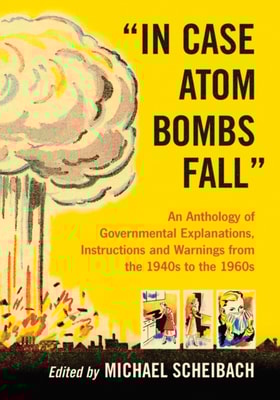
With the very real possibility of nuclear war looming on the horizon from 1945 to the early 1960s, both federal and local governments took on the responsibility of educating Americans on how to survive the expected blasts, residual fallout, and radiation poisoning.
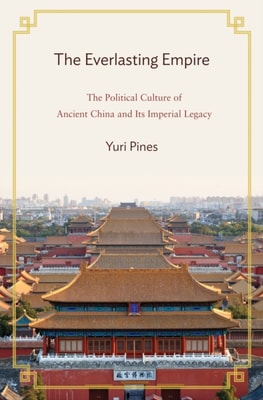
The Qing dynasty (1636-1912)-a crucial bridge between "e;traditional"e; and "e;modern"e; China-was remarkable for its expansiveness and cultural sophistication.
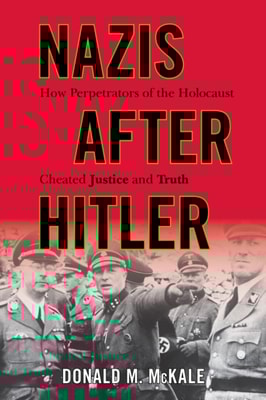
The stories of thirty war criminals who escaped accountability, from a historian praised for his "e;well written, scrupulously researched"e; work (The New York Times).
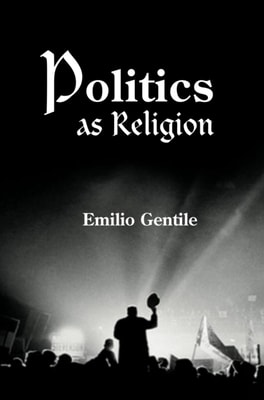
Emilio Gentile, an internationally renowned authority on fascism and totalitarianism, argues that politics over the past two centuries has often taken on the features of religion, claiming as its own the prerogative of defining the fundamental purpose and meaning of human life.
In 2011, amid the popular uprising against Egyptian president Hosni Mubarak, the government sought in vain to shut down the Internet-based social networks of its people.
Turkey has leapt to international prominence as an economic and political powerhouse under its elected Muslim government, and is looked on by many as a model for other Muslim countries in the wake of the Arab Spring.
How Enlightenment Europe rediscovered its identity by measuring itself against the great civilizations of AsiaDuring the long eighteenth century, Europe's travelers, scholars, and intellectuals looked to Asia in a spirit of puzzlement, irony, and openness.
Many Americans wish to believe that the United States, founded in religious tolerance, has gradually and naturally established a secular public sphere that is equally tolerant of all religions--or none.
This volume offers perspectives from the general public in post-Soviet Central Asia and reconsiders the meaning and the legacy of Soviet administration in Kazakhstan, Kyrgyzstan and Uzbekistan.
This book focuses on helping readers to fill the gap of the little known history between Western Europe and its most important trading partner: the People's Republic of China.
Click here to hear Anne-Marie Bradys BBC World Service radio documentary titled The Message from ChinaChinas government is no longer a Stalinist-Maoist dictatorship, yet it does not seem to be moving significantly closer to democracy as it is understood in Western terms.
This book explores the relationship between the distinctive Islamic beliefs (Ibadism) of Oman and how they define the experience of the church with regards to religious freedom.
This pioneering volume focuses on the scale, territorial trajectories, impact, economic relationships, identity and nature of the Scottish-Asia connection from the late seventeenth century to the present.
Between 1975 and 1979 the Khmer Rouge regime in Cambodia enacted a program of organized mass violence that resulted in the deaths of approximately one quarter of the country's population.
This book explores the diverse experience of Bangladesh's development over the last fifty years and provides systematic explanations of its success in socioeconomic development.
This volume provides new insights into gendered interactions over the past two centuries between Germany and Asia, including India, China, Japan, and previously overlooked Asian countries including Vietnam, the Philippines, Thailand, and Korea.
This book examines how the rulers in the Persian Gulf responded to the British announcement of military withdrawal from the Gulf in 1968, ending 150 years of military supremacy in the region.
This book investigates desert islands in postwar anglophone popular culture, exploring representations in radio, print and screen advertising, magazine cartoons, cinema, video games, and comedy, drama and reality television.
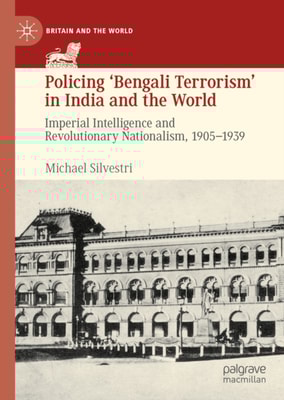
This book examines the development of imperial intelligence and policing directed against revolutionaries in the Indian province of Bengal from the first decade of the twentieth century through the beginning of the Second World War.