In the early 2000s, the central government of China encouraged all of the nation's registered minorities to "e;salvage, sort, synthesize, and elevate"e; folk medical knowledges in an effort to create local health care systems comparable to the nationally supported institutions of traditional Chinese medicine.
Shanghai, a dynamic world metropolis, is home to a multitude of religions, from Buddhism and Islam, to Christianity and Bahaism, to Hinduism and Daoism, and many more.
A chapter-by-chapter explanation of the Book of Exodus, revealing its wisdom about nation building and people formation"e;Kass draws from Exodus' record of the founding of Judaism timely even urgent universal lessons about twenty-first-century preconditions for human flourishing in any community.
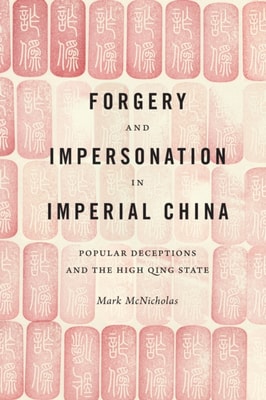
Previous studies of the practice of footbinding in imperial China have theorized that it expressed ethnic identity or that it served an economic function.
A controversial examination of the internal Israeli debate over the Israeli-Palestinian conflict from a best-selling Israeli author Since the Six-Day War, Israelis have been entrenched in a national debate over whether to keep the land they conquered or to return some, if not all, of the territories to Palestinians.
During the first half of the twentieth century, representatives of the French colonial health services actively strove to expand the practice of Western medicine in the frontier colony of Cambodia.
In Excavating the Afterlife, Guolong Lai explores the dialectical relationship between sociopolitical change and mortuary religion from an archaeological perspective.
The first full-scale biography of one of the most important—and enigmatic—leaders in Israeli history Menachem Begin, father of Israel's right wing and sixth prime minister of the nation, was known for his unflinchingly hawkish ideology.
By studying the early splits within Korean nationalism, Michael Robinson shows that the issues faced by Korean nationalists during the Japanese colonial period were complex and enduring.
According to conventional interpretations, the Japanese annexation of Korea in 1910 destroyed a budding native capitalist economy on the peninsula and blocked the development of a Korean capitalist class until 1945.
In this eagerly awaited book, political theorist Michael Walzer reports his findings after decades of reading and thinking about the politics of the Hebrew Bible.
From one of the leading historians of Christianity comes this sweeping reassessment of religious freedom, from the church fathers to John Locke“Robert Louis Wilken’s new masterpiece.
Going beyond the stereotypes of Kalashnikov-wielding Afghan mujahideen and black-turbaned Taliban fundamentalists, Larry Goodson explains in this concise analysis of the Afghan war what has really been happening in Afghanistan in the last twenty years.
The Art of Resistance surveys the lives of seven paintersDing Cong (19162009), Feng Zikai (18981975), Li Keran (190789), Li Kuchan (18981983), Huang Yongyu (b.
A new understanding of rural-urban migration and inequality in contemporary ChinaMany of the millions of workers streaming in from rural China to jobs at urban factories soon find themselves in new kinds of poverty and oppression.
The residents of the three northern provinces of Korea have long had cultural and linguistic characteristics that have marked them as distinct from their brethren in the central area near the capital and in the southern provinces.
A knowledgeable insider provides the first clear view of what has happened in the Arab world and why This important book is not about immediate events or policies or responses to the Arab Spring.
A beautifully written exploration of religion's role in a secular, modern politics, by an accomplished scholar of critical theoryMigrants in the Profane takes its title from an intriguing remark by Theodor W.
A powerful account of life and loss in the Great War, as told by British soldiers in their letters home This book was inspired by the author’s discovery of an extraordinary cache of letters from a soldier who was killed on the Western Front during the First World War.
A short and thoughtful introduction to traditional Chinese medicine that looks beyond the conventional boundaries of Western modernism and biomedical science Traditional Chinese medicine is often viewed as mystical or superstitious, with outcomes requiring naïve faith.
A history of capitalism in nineteenth' and twentieth'century China and India that explores the competition between their tea industries Tea remains the world’s most popular commercial drink today, and at the turn of the twentieth century, it represented the largest export industry of both China and colonial India.
Winner of the 2009 Ananda Kentish Coomaraswamy Book Prize, sponsored by the Association for Asian StudiesThe medieval Rajput queen Padmini - believed to have been pursued by Alauddin Khalji, the Sultan of Delhi - has been the focus of numerous South Asian narratives, ranging from a Sufi mystical romance in the sixteenth century to nationalist histories in the late nineteenth century.
How American conflicts about religion have always symbolized our foundational political values When Americans fight about “religion,” we are also fighting about our conflicting identities, interests, and commitments.
This lively survey of the peoples, cultures, and societies of Southeast Asia introduces a region of tremendous geographic, linguistic, historical, and religious diversity.
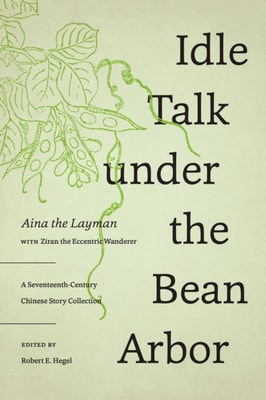
Written around 1660, the unique Chinese short story collection Idle Talk under the Bean Arbor (Doupeng xianhua), by the author known only as Aina the Layman, uses the seemingly innocuous setting of neighbors swapping yarns on hot summer days under a shady arbor to create a series of stories that embody deep disillusionment with traditional values.
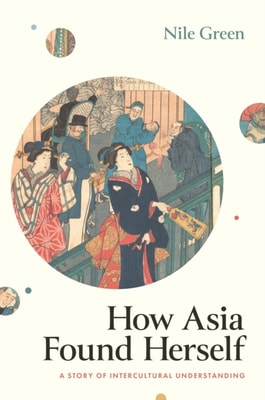
A pioneering history of cross-cultural knowledge that exposes enduring fractures in unity across the world's largest continentThe nineteenth century saw European empires build vast transport networks to maximize their profits from trade, and it saw Christian missionaries spread printing across Asia to bring Bibles to the colonized.
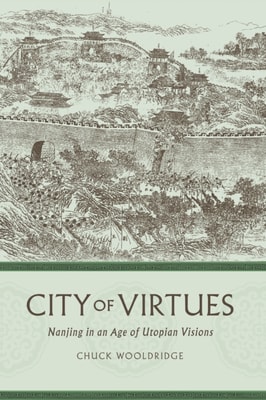
Throughout Nanjings history, writers have claimed that its spectacular landscape of mountains and rivers imbued the city with royal qi, making it a place of great political significance.
In this follow-up to his much-praised book Losing Small Wars: British Military Failure in Iraq and Afghanistan, Frank Ledwidge argues that Britain has paid a heavy cost - both financially and in human terms - for its involvement in the Afghanistan war.
Follows the path of an everyday object, from quarry to deskAn inkstone, a piece of polished stone no bigger than an outstretched hand, is an instrument for grinding ink, an object of art, a token of exchange between friends or sovereign states, and a surface on which texts and images are carved.
The first contemporary analysis of Bedouin and biblical cultures sheds new light on biblical laws, practices, and Bedouin history Written by one of the world’s leading scholars of Bedouin culture, this groundbreaking book sheds new light on significant points of convergence between Bedouin and early Israelite cultures, as manifested in the Hebrew Bible.
The untold story of Israel’s diplomatic maneuvering in the wake of the Six Day War, which frustrated a possible peace settlement Israel’s victory in the June 1967 Six Day War provided a unique opportunity for resolving the decades-old Arab-Zionist conflict.
A celebration of waiting throughout history, and of its importance for connection, understanding, and intimacy in human communication We have always been conscious of the wait for life-changing messages, whether it be the time it takes to receive a text message from your love, for a soldier’s family to learn news from the front, or for a space probe to deliver data from the far reaches of the solar system.
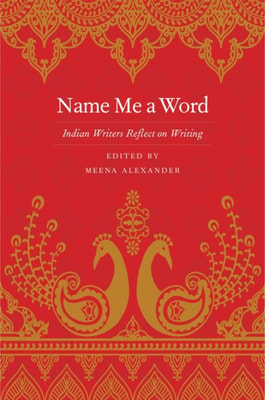
A wide-ranging anthology of twentieth-century and contemporary writing from India and the Indian diaspora, curated by a distinguished scholar and poet Internationally renowned scholar, poet, and essayist Meena Alexander brings together leading twentieth- and twenty-first-century voices from India and the diaspora in this anthology.
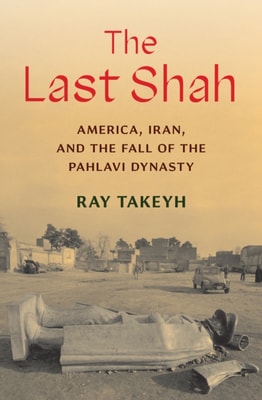
The surprising story of Iran's transformation from America's ally in the Middle East into one of its staunchest adversariesOffering a new view of one of America's most important, infamously strained, and widely misunderstood relationships of the postwar era, this book tells the history of America and Iran from the time the last shah, Mohammad Reza Pahlavi, was placed on the throne in 1941 to the 1979 revolution that brought the present Islamist government to power.