First published in 1969, Conflict and Stability in Fifteenth-Century England is a study of a much neglected and misinterpreted century of English history-the century of the Wars of the Roses which, the author shows, had only a comparatively small effect on English life.
'In the tenth-century Annales Cambriae, which possibly goes back to contemporary sources, the entry about the Battle of Badon Hill mentions that Arthur "e;carried the Cross of our Lord Jesus Christ on his shoulders for three days and three nights"e;.
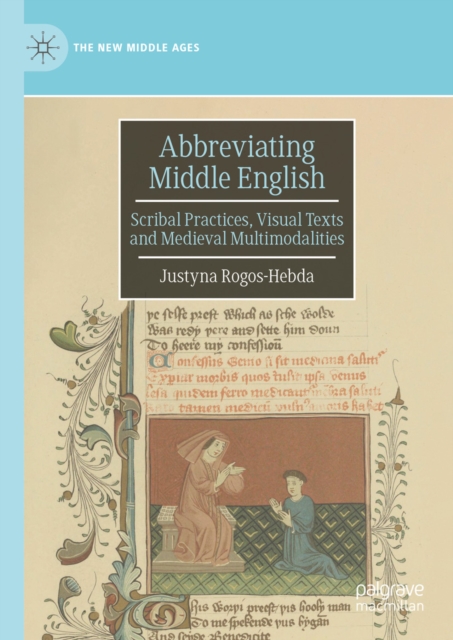
Abbreviating Middle English: Scribal practices, Visual Texts and Medieval Multimodalities investigates the changing dynamics of scribal abbreviating practices in a corpus of late Middle English manuscripts of Richard Rolle's, John Lydgate's and John Gower's works and reinterprets these practices from new perspectives of visual pragmatics, medieval multimodalities and visual code-switching.
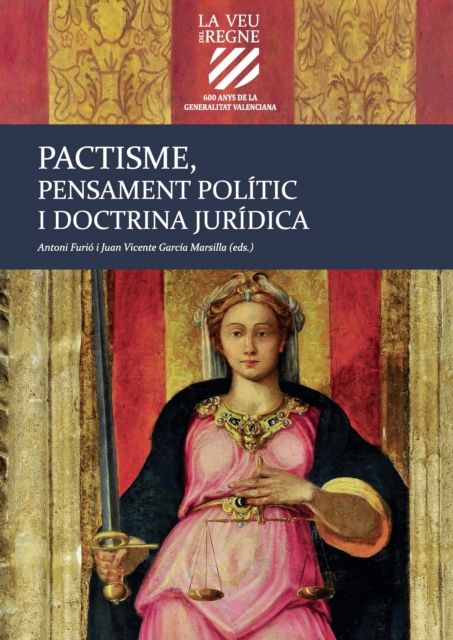
La qüestió dels fonaments del poder polític, i del pactisme en particular, ha ocupat un lloc central en la historiografia de la Corona d'Aragó, que ha fet d'aquest darrer no sols una singularitat privativa, sinó també un signe distintiu d'identitat, gairebé tel·lúric i molt arrelat en la idiosincràsia del país.
This book provides an in-depth study of depictions of England in the Saga of Icelanders (Islendingasogur), examining their utility as sources for the history of Viking Age Anglo-Scandinavian cultural contact.
This book provides an in-depth study of depictions of England in the Saga of Icelanders (Islendingasogur), examining their utility as sources for the history of Viking Age Anglo-Scandinavian cultural contact.
The calendar worked out by Bede remains essentially the one we still use today, yet the mathematical and scientific studies of the early medieval schools have been largely neglected in most discussions of the cultural and intellectual history of Latin Europe.
This volume contains articles covering the centuries between the establishment of Carolingian power in Western Europe and the expansion of the Anglo Norman and Angevin 'Empire' within the French kingdom of the Capetians.
Taking as its starting point an investigation into the physical topography and symbolism of the two cities of Athens and Jerusalem, this book offers a cultural history of the rival superpowers—the Byzantine Empire and Fatimid Caliphate—that between them dominated the Mediterranean world during the Central Middle Ages.
Taking as its starting point an investigation into the physical topography and symbolism of the two cities of Athens and Jerusalem, this book offers a cultural history of the rival superpowers—the Byzantine Empire and Fatimid Caliphate—that between them dominated the Mediterranean world during the Central Middle Ages.
In the articles included in this collection, Professor Daniel argues that Abbot Joachim of Fiore was a disciple of Bernard of Clairvaux whose tertius status was reformist, not millenialist.
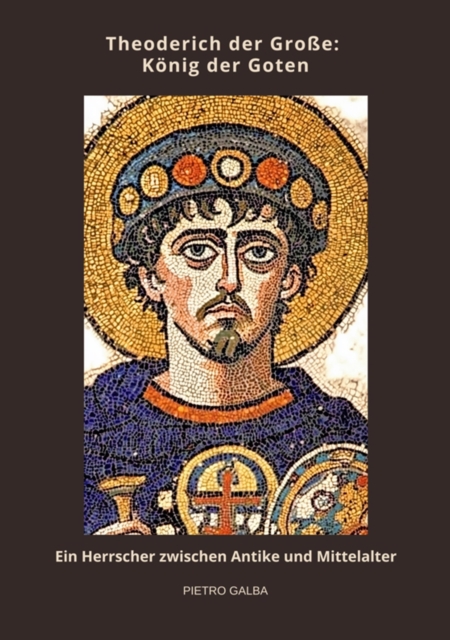
Theoderich der Große, König der Ostgoten, steht als eine der faszinierendsten Persönlichkeiten der Spätantike und des frühen Mittelalters im Mittelpunkt einer Epoche des Wandels.
First published in 1978, this book argues that the troubadour revival in late medieval Spain was a conservative reaction to social crisis by those who belonged, or were affiliated, to a powerful, expanding and belligerent aristocracy.
After an introductory general essay on the life cycle and status of women in Byzantine society, this volume focuses on female religious life, with particular emphasis on the role of convents - as spiritual sanctuary, refuge for women in need, or provider of charitable services.
First published in 1980, but then out of print for several years, this collection, together with The History of Ideas and Doctrines of Canon Law in the Middle Ages, presents a series of fundamental articles by the acknowledged master of medieval canon law studies.
This volume of studies by the late Milton Anastos contains his major articles published after his previous collection appeared, along with the first publication of a portion of 'The Mind of Byzantium', Anastos's projected multi-volume survey of Byzantine intellectual history.