A bold new religious history of the late antique and medieval Middle East that places ordinary Christians at the center of the storyIn the second half of the first millennium CE, the Christian Middle East fractured irreparably into competing churches and Arabs conquered the region, setting in motion a process that would lead to its eventual conversion to Islam.
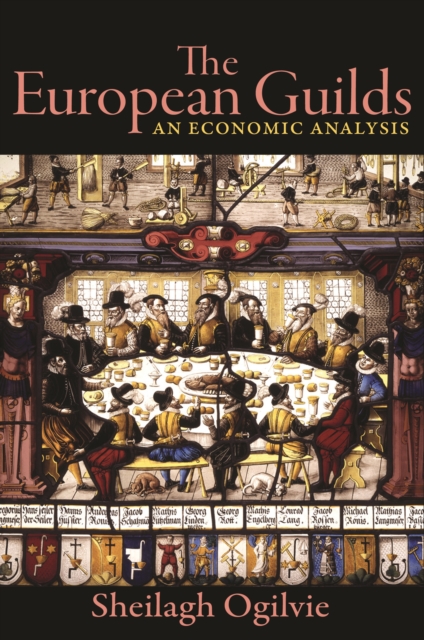
A comprehensive analysis of European craft guilds through eight centuries of economic historyGuilds ruled many crafts and trades from the Middle Ages to the Industrial Revolution, and have always attracted debate and controversy.
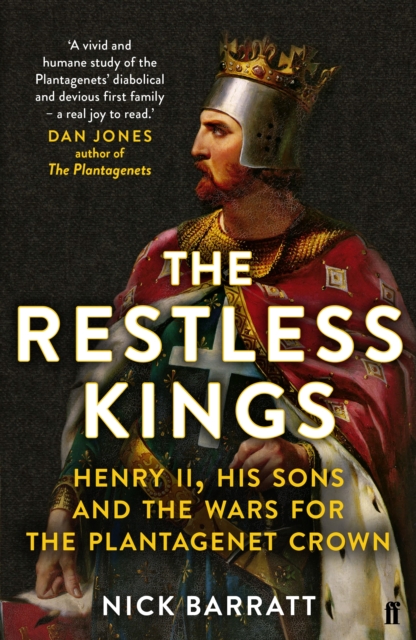
'Compulsively readable' (History), this is the first volume in a series that details the long and violent endeavour of the English to dismember Europe's strongest state, a succession of wars that is one of the seminal chapters in European history.
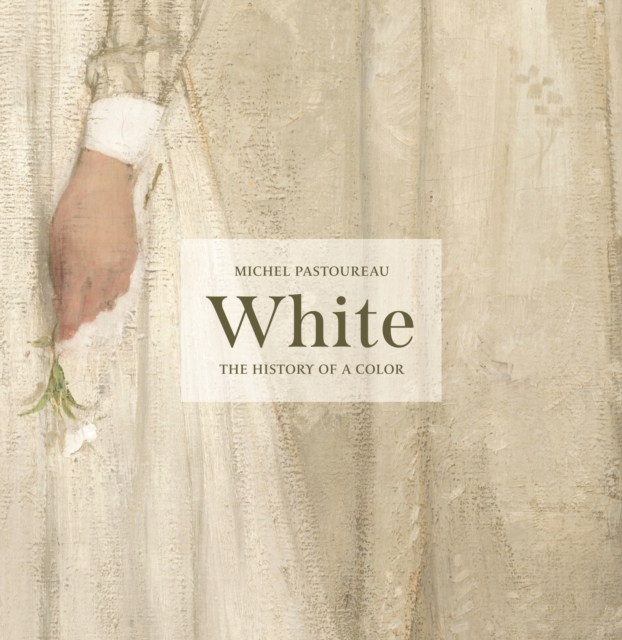
From the acclaimed author of Blue, a beautifully illustrated history of the color white in visual culture, from antiquity to todayAs a pigment, white is often thought to represent an absence of color, but it is without doubt an important color in its own right, just like red, blue, green, or yellowand, like them, white has its own intriguing history.
A bold new religious history of the late antique and medieval Middle East that places ordinary Christians at the center of the storyIn the second half of the first millennium CE, the Christian Middle East fractured irreparably into competing churches and Arabs conquered the region, setting in motion a process that would lead to its eventual conversion to Islam.
A riveting history of the city that led the West out of the ruins of the Roman EmpireAt the end of the fourth century, as the power of Rome faded and Constantinople became the seat of empire, a new capital city was rising in the West.
Ross Dunn here recounts the great traveler's remarkable career, interpreting it within the cultural and social context of Islamic society and giving the reader both a biography of an extraordinary personality and a study of the hemispheric dimensions of human interchange in medieval times.
Bits of late Roman coinage, the mutilated torso of a marble Venus, blue debris from an early medieval glassworks, and the powder rasped from the reputed tomb of Mary Magdalene-these tantalizing mementos of human history found scattered throughout the landscape of southeastern France are the points of departure for Gustaf Sobin's lyrical narrative.
This bold challenge to conventional notions about medieval music disputes the assumption of pure literacy and replaces it with a more complex picture of a world in which literacy and orality interacted.
In this groundbreaking work, Stephen Murray seizes a rare opportunity to explore the relationship between verbal and visual culture by presenting a sermon that may have been preached during the second half of the thirteenth century in or near the cathedral of Notre-Dame of Amiens, whose sculptural program was completed at about the same time.
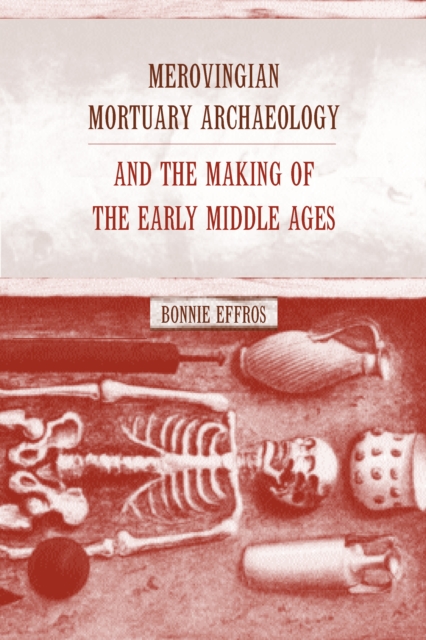
Clothing, jewelry, animal remains, ceramics, coins, and weaponry are among the artifacts that have been discovered in graves in Gaul dating from the fifth to eighth century.
Tomaz Mastnak's provocative analysis of the roots of peacemaking in the Western world elucidates struggles for peace that took place in the high and late Middle Ages.
Although closely focused on the remarkable Hebrew First-Crusade narratives, Robert Chazan's new interpretation of these texts is anything but narrow, as his title, God, Humanity, and History, strongly suggests.
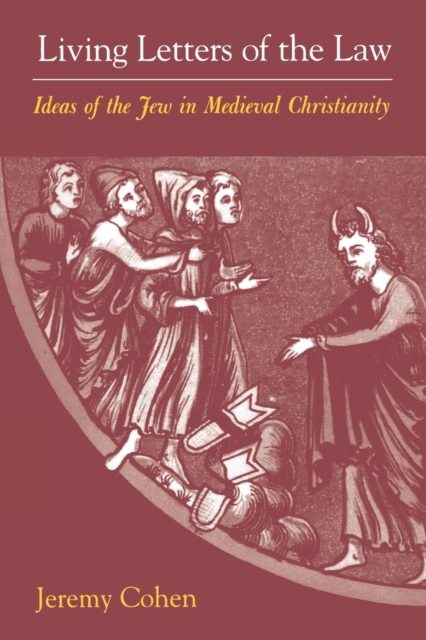
In Living Letters of the Law, Jeremy Cohen investigates the images of Jews and Judaism in the works of medieval Christian theologians from Augustine to Thomas Aquinas.
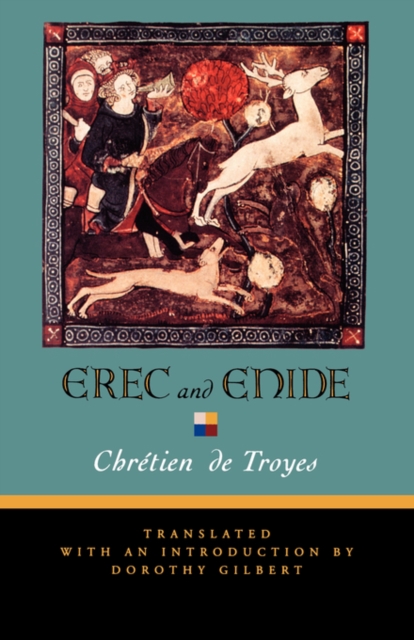
In this new verse translation of one of the great works of French literature, Dorothy Gilbert captures the vivacity, wit, and grace of the first known Arthurian romance.
In the period between 1200 and 1500 in western Europe, a number of religious women gained widespread veneration and even canonization as saints for their extraordinary devotion to the Christian eucharist, supernatural multiplications of food and drink, and miracles of bodily manipulation, including stigmata and inedia (living without eating).
Part of the ALL-NEW LADYBIRD EXPERT SERIES'This accessible illustrated guide is a great introduction to the story, its origins and its enduring legacy' BBC HISTORY- Which is more terrifying - a monster or its mother?
A translation of The Book of the Civilised Man by Daniel of Beccles brings to light the social and cultural life of medieval people in the twelfth and thirteenth centuries through a previously little-known text.
A translation of The Book of the Civilised Man by Daniel of Beccles brings to light the social and cultural life of medieval people in the twelfth and thirteenth centuries through a previously little-known text.
First published in 1907, this transcribed text provides insight into the social, economic, legal and political lives of the residents of Late Medieval Coventry.
First published in 1907, this transcribed text provides insight into the social, economic, legal and political lives of the residents of Late Medieval Coventry.
First published in 1998, this volume brings together some of the best recent work on the period before and after the Norman Conquest and makes an irresistible case for a number of fundamental revisions in our understanding of the culture of Anglo-Saxon and Norman England.
First published in 1998, this volume brings together some of the best recent work on the period before and after the Norman Conquest and makes an irresistible case for a number of fundamental revisions in our understanding of the culture of Anglo-Saxon and Norman England.
As part of the historicizing corpus of seventh-century Irish writing, the Lives framed the narrative of the early saints as an effective weapon in contemporary political and ecclesiastical conflicts.
First published in 1999, this volume emerged as part of the Collected Studies series and features studies authored by Bernard Hamilton over a period of twenty years, all of which deal with relations between Western Europe and the neighbouring civilizations in the Eastern Mediterranean during the 12th and 13th centuries.
First published in 1999, this volume emerged as part of the Collected Studies series and features studies authored by Bernard Hamilton over a period of twenty years, all of which deal with relations between Western Europe and the neighbouring civilizations in the Eastern Mediterranean during the 12th and 13th centuries.
Networks and the Spread of Ideas in the Past: Strong Ties, Innovation and Knowledge Exchange gathers contributions from an international group of scholars to reconsider the role that strong social ties play in the transmission of new ideas, and their crucial place in network analyses of the past.
Networks and the Spread of Ideas in the Past: Strong Ties, Innovation and Knowledge Exchange gathers contributions from an international group of scholars to reconsider the role that strong social ties play in the transmission of new ideas, and their crucial place in network analyses of the past.