This comprehensive account of the economic development of Spain, available for the first time in English, is generally regarded as a major achievement in Spanish historiography.
This work explores the background and first two years of the First Carlist War--a conflict that pitted conservative northern peasants against the liberal Madrid government in the largest and most sustained case of armed peasant resistance to modernization in nineteenth-century Europe.
Using many unpublished and other primary sources as well as interviews with aides and associates of Hindenburg, the author shows in Hindenburg and the Weimar Republic how this proud and cautious man, naive in politics and preoccupied with his reputation among his fellow generals, failed to act in crucial situations, or hesitated until action was futile.
This comprehensive study of labor in German agriculture integrates historical, sociological, and legal facts and relates them to the general political and cultural currents in Germany from 1810 to the Nazi defeat in 1945.
In the 1560's and the 1570's, several authors outside of Spain recorded the text of an oath supposedly uttered by the Aragonese people when they received their king.
Reconstructing the collective experience of an entire provincial nobility over a period of more than two centuries, James Wood finds current theories about the early modernFrench nobility inadequate.
In tracing the history of the anti-mercantilist movement, the author shows that many of the ideas and attitudes associated with eighteenth century philosophes were first formulated in the anti-mercantilist criticism.
In comprehensive detail Margaret King analyzes the activities of the patricians who were predominant in the ranks of the humanists and who made humanist thought a powerful tool in the service of their class and of the city itself.
Questioning whether the Germans were actually as influential or dominant in the Ottoman empire as most standard works suggest, the author attacks the myths surrounding Turkey's role in the war.
Professor Kaegi studies the response of the eastern half of the Roman Empire to the disintegration of western Rome, usually dated from the sack of the city of Rome in A.
"e;The Period of Consolidation, 1871-1880, Volume II"e; opens at a time when Bismarck had become the dominant figure in German and European politics and the new German Reich the most formidable power on the continent.
The author describes the influence on the Enlightenment of the intellectual currents that had been active in France, particularly the historical and humanistic esprit critique and the scientific esprit modern.
Professor Herr's brief and attractively presented Tocqueville and the Old Regime is to be commended to all who are interested in Tocqueville and his great hook on The Ancien Regime and the RevolutionOriginally published in 1962.
While careful attention has been paid to the overthrow of the July Monarchy and to the subsequent development of radicalism under the Second Republic, little research has been done on the counterrevolutionary activity that preceded Louis Napoleon's seizure of power.
The author scrutinizes official documents and unpublished government and private archives to present a day-by-day account of the negotiations among the League's representatives that led to a peaceful settlement of the crisis.
The Scandinavian countries today form a security-community for economic cooperation and the settlement of international controversy by peaceful methods rather than by war.
This book examines the response of several British churches to the problems of industrialism during the period of the socialist revival, a period that also saw the rise of the Labour Party and other workingmen's associations.
The problem of the relationship between moral principles and political necessity, of the purposes of power and the justice of means, has always been a central theme in European history.
The thirteenth-century monarch Alfonso the Learned of Castile and his contemporary rival James the Conqueror, of Aragon-Catalonia, are key figures who made enduring contributions to Western civilization--although neither is well known to American students.
Professor Peterson examines these questions in relation to Hitler's government with its reputedly unlimited internal power; he traces the flow of power throughout the Nazi state from 1933 to 1945, from Hitler to his ministers to provincial governments.
Moving beyond earlier explanations of why the Protestant church opposed the Weimar Republic, David Diephouse emphasizes the social role of the church rather than its direct political activity.
Professor Talbott describes the effort in France to democratize the educational system, particularly in the secondary schools, and to reform the traditional educational structure laid down by the Jesuits in the seventeenth century.
Spanning a long and unusually turbulent phase of Greek history, this collection of Lincoln MacVeagh's papers constitutes a record of high historical value, bringing together a selection of rich source material.
This book, analyzing the government of Florence during one of her most critical periods, and the forces that destroyed it, is the first study of the Florentine Trecento to use archival sources of the communal government systematically.
Tracing the history of the Indian National Congress from its founding in 1885 until about 1905, Professor McLane analyzes its efforts to build a national community and to obtain fundamental reforms from the British.
The fourteenth century is usually portrayed as a period of retrogression and disaster in European history, but for the transalpine state of Savoy it was a period of glory.
Examining the democratic-socialist politics of the Second Republic, Edward Berenson delves into the largely unexplored content of the Montagnards' ideology and traces its diffusion and reception in the populist religious culture of rural France.
By examining the relationship between the notaires, members of a significant French legal profession with deep roots in French history, and the state, Ezra Suleiman demonstrates that clientelism exists and may be more dangerous in a centralized state than in a decentralized one.
The recent discovery of fragments from such novels as Iolaos, Phoinikika, Sesonchosis, and Metiochos and Parthenope has dramatically increased the library catalogue of ancient novels, calling for a fresh survey of the field.
Well after the process of codification had begun elsewhere in nineteenth-century Europe, ancient Roman law remained in use in Germany, expounded by brilliant scholars and applied in both urban and rural courts.
A case study in American philanthropy, this book describes the beginnings of the Center for Hellenic Studies, a research institute established in 1961 in Washington, D.
Since the beginning of the current era of imperialism in the late nineteenth century, there has been a striking contrast between bourgeois political thought in Germany and the West.
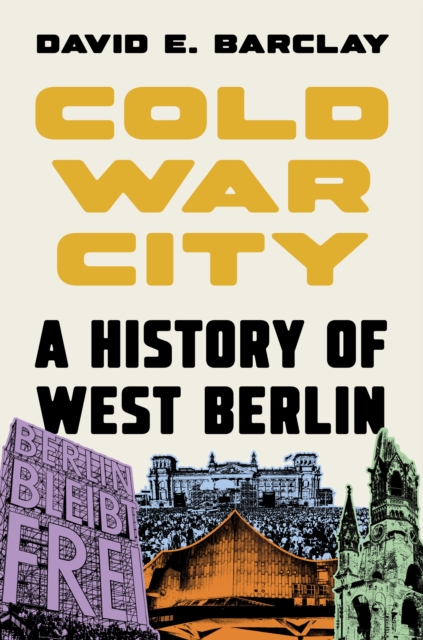
The untold story of West Berlin, the island city deep inside the Soviet bloc that withstood the decades-long confrontation between the USSR and the WestLocated more than one hundred miles behind the Iron Curtain, West Berlin served as a stage on which the confrontation between nuclear-armed superpowers played out across nearly five decades.
Love affairs of the courts of Europe presents a vivid exploration of romantic entanglements within European royal circles, revealing how personal relationships shaped political destiny and public perception.