A remarkable collection of charming and eloquent letters that contain the seeds of Tocqueville’s later masterful account of American democracy Young Alexis de Tocqueville arrived in the United States for the first time in May 1831, commissioned by the French government to study the American prison system.
A combined history of commerce and disease, and their disturbing propensity for traveling together Much as we take comfort in the belief that modern medicine and public health tactics can protect us from horrifying contagious diseases, such faith is dangerously unfounded.
The best single-volume analysis of Burma, its checkered history, and its attempts to reform Burma is one of the largest countries in Southeast Asia and was once one of its richest.
Through the story of a portrait of a woman in a silk dress, historian Zara Anishanslin embarks on a fascinating journey, exploring and refining debates about the cultural history of the eighteenth-century British Atlantic world.
A controversial look at the end of globalization and what it means for prosperity, peace, and the global economic order Globalization, long considered the best route to economic prosperity, is not inevitable.
A fresh and fascinating history of crime and violence in England through the office of the coroner In his fascinating debut, Matthew Lockwood explores the history of crime, homicide, and suicide in England over four centuries through the office of the coroner.
Why those who protested the Vietnam War must be honored, remembered, and appreciated"e;Hell no"e; was the battle cry of the largest peace movement in American history the effort to end the Vietnam War, which included thousands of veterans.
The unique story of a small community of escaped slaves who revolted against the British government yet still managed to maneuver and survive against all odds After being exiled from their native Jamaica in 1795, the Trelawney Town Maroons endured in Nova Scotia and then in Sierra Leone.
As Britain and France became more powerful during the eighteenth century, small states such as Geneva could no longer stand militarily against these commercial monarchies.
A passionate account of how the gulf between France's metropolitan elites and its working classes are tearing the country apartChristophe Guilluy, a French geographer, makes the case that France has become an "e;American society"e; one that is both increasingly multicultural and increasingly unequal.
One of the most distinguished cultural and intellectual historians of our time, Frank Turner taught a landmark Yale University lecture course on European intellectual history that drew scores of students over many years.
Authors Christensen and Laitin argue that an interplay of geographic, historical, and demographic factors undergird sub'Saharan states’ post'independence struggles to eradicate poverty, establish democratic accountability, and quell civil unrest.
Pulitzer Prize Finalist: A biography of the wildly colorful eighteenth-century British politician who became "e;the toast of American revolutionaries"e; (Booklist).
Outlandish alchemist and magician, political intelligencer, apocalyptic prophet, and converser with angels, John Dee (1527–1609) was one of the most colorful and controversial figures of the Tudor world.
A Polish writer’s experience of wartime France, a cosmopolitan outsider’s perspective on politics, culture, and life under duress When the aspiring young writer Andrzej Bobkowski, a self-styled cosmopolitan Pole, found himself caught in occupied France in 1940, he recorded his reflections on culture, politics, history, and everyday life.
This fascinating documentary history is the first English-language exploration of Joseph Stalin's relationship with, and manipulation of, the Soviet political police.
Henry IV (1399–1413), the son of John of Gaunt, duke of Lancaster, seized the English throne at the age of thirty-two from his cousin Richard II and held it until his death, aged forty-five, when he was succeeded by his son, Henry V.
A major reassessment of Philip V's leadership and what it meant for the modern Spanish state Often dismissed as ineffective, indolent, and dominated by his second wife, Philip V of Spain (1700–1746), the first Bourbon king, was in fact the greatest threat to peace in Europe during his reign.
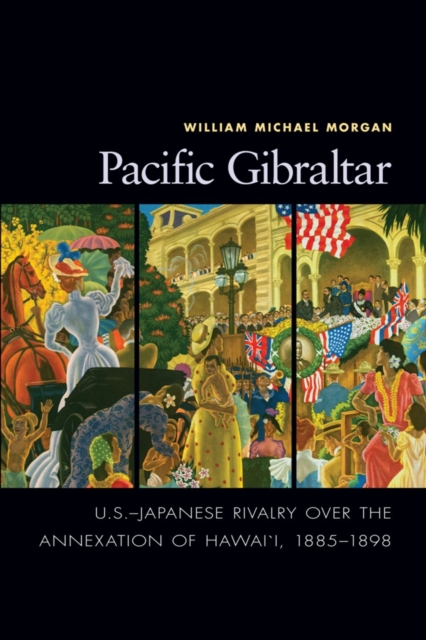
Vietnam Declassified is a detailed account of the CIA's effort to help South Vietnamese authorities win the loyalty of the Vietnamese peasantry and suppress the Viet Cong.
Before Franklin Roosevelt declared December 7 to be a "e;date which will live in infamy"e;; before American soldiers landed on D-Day; before the B-17s, B-24s, and B-29s roared over Europe and Asia, there was Willow Run.
Almost universally, newly independent states seek to affirm their independence and identity by making the production of new maps and atlases a top priority.
A lively interdisciplinary study of how venereal disease was represented in eighteenth-century British literature and art In eighteenth-century Britain, venereal disease was everywhere and nowhere: while physicians and commentators believed the condition to be widespread, it remained shrouded in secrecy, and was often represented using slang, symbolism, and wordplay.
From the prizewinning Jewish Lives series, an illuminating biography of the great Amsterdam rabbi and celebrated popularizer of Judaism in the seventeenth century Menasseh ben Israel (1604–1657) was among the most accomplished and cosmopolitan rabbis of his time, and a pivotal intellectual figure in early modern Jewish history.
A study of the fast-growing Victorian suburbs as places of connection, creativity, and professional advance, especially for women Literature has, from the start of the nineteenth century, cast the suburbs as dull, vulgar, and unimaginative margins where, by definition, nothing important takes place.
Tuberculosis is one of the world's deadliest infectious diseases, killing nearly two million people every year-more now than at any other time in history.
Prior histories of the first Spanish mariners to circumnavigate the globe in the sixteenth century have focused on Ferdinand Magellan and the other illustrious leaders of these daring expeditions.
A lively, expansive history of the Protestant and Catholic Reformations and the momentous changes they set in motion This fast-paced survey of Western civilization’s transition from the Middle Ages to modernity brings that tumultuous period vividly to life.
A unique, in-depth view of Victorian London during the record-breaking summer of 1858, when residents both famous and now-forgotten endured “The Great Stink” together While 1858 in London may have been noteworthy for its broiling summer months and the related stench of the sewage-filled Thames River, the year is otherwise little remembered.