How civility has shaped and been shaped by historical and social forces, and why it is in danger todayCivility is desirable and possible, but can this fragile ideal be guaranteed?
A comprehensive look at the intellectual and cultural innovations of the Weimar periodDuring its short lifespan, the Weimar Republic (1918-33) witnessed an unprecedented flowering of achievements in many areas, including psychology, political theory, physics, philosophy, literary and cultural criticism, and the arts.
A major intellectual biography of Toqueville that restores democracy in America to its essential contextMany American readers like to regard Alexis de Tocqueville as an honorary American and democrat-as the young French aristocrat who came to early America and, enthralled by what he saw, proceeded to write an American book explaining democratic America to itself.
A history of partition seen through the life and fiction of one of the subcontinent's most important modern writersSaadat Hasan Manto (1912-1955) was an established Urdu short story writer and a rising screenwriter in Bombay at the time of India's partition in 1947, and he is perhaps best known for the short stories he wrote following his migration to Lahore in newly formed Pakistan.
The first collection of letters in English by one of the great writers of the twentieth centuryThis is the first collection in English of the extraordinary letters of one of the great writers of the twentieth century.
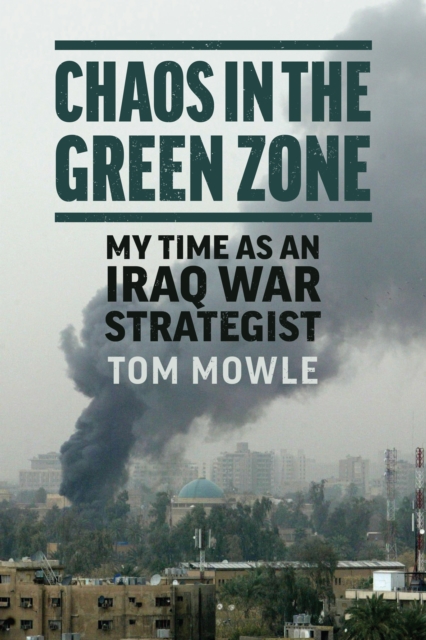
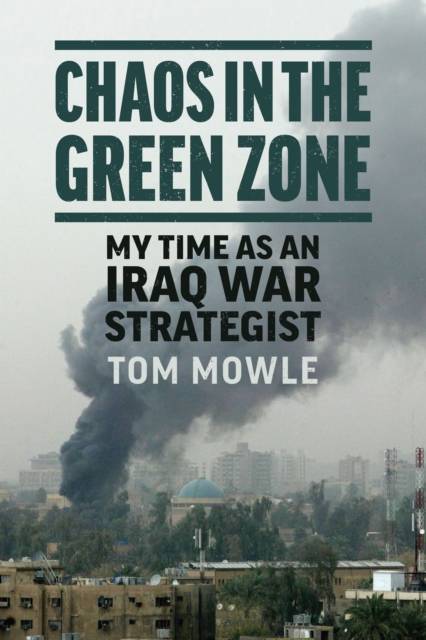
With each day that passed after the 2003 invasion, the United States seemed to sink deeper in the treacherous quicksand of Iraq's social discord, floundering in the face of deep ethno-sectarian divisions that have impeded the creation of a viable state and the molding of a unified Iraqi identity.
A small, insignificant-looking intellectual with absurdly long legs, Soren Kierkegaard (1813-1855) was a veritable Hans Christian Andersen caricature of a man.
A deeply personal meditation on the haunting power of American photos and films of the 1940sWartime Kiss is a personal meditation on the haunting power of American photographs and films from World War II and the later 1940s.
A sweeping history of Islam and the West from the seventh century to todayEurope and the Islamic World sheds much-needed light on the shared roots of Islamic and Western cultures and on the richness of their inextricably intertwined histories, refuting once and for all the misguided notion of a "e;clash of civilizations"e; between the Muslim world and Europe.
From Pulitzer Prizewinning historian Jill Lepore, a history of American origin storiesIn The Story of America, Harvard historian and New Yorker staff writer Jill Lepore investigates American origin storiesfrom John Smith's account of the founding of Jamestown in 1607 to Barack Obama's 2009 inaugural addressto show how American democracy is bound up with the history of print.
People still think of the Cold War as a simple two-sided conflict, a kind of gigantic arm wrestle on a global scale,"e; writes Marc Trachtenberg, "e;but this view fails to grasp the essence of what was really going on.
Why did Hungary, a country that shared much of the religious and institutional heritage of western Europe, fail to replicate the social and political experiences of the latter in the nineteenth and early twenties centuries?
A leading intellectual historian traces the origins of Barack Obama's ideasDerided by the Right as dangerous and by the Left as spineless, Barack Obama puzzles observers.
A history of the steel and arms maker that came to symbolize the best and worst of modern German historyThe history of Krupp is the history of modern Germany.
An unprecedented look at secret documents showing the deliberate nature of the Armenian genocideIntroducing new evidence from more than 600 secret Ottoman documents, this book demonstrates in unprecedented detail that the Armenian Genocide and the expulsion of Greeks from the late Ottoman Empire resulted from an official effort to rid the empire of its Christian subjects.
Mary Dudziak's Exporting American Dreams tells the little-known story of Thurgood Marshall's work with Kenyan leaders as they fought with the British for independence in the early 1960s.
How a Chinese pirate defeated European colonialists and won Taiwan during the seventeenth centuryDuring the seventeenth century, Holland created the world's most dynamic colonial empire, outcompeting the British and capturing Spanish and Portuguese colonies.
How the Grand Alliance of World War II succeeded-and then collapsed-because of personal politicsIn the spring of 1945, as the Allied victory in Europe was approaching, the shape of the postwar world hinged on the personal politics and flawed personalities of Roosevelt, Churchill, and Stalin.
WINNER of the International Affairs Book of the Year at the Political Book Awards 2014Longlisted for the Samuel Johnson Prize 2013The First World War followed a period of sustained peace in Europe during which people talked with confidence of prosperity, progress and hope.
How the conflict between political Islamists and secular-leaning nationalists has shaped the history of the modern Middle EastIn 2013, just two years after the popular overthrow of Hosni Mubarak, the Egyptian military ousted the country's first democratically elected president-Mohamed Morsi of the Muslim Brotherhood-and subsequently led a brutal repression of the Islamist group.
How the Ottomans refashioned and legitimated their rule through mystical imageries of authorityThe medieval theory of the caliphate, epitomized by the Abbasids (750-1258), was the construct of jurists who conceived it as a contractual leadership of the Muslim community in succession to the Prophet Muhammed's political authority.
A pathbreaking history of Sufism, from the earliest centuries of Islam to the presentAfter centuries as the most important ascetic-mystical strand of Islam, Sufism saw a sharp decline in the twentieth century, only to experience a stunning revival in recent decades.
France's New Deal is an in-depth and important look at the remaking of the French state after World War II, a time when the nation was endowed with brand-new institutions for managing its economy and culture.
For this new anthology, Anthony Bonner has chosen central texts from his acclaimed two-volume compilation Selected Works of Ramon Llull (Princeton, 1985).
A fascinating history of the international human rights movement as seen by one of its foundersDuring the past several decades, the international human rights movement has had a crucial hand in struggles against totalitarian regimes and crimes against humanity.
A bloody episode that epitomised the political dilemmas of the eighteenth centuryIn 1798, members of the United Irishmen were massacred by the British amid the crumbling walls of a half-built town near Waterford in Ireland.
A comprehensive history of the Sino-Russian border, one of the longest and most important land borders in the worldThe Sino-Russian border, once the world's longest land border, has received scant attention in histories about the margins of empires.
A multifaceted portrait of the Hiroshima bombing and its many legaciesOn August 6, 1945, in the waning days of World War II, the United States dropped an atomic bomb on the Japanese city of Hiroshima.
This masterwork of interpretative history begins with a bold declaration: "e;The Modern Age is the Jewish Age, and the twentieth century, in particular, is the Jewish Century.
An essential work of the cinematic history of the Weimar Republic by a leading figure of film criticismFirst published in 1947, From Caligari to Hitler remains an undisputed landmark study of the rich cinematic history of the Weimar Republic.
Dieses eBook: "Das deutsche Wunder: Historischer Roman" ist mit einem detaillierten und dynamischen Inhaltsverzeichnis versehen und wurde sorgfältig korrekturgelesen.
Bei einem Empfang der Hudson's Bay Company in Fort Reliance treffen Soldaten, Häuptlinge der Indianer und Forschungsreisende wie Paulina Barnett mit ihrer Dienerin Madge aufeinander.
Like an eagle, American colonists ascended from the gulley of British dependence to the position of sovereign world power in a period of merely two centuries.
This collection of essays studies the expression and diffusion of radical ideas in Britain from the period of the English Revolution in the mid-seventeenth century to the Romantic Revolution in the early nineteenth century.
It is known that Tolstoy was a believer in God, committed to the Ten Commandments, and sought the truth as much as he could, but he also refused to be affiliated with any religious organization or institution, especially the church.