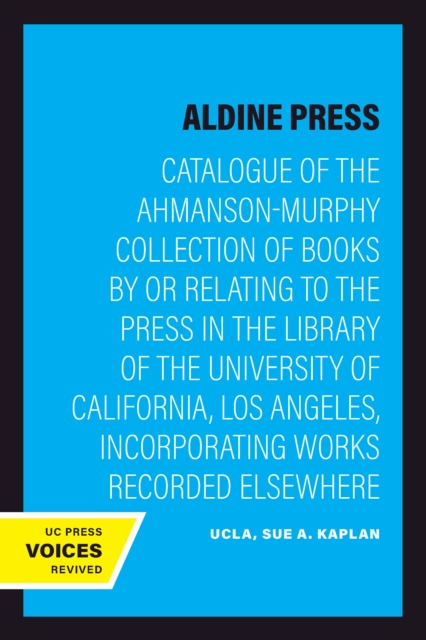
This catalog provides a descriptive bibliography of books in the Ahmanson-Murphy Aldine collection at the University of California, Los Angeles, together with abbreviated notices of works not at UCLA.
The Life and Adventures of George Nidever: 1802-1883 is a fascinating window into the life of a quintessential American frontiersman whose journey spanned the rugged terrains of Tennessee, Missouri, and eventually California.
Post-Revolutionary Nicaragua: State, Class, and the Dilemmas of Agrarian Policy offers a penetrating analysis of the challenges faced by the Sandinista regime following the overthrow of the Somoza dynasty in 1979.
Post-Revolutionary Nicaragua: State, Class, and the Dilemmas of Agrarian Policy offers a penetrating analysis of the challenges faced by the Sandinista regime following the overthrow of the Somoza dynasty in 1979.
The Life and Adventures of George Nidever: 1802-1883 is a fascinating window into the life of a quintessential American frontiersman whose journey spanned the rugged terrains of Tennessee, Missouri, and eventually California.
Oil and Revolution in Mexico offers a compelling analysis of the transformative yet fraught relationship between foreign capital and domestic development during the late 19th and early 20th centuries.
Wear It Proudly by Will Tsuchida offers an extraordinary first-hand account of war, identity, and loyalty through the letters of a Japanese American medic serving with the U.
The Pacific Coast Maritime Shipping Industry, 1930-1948: Volume I: An Economic Profile offers a meticulous examination of an industry pivotal to the economic and historical development of the United States' West Coast.
A Literary History of Southern California offers a deep exploration into the evolving cultural and literary identity of a region that has long captured the American imagination.
Oil and Revolution in Mexico offers a compelling analysis of the transformative yet fraught relationship between foreign capital and domestic development during the late 19th and early 20th centuries.
In Political Survival, Barry Ames shows how public policy, especially the public budget, is used by political leaders seeking to construct coalitions insuring their survival in office.
Wear It Proudly by Will Tsuchida offers an extraordinary first-hand account of war, identity, and loyalty through the letters of a Japanese American medic serving with the U.
The Pacific Coast Maritime Shipping Industry, 1930-1948: Volume I: An Economic Profile offers a meticulous examination of an industry pivotal to the economic and historical development of the United States' West Coast.
A Literary History of Southern California offers a deep exploration into the evolving cultural and literary identity of a region that has long captured the American imagination.
The Meaning of the War to the Americas captures the critical intellectual and moral considerations of World War II's impact on the Western Hemisphere through a series of lectures delivered at the University of California, Los Angeles, in 1941.
Man, Land, and Water delves into the socioeconomic and political evolution of Mexico during a transformative era, emphasizing the intertwined dynamics of land ownership, water management, and agricultural policy.
Man, Land, and Water delves into the socioeconomic and political evolution of Mexico during a transformative era, emphasizing the intertwined dynamics of land ownership, water management, and agricultural policy.
Rise of the Labor Movement in Los Angeles by Grace Heilman Stimson recovers the largely neglected early history of organized labor in southern California, situating the city's unions within the broader trajectory of American labor and industrial relations.
Rise of the Labor Movement in Los Angeles by Grace Heilman Stimson recovers the largely neglected early history of organized labor in southern California, situating the city's unions within the broader trajectory of American labor and industrial relations.
The Meaning of the War to the Americas captures the critical intellectual and moral considerations of World War II's impact on the Western Hemisphere through a series of lectures delivered at the University of California, Los Angeles, in 1941.