This volume explores the response of liberals to rightwing attacks during the Red Scare of the late 1940s and early 1950s, establishing it as a defensive approach aimed at warding off efforts to conflate liberalism with communism, but not at striking back at the opposing ideology of conservatism itself.
The book explores the intellectual history of Bulgaria between the 1960s and the 1980s at the intersections of the country's social and political history.
The book explores the intellectual history of Bulgaria between the 1960s and the 1980s at the intersections of the country's social and political history.
Red Money for the Global South explores the relationship of the East with the "e;new"e; South after decolonization, with a particular focus on the economic motives of the Council for Mutual Economic Assistance (CMEA) and other parties that were all striving for mutual cooperation.
Immigrants and Foreigners in Central and Eastern Europe during the Twentieth Century challenges widespread conceptions of Central and Eastern European countries as merely countries of origin.
Red Money for the Global South explores the relationship of the East with the "e;new"e; South after decolonization, with a particular focus on the economic motives of the Council for Mutual Economic Assistance (CMEA) and other parties that were all striving for mutual cooperation.
Immigrants and Foreigners in Central and Eastern Europe during the Twentieth Century challenges widespread conceptions of Central and Eastern European countries as merely countries of origin.
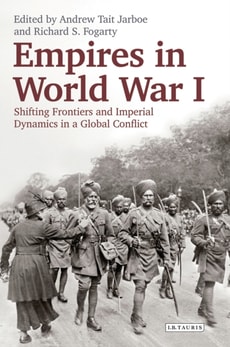
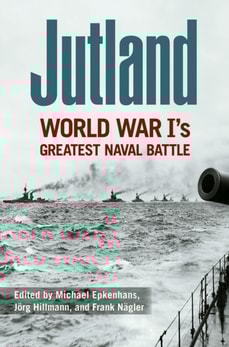
Soon after the guns in Belgium and France had signalled the commencement of what would become the world's single most destructive conflict to date, the British, Ottoman, German, Russian, Austro-Hungarian, French and Belgian Empires were at war.
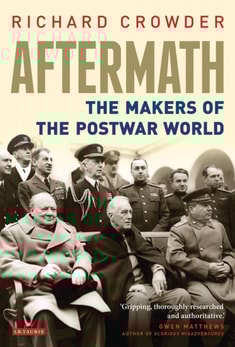
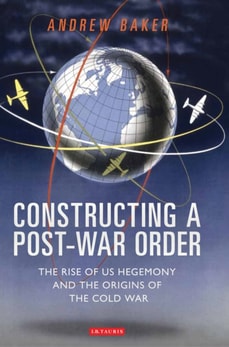
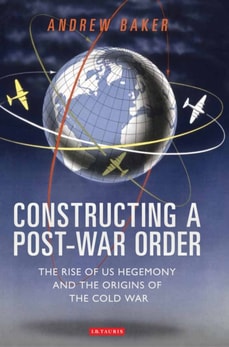
The years 1942 to 1946 saw the acceleration of World War II, its conclusion and the construction of a post-war order that was to culminate in the Cold War.
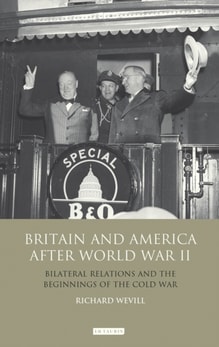
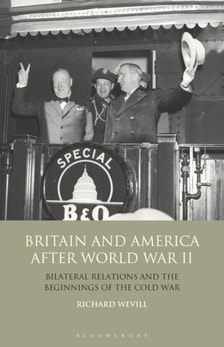
The period immediately after World War II was a vital one for diplomatic relations and, with the Soviet Union emerging as a new superpower, it was particularly important for Britain's relations with America.
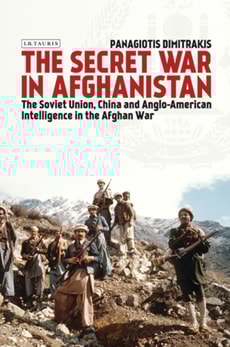
The Soviet invasion of Afghanistan, in support of a Marxist-Leninist government, and the subsequent nine-year conflict with the indigenous Afghan Mujahedeen was one of the bloodiest conflicts of the Cold War.
The Kosovo question posed a great challenge to the international order in the western Balkans for a number of decades prior to the outbreak of war in the 1990s.
On 27th May 1977, a small demonstration against the MPLA, the ruling party of Angola led to the slaughter of thousands, if not tens of thousands, of people.
The period immediately after World War II was a vital one for diplomatic relations and, with the Soviet Union emerging as a new superpower, it was particularly important for Britain's relations with America.
The Cold War was a period of intense geopolitical rivalry, in which diplomacy and international relations in Asia and the Middle East acquired huge global significance.
The years 1942 to 1946 saw the acceleration of World War II, its conclusion, and the construction of a post-war order that was to culminate in the Cold War.
Born out of the ashes of World War II, the covert action arm of the Central Intelligence Agency (CIA) was created to counter the challenge posed by the Soviet Union and its allies and bolster American interests worldwide.
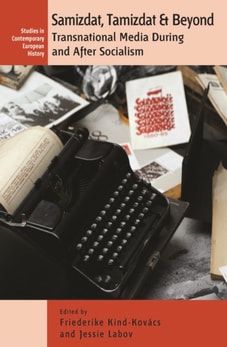
In many ways what is identified today as cultural globalization in Eastern Europe has its roots in the Cold War phenomena of samizdat ( do-it-yourself underground publishing) and tamizdat (publishing abroad).
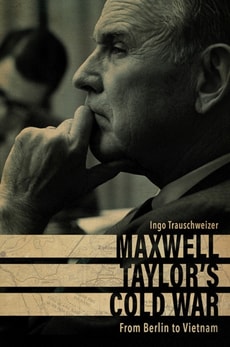
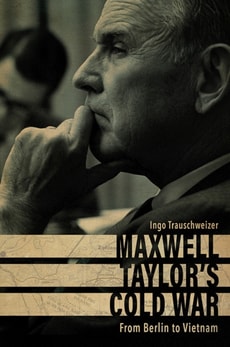
General Maxwell Taylor served at the nerve centers of US military policy and Cold War strategy and experienced firsthand the wars in Korea and Vietnam, as well as crises in Berlin and Cuba.
General Maxwell Taylor served at the nerve centers of US military policy and Cold War strategy and experienced firsthand the wars in Korea and Vietnam, as well as crises in Berlin and Cuba.
Provides a day-by-day account of the action on all fronts and of the events surrounding the conflict, from the guns of August 1914 to the November 1918 Armistice and its troubled aftermath.
The story of Brothers to the Rescue and the Cuban refugees they flew to safety, told in collaboration with founding member Jos BasultoThere was a time in Miami when it seemed impossible to go through a week without news coverage of the men, women, and children escaping Cuba and being pulled off of makeshift rafts in the middle of the Florida Straits.
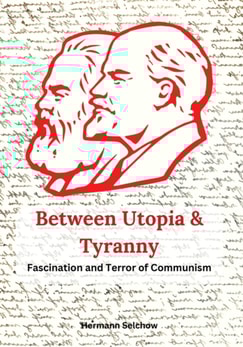
With the new edition of my book "e;Between Utopia and Tyranny: The Fascination and Horror of Communism"e; I offer you an in-depth analysis of the phenomenon of "e;communism"e;, introducing you to the history and ideologies behind one of the most influential political movements of the 20th century.
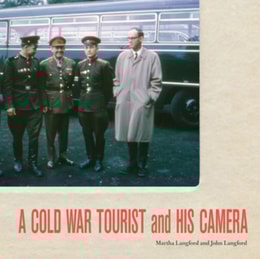
Martha Langford and John Langford examine their father's apparently innocuous photographic experience, revealing the complexity of both the images and their creator.