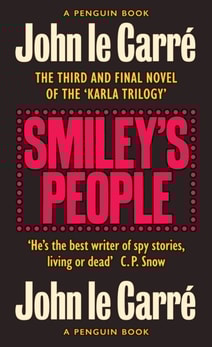
The concluding part of John le Carr 's celebrated Karla Trilogy, Smiley's People sees the last confrontation between the indefatigable spymaster George Smiley and his great enemy, as their rivalry comes to a shattering end.
In the second part of John le Carr 's Karla Trilogy, the battle of wits between spymaster George Smiley and his Russian adversary takes on an even more dangerous dimension.
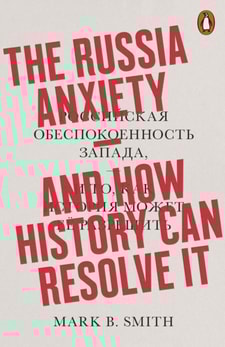
'This exciting and provocative book blows apart misconceptions about the Russian past' Lara Douds, Times Higher Education Russia is an exceptional country, the biggest in the world.
'Everything about this story is astounding' Bryan Appleyard, Sunday Times"e;Trinity"e; was the codename for the test explosion of the atomic bomb in New Mexico on 16 July 1945.
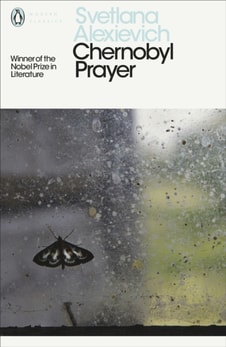
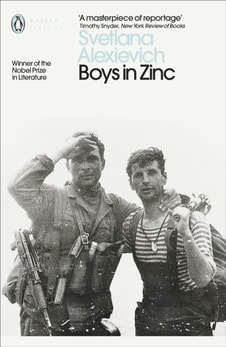
The haunting history of the Soviet-Afghan War from the winner of the Nobel Prize in Literature 2015- A new translation based on the updated text - From 1979 to 1989 Soviet troops engaged in a devastating war in Afghanistan that claimed thousands of casualties on both sides.
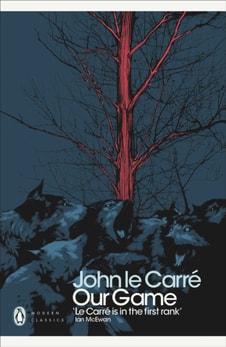
Le Carr 's post-Cold War masterpiece, filled with suspense, betrayal, desire and dramaThe Cold War is over and retired secret servant Tim Cranmer has been put out to pasture, spending his days making wine on his Somerset estate.
Selected as a Book of the Year in the TLS and SpectatorThe final decade of the Cold War, through the eyes of a laconic and elegant observerIn 1979 Richard Bassett set out on a series of adventures and encounters in central Europe which allowed him to savour the last embers of the cosmopolitan old Hapsburg lands and gave him a ringside seat at the fall of another ancien regime, that of communist rule.
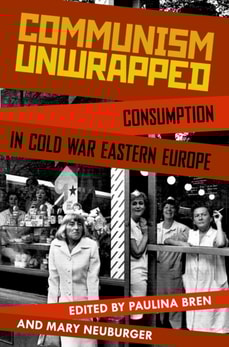
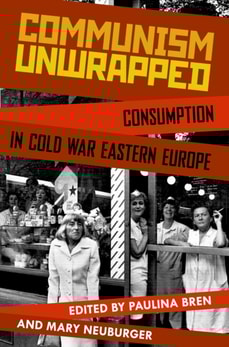
Communism Unwrapped reveals the complex world of consumption in Cold War Eastern Europe, exploring the ways people shopped, ate, drank, smoked, cooked, acquired, assessed and exchanged goods.
Moscow's Novodevichy Cemetery is the final resting place of some of Russia's most celebrated figures, from Khrushchev and Yeltsin to Anton Chekhov, Sergei Eisenstein, Nikolai Gogol, and Mikhail Bulgakov.
Moscow's Novodevichy Cemetery is the final resting place of some of Russia's most celebrated figures, from Khrushchev and Yeltsin to Anton Chekhov, Sergei Eisenstein, Nikolai Gogol, and Mikhail Bulgakov.
The Soviet Union was the largest state in the twentieth-century world, but its repressive power and terrible ambition were most clearly on display in Europe.
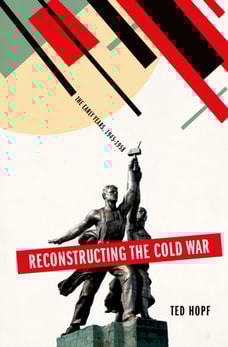
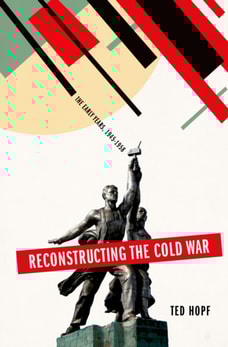
General answers are hard to imagine for the many puzzling questions that are raised by Soviet relations with the world in the early years of the Cold War.
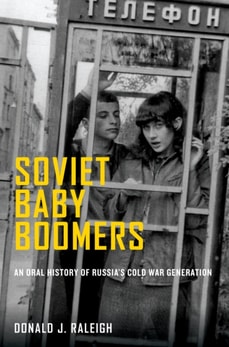
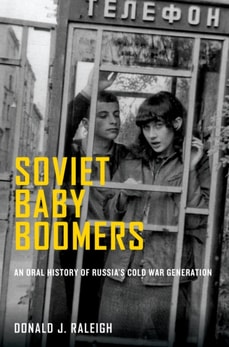
Donald Raleigh's Soviet Baby Boomers traces the collapse of the Soviet Union and the transformation of Russia into a modern, highly literate, urban society through the fascinating life stories of the country's first post-World War II, Cold War generation.
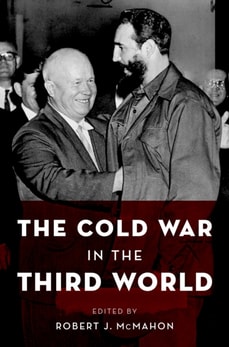
The Cold War in the Third World explores the complex interrelationships between the Soviet-American struggle for global preeminence and the rise of the Third World.
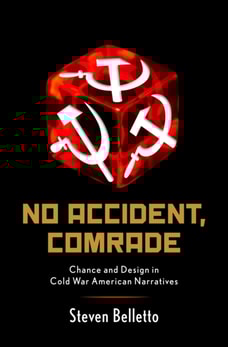
No Accident, Comrade argues that chance became a complex yet conflicted cultural signifier during the Cold War, when a range of thinkers--politicians, novelists, historians, biologists, sociologists, and others--contended that totalitarianism denied the very existence and operation of chance in the world.
Donald Raleigh's Soviet Baby Boomers traces the collapse of the Soviet Union and the transformation of Russia into a modern, highly literate, urban society through the fascinating life stories of the country's first post-World War II, Cold War generation.
General answers are hard to imagine for the many puzzling questions that are raised by Soviet relations with the world in the early years of the Cold War.
Communism Unwrapped reveals the complex world of consumption in Cold War Eastern Europe, exploring the ways people shopped, ate, drank, smoked, cooked, acquired, assessed and exchanged goods.
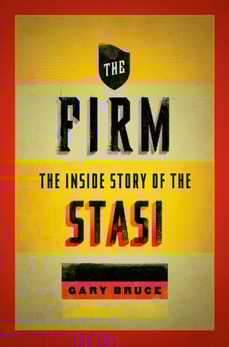
Based on previously classified documents and on interviews with former secret police officers and ordinary citizens, The Firm is the first comprehensive history of East Germany's secret police, the Stasi, at the grassroots level.
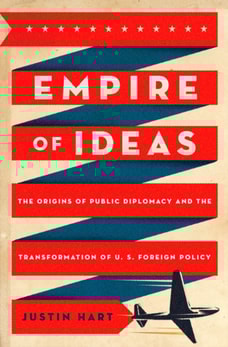
Covering the period from 1936 to 1953, Empire of Ideas reveals how and why image first became a component of foreign policy, prompting policymakers to embrace such techniques as propaganda, educational exchanges, cultural exhibits, overseas libraries, and domestic public relations.
Based on previously classified documents and on interviews with former secret police officers and ordinary citizens, The Firm is the first comprehensive history of East Germany's secret police, the Stasi, at the grassroots level.