By investigating the major changes in world history during the past five hundred years, Woodruff explains to what extent world forces have been responsible for shaping both the past and the present.
The Indian Ocean islands of Mauritius and Bourbon and their satellite colony of Seychelles, collectively known as the Mascareignes, were all plantation colonies, as well as significant naval bases from the seventeenth to nineteenth centuries.
This study critically examines Woodrow Wilson's acceptance of the principle of national self-determination and his role in implementing it at the Paris Peace Conference of 1919.
Provides a comprehensive chronological narrative of the history of the British Empire between 1815 and 1914, together with a more theoretical and reflective concluding chapter, thus giving an overview of British policy and action which takes account of the many factors underlying British expansion.
This collection of essays is concerned with the impact of the experience of empire upon the literary imagination as far as Ireland, Africa and India are concerned.
As the greatest imperial power before 1939 Britain played a leading role in the great post-war shift in the relationship between the West and the Third World which we call 'decolonisation'.
In an analysis of Britain's policy towards Palestine in the post-mandatory era, the author examines the circumstances which led to the formulation of Britain's policy - the partition of mandatory Palestine between Israel and Jordan - and the stages of its implementation.
This book is about infant mortality decline, the rise of the infant welfare movement, outcomes in terms of changing priorities in child health and what happened to mothers and babies.
Communist China's integration into world diplomatic and trading systems in the 1950s was troublesome: relations with British governments and British business interests were no exception.
A text which describes the ways that European powers used science and scientific inquiry to enforce their supposed cultural superiority on societies of Africa, Asia and Latin America.
In Britain and the Origins of Canadian Confederation (1837-1867), Ged Martin challenges the view that the provinces of British North America united between 1864 and 1867 in response to the internal and external challenges of the time.
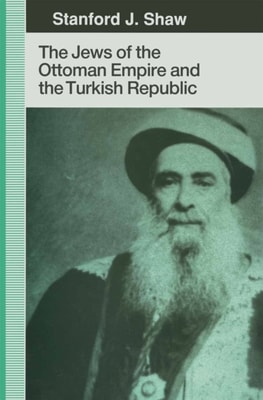
This book studies the role of the Ottoman Empire and Republic of Turkey in providing refuge and prosperity for Jews fleeing from persecution in Europe and Byzantium in medieval times and from Russian pogroms and the Nazi holocaust in the nineteenth and twentieth centuries.
For some, Tahiti, New Caledonia and Wallis and Futuna are idyllic tropical islands with a French flavour, while for others they represent continuing French colonialism, thwarted independence movements and nuclear testing.
Eleven of the world's leading scholars on Namibia offer a collection of articles that provide an examination of the importance of Namibia to each of the major Western capitalist powers, and analyze the extent to which each power contributes to South Africa's continuing occupation of Namibia.