This edited volume challenges the hegemonic values and practices that have shaped the contemporary state of English language education in Chile, offering a space for a transformative vision that prioritises pedagogical practices grounded in (g)localised methodologies and epistemologies.
This volume examines the tumultuous changes that have occurred and are still occurring in the aftermath of European colonization of the globe from 1492 to 1947.
Unique in its global and interdisciplinary scope, this collection will bring together comparative insights across European, Ottoman, Japanese, and US imperial contexts while spanning colonized spaces in Latin America, the Caribbean, Africa, the Indian Ocean, the Middle East, and East and Southeast Asia.
Unique in its global and interdisciplinary scope, this collection will bring together comparative insights across European, Ottoman, Japanese, and US imperial contexts while spanning colonized spaces in Latin America, the Caribbean, Africa, the Indian Ocean, the Middle East, and East and Southeast Asia.
This book investigates the Casa de Montejo and considers the role of the building's Plateresque facade as a form of visual rhetoric that conveyed ideas about the individual and communal cultural identities in sixteenth-century Yucatan.
This book investigates the Casa de Montejo and considers the role of the building's Plateresque facade as a form of visual rhetoric that conveyed ideas about the individual and communal cultural identities in sixteenth-century Yucatan.
In this fascinating story of colonial competition around Lake Rudolf, a remote body of water in northern Kenya, Pascal James Imperato examines the political and diplomatic aspects of colonial competition for the lake as well as the many expeditions that traveled there.
In this fascinating story of colonial competition around Lake Rudolf, a remote body of water in northern Kenya, Pascal James Imperato examines the political and diplomatic aspects of colonial competition for the lake as well as the many expeditions that traveled there.
Postdevelopment in Practice critically engages with recent trends in postdevelopment and critical development studies that have destabilised the concept of development, challenging its assumptions and exposing areas where it has failed in its objectives, whilst also pushing beyond theory to uncover alternatives in practice.
Postdevelopment in Practice critically engages with recent trends in postdevelopment and critical development studies that have destabilised the concept of development, challenging its assumptions and exposing areas where it has failed in its objectives, whilst also pushing beyond theory to uncover alternatives in practice.
Return migration has received growing levels of attention in both academic and policy circles in recent years, as the African diaspora's role in contributing to the development of their country of origin has become apparent.
Return migration has received growing levels of attention in both academic and policy circles in recent years, as the African diaspora's role in contributing to the development of their country of origin has become apparent.
Drawing on a rich lineage of anti-discriminatory scholarship, art, and activism, Locating African European Studies engages with contemporary and historical African European formations, positionalities, politics, and cultural productions in Europe.
Drawing on a rich lineage of anti-discriminatory scholarship, art, and activism, Locating African European Studies engages with contemporary and historical African European formations, positionalities, politics, and cultural productions in Europe.
Originating in the sea, especially in the waters surrounding the low-lying islands of the Maldives, Cypraea moneta (sometimes confused with Cypraea annulus) was transported to various parts of Afro-Eurasia in the prehistoric era, and in many cases, it was gradually transformed into a form of money in various societies for a long span of time.
Originating in the sea, especially in the waters surrounding the low-lying islands of the Maldives, Cypraea moneta (sometimes confused with Cypraea annulus) was transported to various parts of Afro-Eurasia in the prehistoric era, and in many cases, it was gradually transformed into a form of money in various societies for a long span of time.
In the 1960s, the governments of Colombia, Peru, and Bolivia launched agricultural settlement programs in each country's vast Amazonian frontier lowlands.
In the 1960s, the governments of Colombia, Peru, and Bolivia launched agricultural settlement programs in each country's vast Amazonian frontier lowlands.
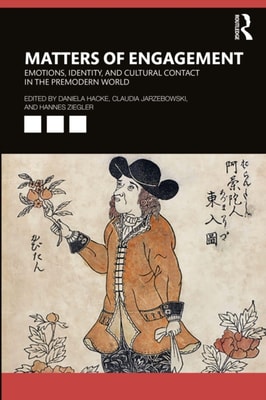
By drawing on a broad range of disciplinary and cross-disciplinary expertise, this study addresses the history of emotions in relation to cross-cultural movement, exchange, contact, and changing connections in the later medieval and early modern periods.
By drawing on a broad range of disciplinary and cross-disciplinary expertise, this study addresses the history of emotions in relation to cross-cultural movement, exchange, contact, and changing connections in the later medieval and early modern periods.
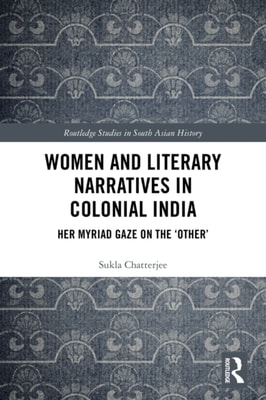
In the colonial context of South Asia, there is a glaring asymmetry in the written records of the interaction between the Bengali women and their European counterparts, which is indicative of the larger and the overall asymmetry of discursive power, including the flow and access to information between the colonizers and their subjects.
In the colonial context of South Asia, there is a glaring asymmetry in the written records of the interaction between the Bengali women and their European counterparts, which is indicative of the larger and the overall asymmetry of discursive power, including the flow and access to information between the colonizers and their subjects.
Popular Music and the Postcolonial addresses the often-overlooked relationship between the fields of popular music and postcolonial studies, and it has implications for ethnomusicology, cultural and literary studies, history, sociology, and political economy.
Popular Music and the Postcolonial addresses the often-overlooked relationship between the fields of popular music and postcolonial studies, and it has implications for ethnomusicology, cultural and literary studies, history, sociology, and political economy.