British Imperialism and Australia (1939) looks at the early economic history of Australia, which towards the end of the period under review became an important field of British Imperial development.
British India's Relations with the Kingdom of Nepal (1970) uses original documents and confidential papers never before available to examine the relations between Nepal and British India from 1857 to 1947.
British Imperialism and Australia (1939) looks at the early economic history of Australia, which towards the end of the period under review became an important field of British Imperial development.
Colonialism and Underdevelopment in Ghana (1978) examines Ghana's integration into the world economic system, and the effects which such integration had on its development.
History of Nigeria (1969) was first published in 1929 and completely revised by its author, and gives the history of Nigeria from before its first encounters with the British, through colonial rule, and up to independence in 1960.
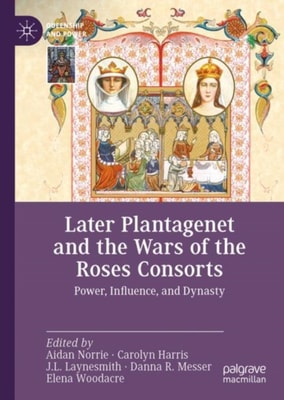
This book examines the lives and tenures of the consorts of the Plantagenet dynasty during the later Middle Ages, encompassing two major conflicts-the Hundred Years' War and the Wars of the Roses.
This collection of essays, written by authors of different nationalities, explores the experiences of the countries that were not numbered among the Second World War's major belligerents, including colonies, 'lesser' powers, and neutral nation states.
This collection of essays, written by authors of different nationalities, explores the experiences of the countries that were not numbered among the Second World War's major belligerents, including colonies, 'lesser' powers, and neutral nation states.
This microhistory of the Salvagos-an Istanbul family of Venetian interpreters and spies travelling the sixteenth- and seventeenth-century Mediterranean-is a remarkable feat of the historian's craft of storytelling.
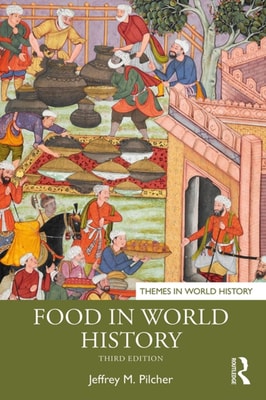
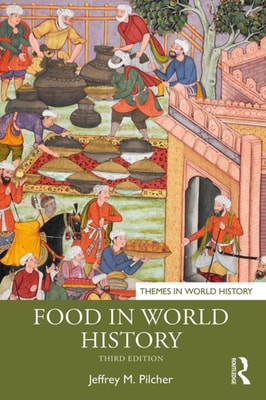
Now in its third edition, Food in World History explores culinary cultures and food politics throughout the world, from ancient times to the present day, with expanded discussions of industrialization, indigeneity, colonialism, gender, environment, and food and power.
Now in its third edition, Food in World History explores culinary cultures and food politics throughout the world, from ancient times to the present day, with expanded discussions of industrialization, indigeneity, colonialism, gender, environment, and food and power.
In academic institutions worldwide, the call to decolonize the syllabus, curriculum, and the entire university experience is growing louder and more urgent.
The Forgotten Appeasement of 1920 examines a turning point in East European history: the summer of 1920, when Lenin's Soviet Russia decided to challenge the Versailles system and launch a military attack on the continent.
The Forgotten Appeasement of 1920 examines a turning point in East European history: the summer of 1920, when Lenin's Soviet Russia decided to challenge the Versailles system and launch a military attack on the continent.
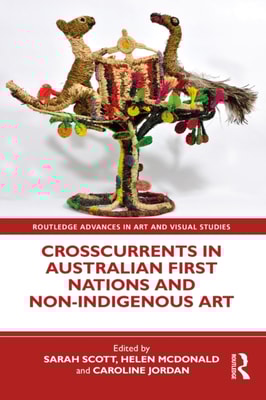
This edited collection examines art resulting from cross-cultural interactions between Australian First Nations and non-Indigenous people, from the British invasion to today.
This book examines the complexities of women's lives in Africa and the transnational spaces of Europe and North America through the literary works of key African women writers.
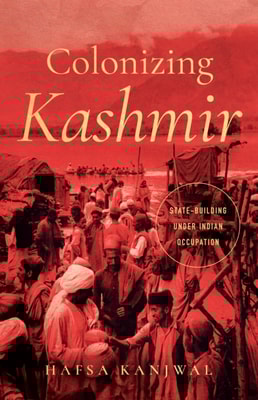
The Indian government, touted as the world's largest democracy, often repeats that Jammu and Kashmir-its only Muslim-majority state-is "e;an integral part of India.
This book explores the relationships between empire, natural history, and gender in the production of geographical knowledge and its translation between colonial Burma and Britain.
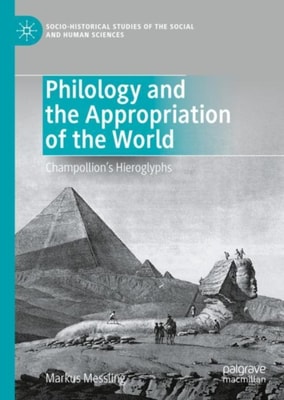
This book sheds new light on the work of Jean-Francois Champollion by uncovering a constellation of epistemological, political, and material conditions that made his decipherment of Egyptian hieroglyphs possible.
"e;Thoroughly researched, clearly written, and eye-opening in major and minor ways, this book will be valuable not only to academics but to all readers.
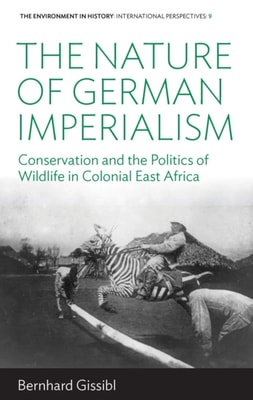
Today, the East African state of Tanzania is renowned for wildlife preserves such as the Serengeti National Park, the Ngorongoro Conservation Area, and the Selous Game Reserve.
During the First World War, the Jewish population of Central Europe was politically, socially, and experientially diverse, to an extent that resists containment within a simple historical narrative.
Historical research into the Armenian Genocide has grown tremendously in recent years, but much of it has focused on large-scale questions related to Ottoman policy or the scope of the killing.
Far from the battlefront, hundreds of thousands of workers toiled in Bohemian factories over the course of World War I, and their lives were inescapably shaped by the conflict.
The collapse of the Habsburg Monarchy at the end of World War I ushered in a period of radical change for East-Central European political structures and national identities.
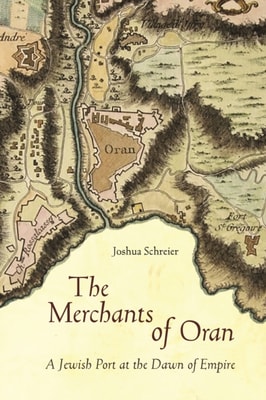
The Merchants of Oran weaves together the history of a Mediterranean port city with the lives of Oran's Jewish mercantile elite during the transition to French colonial rule.
This edited volume consolidates research from 32 countries in order to address the implications of the recent global wave of migration on educational opportunity and assess links between migration and bullying in Europe and further afield.
Ireland in an Imperial World interrogates the myriad ways through which Irish men and women experienced, participated in, and challenged empires in the nineteenth and twentieth centuries.
Leading scholars in the sociology of migration, Michaela Benson and Karen O'Reilly, re-theorise lifestyle migration through a sustained focus on postcolonialism at its intersections with neoliberalism.
This book discusses John Stuart Mill's intellectual activity from about 1827 to 1848, namely between his recovery from his so-called 'Mental Crisis' and the publication of Principles of Political Economy.
This book explores the world of Nigerian universities to offer an innovative perspective on the history of development and decolonisation from the 1930s to the 1960s.