This pioneering volume focuses on the scale, territorial trajectories, impact, economic relationships, identity and nature of the Scottish-Asia connection from the late seventeenth century to the present.
Examining the rise of the field of imperial history in Britain and wider webs of advocacy, this book demonstrates how intellectuals and politicians promoted settler colonialism, excluded the subject empire, and laid a precarious framework for decolonization.
This book examines the historical and current state of health and the health of the African people, including the Arab North, impacted by such factors as geography and natural elements, cultural and colonial traditions, and competing biomedical and traditional systems.
This book focuses on Africa's challenges, achievements, and failures over the past several centuries using an interdisciplinary approach that combines theory and fact and evidence-based practices and interventions in public health, and argues that most of the health problems in Africa are not a result of scarce or lack of resources, but of the misconceived and misplaced priorities that have left the continent behind every other on the globe in terms of health, education, and equitable distribution of opportunities and access to (quality) health as agreed by the United Nations member states at Alma-Ata in 1978.
This book explores the dynamics of Anglo-Australian cricketing relations within the 'British World' in the late nineteenth and early twentieth centuries.
This book examines how the rulers in the Persian Gulf responded to the British announcement of military withdrawal from the Gulf in 1968, ending 150 years of military supremacy in the region.
This book focuses on the latter half of the twentieth century, when much of northwest Europe grew increasingly multicultural with the arrival of foreign workers and (post-)colonial migrants, whilst simultaneously experiencing a boom in feminist and sexual liberation activism.
This book examines the development of imperial intelligence and policing directed against revolutionaries in the Indian province of Bengal from the first decade of the twentieth century through the beginning of the Second World War.
This book is an exposition of how political, cultural, historical, and economic structures and processes shape the nature and character of curriculum landscapes globally.
In 1824 and 1830, over one hundred thousand acres across Iowa, Minnesota and Nebraska were set aside as a home for descendants of Native American women and white traders and trappers.
This book is an innovative presentation of the way in which the descendants of Muslim immigrants from Algeria in France perceive and deal with multiple social identifications.
This book recasts one of the most well-studied and popularly-beloved eras in history: the tumultuous span from the 1485 accession of Henry VII to the 1603 death of Elizabeth I.
This book offers a new perspective on the cultural politics of the Napoleonic Empire by exploring the issue of language within four pivotal institutions - the school, the army, the courtroom and the church.
This volume views the study of disease as essential to understanding the key historical developments underpinning the foundation of contemporary Indian Ocean World (IOW) societies.
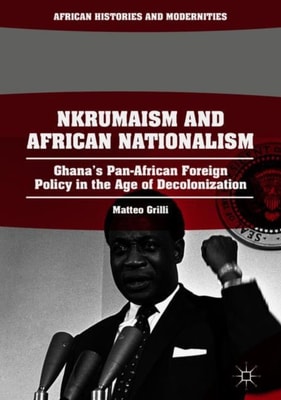
This book examines Ghana's Pan-African foreign policy during Nkrumah's rule, investigating how Ghanaians sought to influence the ideologies of African liberation movements through the Bureau of African Affairs, the African Affairs Centre and the Kwame Nkrumah Ideological Institute.
This book provides an interpretive narrative of the wars fought by Bulgaria against the Byzantine Empire for dominant control of the Balkan Peninsula during the early medieval era.
The Colonial Public and the Parsi Stage is the first comprehensive study of the Parsi theatre, colonial South and Southeast Asia's most influential cultural phenomenon and the precursor of the Indian cinema industry.
This book provides a new analysis of the contested history of one of the most violent wars of decolonisation of the twentieth century - the Algerian War/ the Algerian Revolution between 1954 and 1962.
This book considers the role played by co-operative agriculture as a critical economic model which, in Australia, helped build public capital, drive economic development and impact political arrangements.
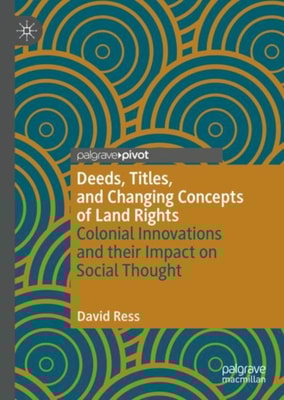
This book explores the history of public land tenure records, which first began in colonial Massachusetts as English settlers and Native Americans tried to resolve differing ideas about rights to land in the seventeenth century.
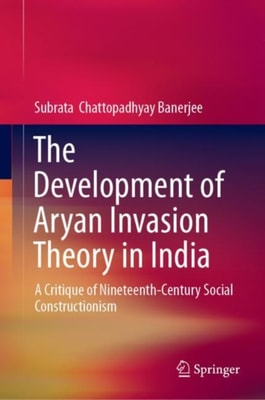
This book delves deep into the Social Construction of Theory, comparative epistemology and intellectual history to stress the interrelationship between diverse cultures during the colonial period and bring forth convincing evidence of how the 19th century was shaped.
This long-awaited book is a vivid history of Frelimo, the liberation movement that gained power in Mozambique following the sudden collapse of Portuguese rule in 1974.
This book examines the history of the relationship between Liberia and Britain-the world's first black republic, founded by former slaves, and the world's strongest colonial power.
This book explores how objects, landscapes, and architecture were at the heart of how people imagined outlaws and disorder in colonial southern Africa.
This book argues that early American history is best understood as the story of a settler-colonial supplanting society-a society intent on a vast land grab of American Indian space and driven by a logic of elimination and a genocidal imperative to rid the new white settler living space of its existing Indigenous inhabitants.