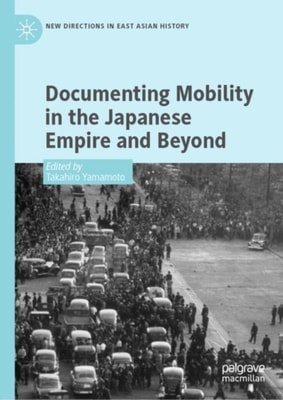
This book tackles the question of border control in and around imperial Japan in the first half of the twentieth century, with a specific focus on its documentation regime.
In his critical study of Australian imperialism, Erik Paul analyses the making, character and contours of the geopolitical state from the time of the British invasion and colonisation to the present, expanding the country's continental political and economic power.
This book brings together a set of incisive essays that interrogate Malaysian history and social relations which began during pre-colonial times, and extended to colonial and post-colonial Malaysia.
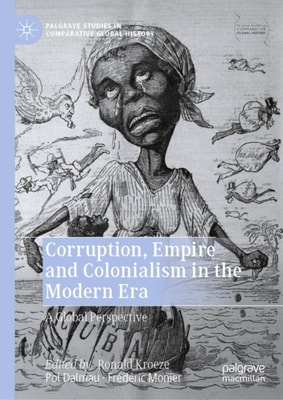
Answering the calls made to overcome methodological nationalism, this volume is the first examination of the links between corruption and imperial rule in the modern world.
Well-grounded on abundant Japanese language sources which have been underused, this book uncovers the League of Nations' works in East Asia in the inter-war period.
This book considers literary images of Japan created by David Mitchell, Kazuo Ishiguro, and Tan Twan Eng to examine the influence of Japanese imperialism and its legacy at a time when culture was appropriated as route to governmentality and violence justified as root to peace.
This book delves deep into the Social Construction of Theory, comparative epistemology and intellectual history to stress the interrelationship between diverse cultures during the colonial period and bring forth convincing evidence of how the 19th century was shaped.
This monograph presents a comprehensive account of environmental history of India and its tribals from the late eighteenth onwards, covering both the colonial and post-colonial periods.
This book examines how in navigating Hong Kong's colonial history alongside its ever-present Chinese identity, the city has come to manifest a conflicting socio-cultural plurality.
The Experimental Turn in the Moroccan Novel, 1976-1989 examines the trajectory of the Moroccan experimental novel and makes a link between its emergence in the early-mid 1970s and the Arab defeat in the six-day war with Israel in 1967.
Bringing together the work of leading scholars of religion in imperial Japan and colonial Korea, this collection addresses the complex ways in which religion served as a site of contestation and negotiation among different groups, including the Korean Choson court, the Japanese colonial government, representatives of different religions, and Korean and Japanese societies.
Contesting stereotypical and deterministic accounts of British South Asian Muslims (BrAsians), which have largely contributed towards the perpetuation of Islamophobia, this book analyses how the influence of parents, extended family, and community support and constrain the lives of a younger generation of amateur and professional boxers.
Cuando los profesores Pío García, Felipe Medina Gutiérrez y Diana Cure me hicieron la honrosa invitación a escribir el prólogo de esta obra, mi primera reacción fue de duda, pues no soy experto en el tema del que se trata aquí y no suelo escribir sobre lo que no conozco con profundidad defendible.
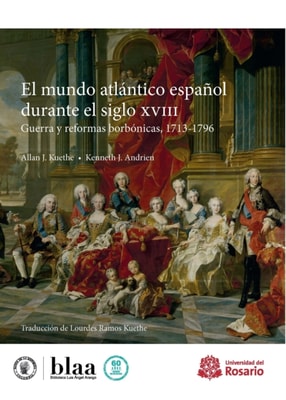
El atlantico espanol durante el siglo XVIII destaca el juego entre Espana y America mientras el imperio espanol luchaba por sobrevivir en la feroz competencia internacional que domino el siglo dieciocho.
Un nuevo reino imaginado examina el entramado discursivo del proyecto político de las Elegías de varones ilustres de Indias (1589-1601), una historia de la conquista del Caribe y lo que es hoy Colombia, Panamá y Venezuela, escrita por el erudito literato, riguroso historiador y clérigo, Juan de Castellanos (Alanis, España 1522- Tunja 1607).
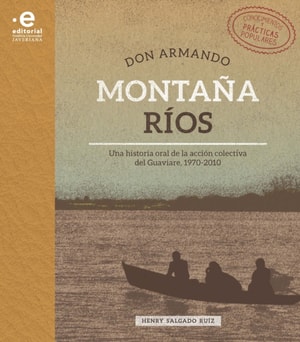
Las historias de Teresa y Eusebio Prada, Gerardo Gonzalez, de los cuadernos de Jaime Jara, de Juan de la Cruz Varela y tantos otros, elaboradas o relatadas por ellos mismos y recogidas por sus hijas e hijos y por estudiosos como Jacques Aprile-Gniset y Henry Salgado, autor de esta obra, nos conducen a una memoria que enriquece el reconocimiento de los campesinos colombianos.
Presentamos a los lectores académicos y público en general este trabajo de investigación con pretensiones de abarcar espacios y sociedades que en la globalidad permiten hablar de una unidad del Pacífico del Norte de Suramérica entre Colombia y Ecuador, con sus correspondiente valles interandinos del Cauca, Patía y Chota, con los cuales históricamente ha tenido relaciones que en su especificidad muestran los matices creados por la diversidad del medio y por las diversas formas de adaptación y resistencias de las sociedades negras al medio y a las relaciones conflictivas de dominio que allí se establecieron.
"En esta obra se muestra la manera como funcionó el proceso de censura inquisitorial en los libros en la Nueva Granada, específicamente en las bibliotecas de Santafé.
Esta es una fuente de consulta para la resolución de diversas inquietudes sobre la identidad de las personas que ejercían la autoridad durante el año del comienzo del proceso de la Independencia.
El objetivo de esta obra consiste en analizar la composición de las principales instituciones de la capital del virreinato del Nuevo Reino de Granada con el fin de conocer quiénes formaban parte de las altas instancias rectoras de Santa Fe durante unan época caracterizada por grandes cambios administrativos.
Al ingeniero Miguel Triana (Bogota, 1859-1931) el Gobierno de Rafael Reyes le encargo la exploracion del territorio sur del pais, en el recien creado departamento de Narino (1903), con el fin de explorar un posible camino que uniera la ciudad de Pasto con el rio Putumayo.
Este libro destaca terrenos locales de cinco geografías espaciales específicas de América del Sur: el Biobío en Chile, el Valle Sagrado en Perú, Potosí (y La Paz) en Bolivia, el oriente de Ecuador y el suroccidente de Colombia como fuentes de conocimiento, vitalidad y habitabilidad.
Refreshing and educational narrative historyAfter a life-changing diagnosis, Dutch entrepreneur Jacob Gelt Dekker decides to take a step into the unknown.
Apart from the fifteen years that Sher Shah Suri snatched upon defeating Humayun, the flag of the grand Mughal Empire flew over Delhi undefeated for over 300 years.
Bringing together the work of leading scholars of religion in imperial Japan and colonial Korea, this collection addresses the complex ways in which religion served as a site of contestation and negotiation among different groups, including the Korean Choson court, the Japanese colonial government, representatives of different religions, and Korean and Japanese societies.
Engaging Children in Vast Early America examines the often overlooked roles that children played in moments of contact between Indigenous groups, Europeans, and Africans in North and South America over the course of the seventeenth through nineteenth centuries.
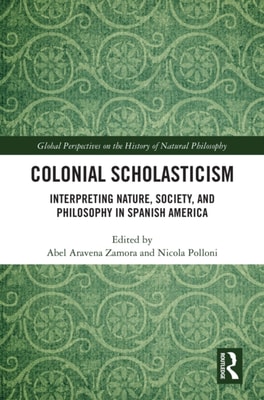
Colonial Scholasticism: Interpreting Nature, Society, and Philosophy in Spanish America explores the enduring influence of scholasticism beyond Europe, tracing its evolution in the intellectual and educational institutions of colonial Latin America.
This is the complete and authoritative edition of the folk and fairy tales of the brothers Grimm, with 212 tales, and including the tale of The Starving Children (which was removed after the 1819 edition).
"e;Old Times in the Colonies"e; is an outline of some of the principal events that transpired during the colonial period of our country, and portrays the hardships and sufferings of those who laid the foundations of a new empire.
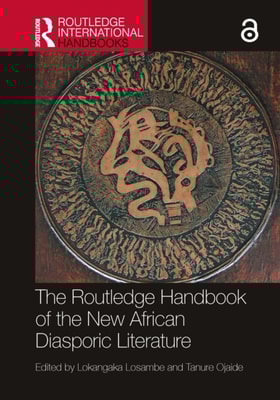
The Routledge Handbook of the New African Diasporic Literature introduces world literature readers to the transnational, multivocal writings of immigrant African authors.
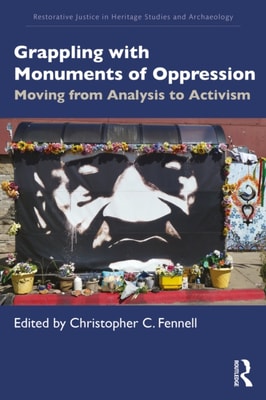
Grappling with Monuments of Oppression provides a timely analysis of the diverse approaches being used around the world to confront colonial and imperial monuments and to promote social equity.
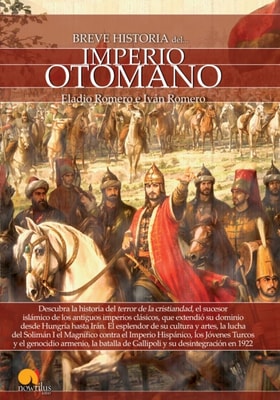
Descubra la historia de uno de los imperios más duraderos en la historia del mundo, el otomano, desde su formación por el guerrero musulmán turco, Osmán, a comienzos del siglo XIV hasta su desaparición oficial en 1922.
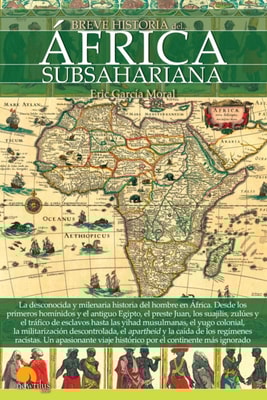
En esta obra el lector conocerá las principales etapas de la historia del continente africano: la prehistoria, con la aparición de los primeros homínidos en África; los tiempos antiguos, donde se observan similitudes culturales entre el Antiguo Egipto y las sociedades subsaharianas; los siglos oscuros, el período menos conocido de la historia africana; la era de los imperios o época clásica africana, en la que se erigieron grandes imperios cuya fama llegó hasta Europa; la era del contacto occidental o período predador, caracterizada por el tráfico de esclavos y por la militarización de las sociedades africanas; el período colonial y, finalmente, el período independiente, con la gran disyuntiva entre tradición y modernidad que incidirá en el devenir de los nuevos estados del continente.
La Crónica del Perú es el primer relato de la exploración y conquista de Colombia, Ecuador, Perú y Bolivia, así como la primera historia del mundo andino que se inicia en la época prehispánica.