A powerful account of how coerced migration built the British Empire In the early seventeenth century, Britain took ruthless steps to deal with its unwanted citizens, forcibly removing men, women, and children from their homelands and sending them to far-flung corners of the empire to be sold off to colonial masters.
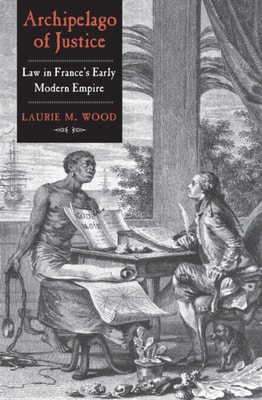
An examination of France’s Atlantic and Indian Ocean empires through the stories of the little-known people who built it This book is a groundbreaking evaluation of the interwoven trajectories of the people, such as itinerant ship-workers and colonial magistrates, who built France’s first empire between 1680 and 1780 in the Atlantic and Indian Oceans.
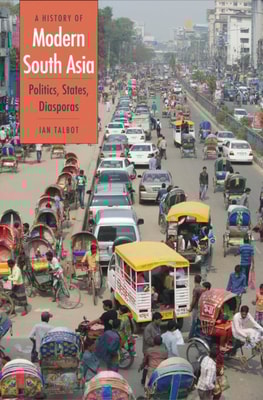
Noted historian Ian Talbot has written a new history of modern South Asia that considers the Indian Subcontinent in regional rather than in solely national terms.
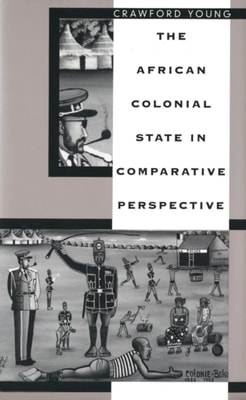
In this comprehensive and original study, a distinguished specialist and scholar of African affairs argues that the current crisis in African development can be traced directly to European colonial rule, which left the continent with a "e;singularly difficult legacy"e; that is unique in modern history.
In this important book, Kathleen Deagan and José María Cruxent present detailed technical documentation of their ten-year archaeological excavation of La Isabela, America’s first colony.
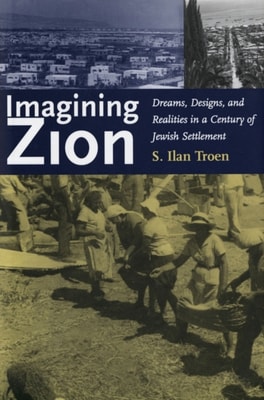
This timely book tells the fascinating story of how Zionists colonizers planned and established nearly 700 agricultural settlements, towns, and cities from the 1880s to the present.
Personal, provocative and powerfully persuasive - an essential guide to what white feminism is, why it matters, and how we can put an end to it'Thoughtful and provocative.
This lavishly illustrated, visually stimulating, and easy-to-read ebook explores one of the most important periods of Western history - the American War of Independence.
Ved Mehta's brilliant Mahatma Gandhi and his Apostles provides an unparalleled portrait of the man who lead India out of its colonial past and into its modern form.
This book offers a new approach to design theory and practice that draws on Indigenous knowledges, methodologies and methods, presenting concepts of decolonising and Indigenous design that are interweaved as theory, storytelling, and practices.
We think we know ancient Greece, the civilisation that shares the same name and gave us just about everything that defines 'western' culture today, in the arts, sciences, social sciences and politics.
The definitive modern biography of the great slave leader, military genius and revolutionary hero Toussaint LouvertureThe Haitian Revolution began in the French Caribbean colony of Saint-Domingue with a slave revolt in August 1791, and culminated a dozen years later in the proclamation of the world's first independent black state.
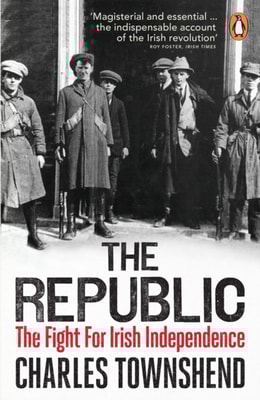
A gripping narrative of the most critical years in modern Ireland's history, from Charles TownshendThe protracted, terrible fight for independence pitted the Irish against the British and the Irish against other Irish.
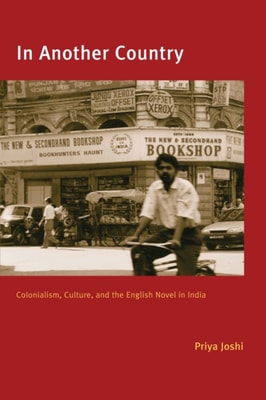
In a work of stunning archival recovery and interpretive virtuosity, Priya Joshi illuminates the cultural work performed by two kinds of English novels in India during the colonial and postcolonial periods.
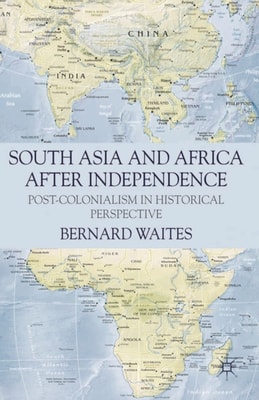
Post-colonial South Asia and Africa invite comparison: along with their political boundaries, they inherited from colonial regimes administrative languages, a cluster of sovereign state institutions and modern economic nuclei.
A New Introduction to American Constitutionalism is the first text to study the entirety of American constitutionalism, not just the traces that appear in Supreme Court decisions.
When President George Washington ordered an army of 13,000 men to march west in 1794 to crush a tax rebellion among frontier farmers, he established a range of precedents that continues to define federal authority over localities today.
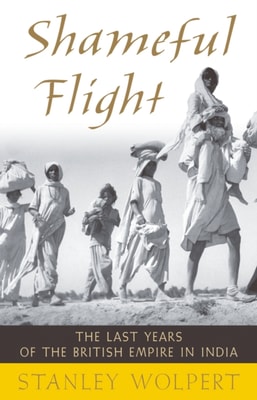
Britain's precipitous and ill-planned disengagement from India in 1947--condemned as a "e;shameful flight"e; by Winston Churchill--had a truly catastrophic effect on South Asia, leaving hundreds of thousands of people dead in its wake and creating a legacy of chaos, hatred, and war that has lasted over half a century.
In this superb volume in Oxford's acclaimed Pivotal Moments series, Colin Calloway reveals how the Treaty of Paris of 1763 had a profound effect on American history, setting in motion a cascade of unexpected consequences, as Indians and Europeans, settlers and frontiersmen, all struggled to adapt to new boundaries, new alignments, and new relationships.
Paul Revere's midnight ride looms as an almost mythical event in American history--yet it has been largely ignored by scholars and left to patriotic writers and debunkers.
When President George Washington ordered an army of 13,000 men to march west in 1794 to crush a tax rebellion among frontier farmers, he established a range of precedents that continues to define federal authority over localities today.
Paul Revere's midnight ride looms as an almost mythical event in American history--yet it has been largely ignored by scholars and left to patriotic writers and debunkers.
Britain's precipitous and ill-planned disengagement from India in 1947--condemned as a "e;shameful flight"e; by Winston Churchill--had a truly catastrophic effect on South Asia, leaving hundreds of thousands of people dead in its wake and creating a legacy of chaos, hatred, and war that has lasted over half a century.
When the colonial slave trade, and then slavery itself, were abolished early in the 19th century, the British empire brazenly set up a new system of trade using Indian rather than African laborers.
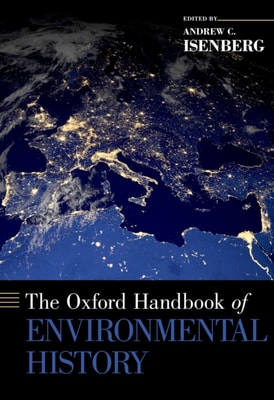
The field of environmental history emerged just decades ago but has established itself as one of the most innovative and important new approaches to history, one that bridges the human and natural world, the humanities and the sciences.