Gandhi's non-violent struggles against racism, violence, and colonialism in South Africa and India had brought him to such a level of notoriety, adulation that when asked to write an autobiography midway through his career, he took it as an opportunity to explain himself.
A TIMES HISTORY BOOK OF THE YEARFrom the preeminent historian of 20th century Spain Paul Preston, Architects of Terror is a new history of how paranoia, conspiracy and anti-Semitism was used to justify the military coup of 1936 and enabled the construction of a dictatorship built on violence and persecution.
Parliament as an Export (1966) deals with the adoption of overseas countries and particularly the Commonwealth countries of the British Parliamentary system.
James Smith (1989) is study of this hitherto-neglected maker of colonial culture, and traces the rise and decline of the transplanted ideas and values that Smith and many of his fellow immigrants to Australia upheld.
Malta and the End of Empire (1971) examines the now-forgotten moment in 1956 when the people of Malta, Gozo and Comino were asked by the British and Maltese Governments to decide whether they wanted full integration with the United Kingdom - a remarkable proposal which ran quite contrary to colonial policy at the time.
The Yoruba-Speaking Peoples of the Slave Coast of West Africa (1894) is an important work of in-depth research into one of the principal indigenous communities of West Africa.
The Routledge International Handbook of Heritage and Politics surveys the intersection of heritage and politics today and helps elucidate the political implications of heritage practices.
The Routledge International Handbook of Heritage and Politics surveys the intersection of heritage and politics today and helps elucidate the political implications of heritage practices.
The Turning Point in Africa (1982) is a significant study of British colonial policy towards tropical Africa during a critical decade, from the complacent trusteeship of the inter-war years to the strategy of decolonization inaugurated after the Second World War.
The World Today (1974) examines the world of the late twentieth century and its roots - the disintegration of the old world is analysed in the expansion and subsequent decline of nineteenth-century imperialism, and the attempts by the League of Nations and United Nations to bring about a new order on international cooperation.
El proyecto de publicación consta de seis importantes volúmenes en los que se recorre la historia de la independencia argentina desde los primeros años de la Colonia hasta la organización de la República.
The book provides valuable insights on decolonising the digital media landscape and the indigenisation of participatory epistemologies to continue the legacies of indigenous languages in the global South.
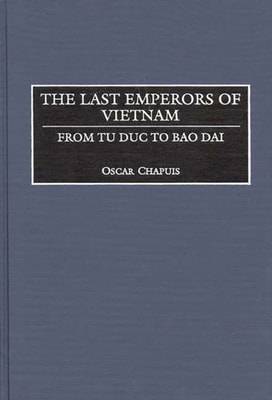
This book tells the story of French interaction with Vietnam and the neighboring region, which began with the French seizure of Cochin-China and Tonking in the 19th century under Emperor Tu Duc and ended with their humiliating defeat at Dien Bien Phu in 1954.
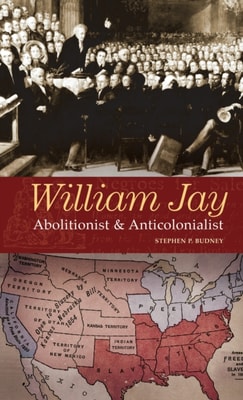
A founder of the New York Anti-Slavery Society, William Jay was one of the most prolific and influential abolitionists of his day, yet Americans know little about him.
Decolonisation is a term which has become a modern day buzzword as we look to understand the influences of the systemic structures of oppression which have molded all of our identities, yet, in the worlds of counselling and psychotherapy there has been a struggle to understand what this term means in regard to our profession.
Die Freimaurerei, oft umhüllt von Geheimnissen und Mythen, hat über Jahrhunderte hinweg einen erheblichen Einfluss auf die europäischen Gesellschaften ausgeübt.