The Oxford Handbook of Postcolonial Studies provides a comprehensive overview of the latest scholarship in postcolonial studies, while also considering possible future developments in the field.
The Oxford Handbook of Postcolonial Studies provides a comprehensive overview of the latest scholarship in postcolonial studies, while also considering possible future developments in the field.
This unique and meticulously-researched study examines the triangular relationship between the British government, the Palace, and the modern Commonwealth since 1945.
The Oxford Handbook of Greek Drama in the Americas is the first edited collection to discuss the performance of Greek drama across the continents and archipelagos of the Americas from the beginning of the nineteenth century to the present.
The Oxford Handbook of Greek Drama in the Americas is the first edited collection to discuss the performance of Greek drama across the continents and archipelagos of the Americas from the beginning of the nineteenth century to the present.
After Empires describes how the end of colonial empires and the changes in international politics and economies after decolonization affected the European integration process.
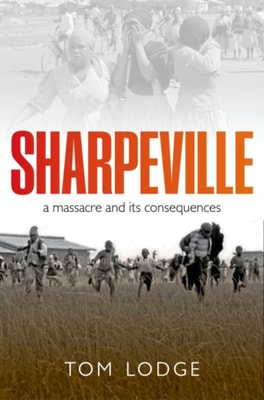
On 21 March 1960 several hundred black Africans were injured and 69 killed when South African police opened fire on demonstrators in the township of Sharpeville, protesting against the Apartheid regime's racist 'pass' laws.
Invaded in 1830, populated by one million settlers who co-existed uneasily with nine million Arabs and Berbers, Algeria was different from other French colonies because it was administered as an integral part of France, in theory no different from Normandy or Brittany.
Memories of Empire is a trilogy which explores the complex, subterranean political currents which emerged in English society during the years of postwar decolonization.
On 21 March 1960 several hundred black Africans were injured and 69 killed when South African police opened fire on demonstrators in the township of Sharpeville, protesting against the Apartheid regime's racist 'pass' laws.
Invaded in 1830, populated by one million settlers who co-existed uneasily with nine million Arabs and Berbers, Algeria was different from other French colonies because it was administered as an integral part of France, in theory no different from Normandy or Brittany.
Memories of Empire is a trilogy which explores the complex, subterranean political currents which emerged in English society during the years of postwar decolonization.
The international administration of troubled states - whether in Bosnia, Kosovo, or East Timor - has seen a return to the principle of trusteeship; that is when some form of international supervision is required in a particular territory in order both to maintain order and to foster the norms and practices of fair self-government.
Essential reading for anyone interested in the African continent and the diversity of human history, this Very Short Introduction looks at Africa's past and reflects on the changing ways it has been imagined and represented.
How should constitutional design respond to the opportunities and challenges raised by ethnic, linguistic, religious, and cultural differences, and do so in ways that promote democracy, social justice, peace and stability?
The Balkans has long been a place of encounter among different peoples, religions, and civilizations, resulting in a rich cultural tapestry and mosaic of nationalities.
Essential reading for anyone interested in the African continent and the diversity of human history, this Very Short Introduction looks at Africa's past and reflects on the changing ways it has been imagined and represented.
Transnational Patriotism in the Mediterranean investigates the long process of transition from a world of empires to a world of nation-states by narrating the biographies of a group of people who were born within empires but came of age surrounded by the emerging vocabulary of nationalism, much of which they themselves created.
Transnational Patriotism in the Mediterranean investigates the long process of transition from a world of empires to a world of nation-states by narrating the biographies of a group of people who were born within empires but came of age surrounded by the emerging vocabulary of nationalism, much of which they themselves created.
Winston Churchill spent his early childhood in Ireland, had close Irish relatives, and was himself much involved in Irish political issues for a large part of his career.
Winston Churchill spent his early childhood in Ireland, had close Irish relatives, and was himself much involved in Irish political issues for a large part of his career.
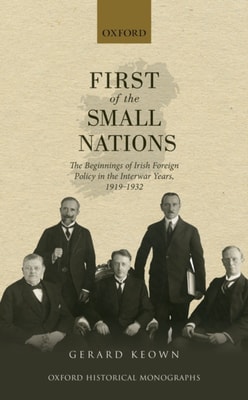
First of the Small Nations traces the ideas and aspirations of the revolutionary generation in Ireland from the 1890s to 1918 who dreamt of an independent Irish state and imagined how an Irish foreign policy might look.
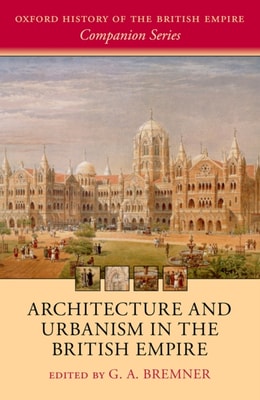
Throughout today's postcolonial world, buildings, monuments, parks, streets, avenues, entire cities even, remain as witness to Britain's once impressive if troubled imperial past.
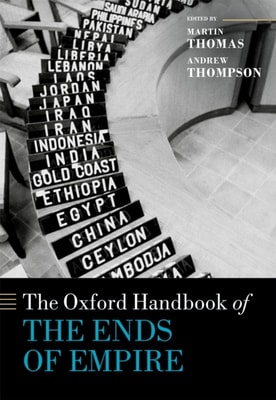
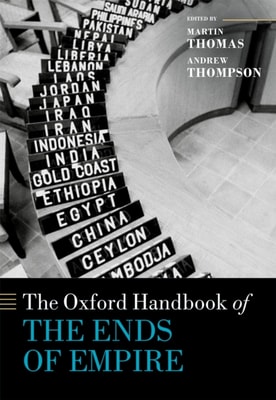
The Oxford Handbook of the Ends of Empire offers the most comprehensive treatment of the causes, course, and consequences of the ends of empire in the twentieth century.
The Oxford Handbook of the Ends of Empire offers the most comprehensive treatment of the causes, course, and consequences of the ends of empire in the twentieth century.
How should constitutional design respond to the opportunities and challenges raised by ethnic, linguistic, religious, and cultural differences, and do so in ways that promote democracy, social justice, peace and stability?
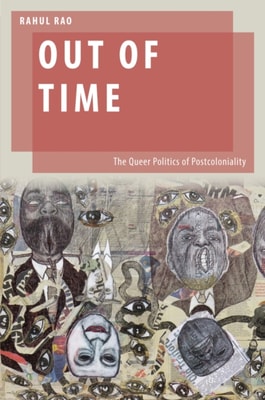
Between 2009 and 2014, an anti-homosexuality law circulating in the Ugandan parliament came to be the focus of a global conversation about queer rights.
Between 2009 and 2014, an anti-homosexuality law circulating in the Ugandan parliament came to be the focus of a global conversation about queer rights.