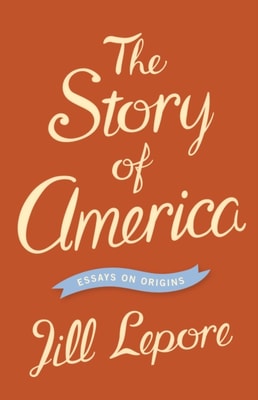
From celebrated writer Jill Lepore, a literary and political history of American origin stories In The Story of America, Harvard historian and New Yorker staff writer Jill Lepore investigates American origin stories-from John Smith's account of the founding of Jamestown in 1607 to Barack Obama's 2009 inaugural address-to show how American democracy is bound up with the history of print.
The Poverty of Clio challenges the hold that cliometrics--an approach to economic history that employs the analytical tools of economists--has exerted on the study of our economic past.
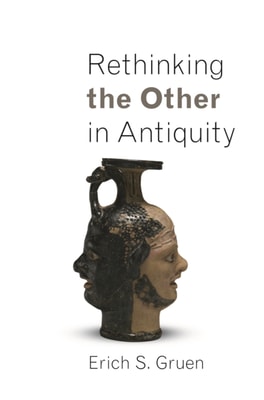
Prevalent among classicists today is the notion that Greeks, Romans, and Jews enhanced their own self-perception by contrasting themselves with the so-called Other--Egyptians, Phoenicians, Ethiopians, Gauls, and other foreigners--frequently through hostile stereotypes, distortions, and caricature.
First published in 2000, Dipesh Chakrabarty's influential Provincializing Europe addresses the mythical figure of Europe that is often taken to be the original site of modernity in many histories of capitalist transition in non-Western countries.
This pioneering work is the first to trace how our understanding of the causes of human behavior has changed radically over the course of European and American cultural history since 1830.
This book explores the various ways in which socialists have understood the relationship between their political beliefs and different religious and philosophical traditions.
This student guide introduces the key concepts, theories and approaches to the history of emotions while teaching readers how to apply these ideas to historical source material.
This introductory textbook presents medical history as a theoretically rich discipline, one that constantly engages with major social questions about ethics, bodies, state power, disease, public health and mental disorder.
Based on the assumption that reality, reference and representation work together, this introductory textbook explains and illustrates the various ways in which historians write the past as history.
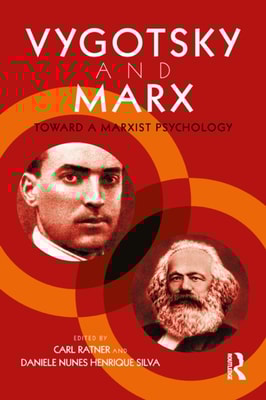
This important book fills two interrelated gaps in the field of psychology, first by developing a Marxist orientation to psychology and second by explaining how psychological pioneer Lev Vygotsky contributed greatly to this trend.
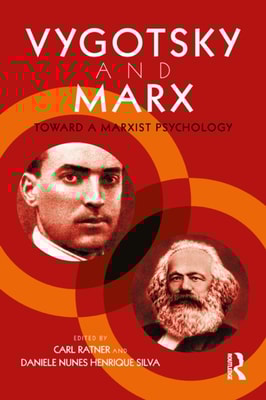
This important book fills two interrelated gaps in the field of psychology, first by developing a Marxist orientation to psychology and second by explaining how psychological pioneer Lev Vygotsky contributed greatly to this trend.
This volume contains key writings, mainly recent, that define the current debate concerning our understanding of the nature of Max Weber's social and political thought.
This volume contains key writings, mainly recent, that define the current debate concerning our understanding of the nature of Max Weber's social and political thought.
This is an annotated bibliography of Catholic books in English printed abroad or secretly in England at a time when Catholic printing was prohibited in England and such books, when discovered by the authorities, were seized and destroyed.
This is an annotated bibliography of Catholic books in English printed abroad or secretly in England at a time when Catholic printing was prohibited in England and such books, when discovered by the authorities, were seized and destroyed.
In his provocative and timely study of posthumanism, Dongshin Yi adopts an imaginary/imaginative approach to exploring the transformative power of the cyborg, a strategy that introduces balance to the current discourses dominated by the practicalities of technoscience and the dictates of anthropocentrism.
In his provocative and timely study of posthumanism, Dongshin Yi adopts an imaginary/imaginative approach to exploring the transformative power of the cyborg, a strategy that introduces balance to the current discourses dominated by the practicalities of technoscience and the dictates of anthropocentrism.
The opposition of science and religion is a recent phenomenon; in the middle ages, and indeed until the middle of the nineteenth century, there was almost no conflict.
The opposition of science and religion is a recent phenomenon; in the middle ages, and indeed until the middle of the nineteenth century, there was almost no conflict.
Iconoclasm, the debate about the legitimacy of religious art that began in Byzantium around 730 and continued for nearly 120 years, has long held a firm grip on the historical imagination.
Iconoclasm, the debate about the legitimacy of religious art that began in Byzantium around 730 and continued for nearly 120 years, has long held a firm grip on the historical imagination.
Exploring the boundaries of the law as they existed in medieval and early modern times and as they have been perceived by historians, this volume offers a wide ranging insight into a key aspect of European society.
Exploring the boundaries of the law as they existed in medieval and early modern times and as they have been perceived by historians, this volume offers a wide ranging insight into a key aspect of European society.
Kevin Killeen addresses one of the most enigmatic of seventeenth century writers, Thomas Browne (1605-1682), whose voracious intellectual pursuits provide an unparalleled insight into how early modern scholarly culture understood the relations between its disciplines.
Kevin Killeen addresses one of the most enigmatic of seventeenth century writers, Thomas Browne (1605-1682), whose voracious intellectual pursuits provide an unparalleled insight into how early modern scholarly culture understood the relations between its disciplines.